Red Light Therapy for Alzheimer’s: What Science Says

Red Light Therapy for Alzheimer’s: What Research Says About Light and Brain Health
Researchers are exploring whether red light therapy for Alzheimer’s could support brain function by influencing cellular processes linked to neurodegeneration. The approach, known as photobiomodulation, uses specific wavelengths of red or near infrared light that may interact with cells involved in energy production, inflammation, and blood flow in the brain.
Early laboratory and animal studies suggest these wavelengths may affect biological pathways associated with Alzheimer’s disease. Small human studies are also beginning to investigate whether light-based therapies can influence memory, mood, or cognitive performance.
The research is still developing, and photobiomodulation is not considered a treatment for Alzheimer’s disease. However, growing interest in transcranial light therapy has led scientists to examine how controlled light exposure might support brain health.
This article reviews the current evidence on red light therapy for Alzheimer’s, the biological mechanisms researchers are studying, and how photobiomodulation devices are designed to deliver therapeutic wavelengths.
- 1. Red Light Therapy for Alzheimer’s: What Research Says About Light and Brain Health
- 2. What Is Alzheimer’s Disease?
- 3. What Is Red Light Therapy?
- 4. How Red and Near Infrared Light May Affect the Brain
- 5. What Animal Studies Show About Photobiomodulation and Alzheimer’s
- 6. Human Studies on Red Light Therapy for Alzheimer’s
- 7. Why Light Therapy Parameters Matter (Wavelength, Dose, Frequency)
- 8. Devices Used for Photobiomodulation Therapy
- 9. Lumaflex Essential Pro and App Controlled Light Settings
- 10. Limitations of Red Light Therapy Research for Alzheimer’s
- 11. The Future of Photobiomodulation for Brain Health
- 12. Frequently Asked Questions About Red Light Therapy and Alzheimer’s
- 13. References
What Is Alzheimer’s Disease?
Alzheimer’s disease is a form of neurodegeneration that gradually disrupts memory, learning, and other cognitive functions. As the disease progresses, structural and biochemical changes in the brain interfere with communication between neurons.
Two hallmark features define Alzheimer’s pathology:
-
Amyloid beta plaques, which accumulate between brain cells
-
Tau protein tangles, which form inside neurons and disrupt cellular transport
While these protein abnormalities are central to the disease, researchers now recognize that Alzheimer’s involves a broader network of biological changes in the brain.
Studies have identified several interconnected processes that contribute to cognitive decline, including mitochondrial dysfunction, chronic neuroinflammation, impaired cerebral circulation, oxidative stress, and reduced waste clearance in brain tissue. These disruptions affect how neurons produce energy, communicate, and remove metabolic byproducts.
Because Alzheimer’s affects multiple systems at once, scientists are increasingly exploring approaches that influence several biological pathways rather than a single target. This broader understanding of Alzheimer’s brain changes has helped drive interest in research areas such as photobiomodulation and light-based brain therapies.
What Is Red Light Therapy?
Red light therapy, also known as photobiomodulation therapy, uses specific wavelengths of red and near infrared light to interact with cells in the body. In clinical and research settings, this light is typically delivered through LED light therapy devices or low level laser therapy systems that emit controlled therapeutic wavelengths.
Unlike surgical lasers or heat-based treatments, photobiomodulation works through a non-thermal mechanism. The light does not damage tissue. Instead, it is absorbed by molecules inside cells that respond to particular wavelengths.
A key target is cytochrome c oxidase, an enzyme found in mitochondria. When these cellular structures absorb red or near infrared light, it may influence mitochondrial activity and energy production.
When light therapy is directed toward the head, researchers refer to the technique as transcranial photobiomodulation (tPBM). This approach is being studied to understand how light exposure might influence brain metabolism, circulation, and inflammatory signaling.
How Red and Near Infrared Light May Affect the Brain
Research on photobiomodulation and brain function focuses on how red and near infrared light interacts with biological systems involved in neurodegeneration. Laboratory and animal studies suggest that certain wavelengths may influence cellular activity in brain tissue.
Much of this research centers on processes already known to change in Alzheimer’s disease, including mitochondrial energy production, neuroinflammation, cerebral blood flow, and protein clearance pathways. Scientists are investigating whether light exposure at specific wavelengths can affect these systems and support normal cellular function.
The following mechanisms are among the most commonly discussed in photobiomodulation research.
1. Mitochondrial Energy Production
A central mechanism studied in photobiomodulation involves cytochrome c oxidase, an enzyme within mitochondria. These structures generate most of the energy used by cells, including neurons in the brain.
Red and near infrared light can be absorbed by cytochrome c oxidase. This interaction may support activity within the mitochondrial electron transport chain, which plays a key role in cellular energy production.
Research suggests this process may contribute to:
- increased ATP production
- improved cellular energy metabolism
- better support for neuronal function
This pathway is particularly relevant to Alzheimer’s disease because mitochondrial dysfunction and reduced brain energy metabolism are commonly observed in neurodegeneration. Supporting mitochondrial activity may help neurons maintain normal function under metabolic stress.
2. Neuroinflammation
Another process under investigation is neuroinflammation in Alzheimer’s disease. The brain’s immune cells, called microglia, normally help clear debris and support tissue repair. In Alzheimer’s, these cells can remain chronically activated, releasing inflammatory cytokines and reactive molecules that contribute to neuronal damage.
Laboratory studies suggest photobiomodulation may influence immune signaling in brain tissue. Exposure to red or near infrared light has been associated with changes in microglial activation, potentially shifting these cells away from a persistent inflammatory state and toward a repair-oriented response.
By moderating inflammatory signaling, researchers believe photobiomodulation could help create conditions that are more supportive of neuronal stability and recovery.
3. Cerebral Blood Flow
Changes in cerebral blood flow are frequently observed in Alzheimer’s disease. Reduced circulation can limit oxygen delivery and disrupt normal brain metabolism, which may contribute to cognitive decline.
Photobiomodulation has been associated with nitric oxide signaling, a process that can relax and widen blood vessels. This vasodilation may support improved circulation in brain tissue.
Improved vascular function may help support:
- brain oxygenation
- nutrient delivery to neurons
- removal of metabolic byproducts
Because vascular dysfunction is a recognized feature of Alzheimer’s pathology, researchers continue to investigate whether light therapy can influence brain circulation and metabolic support.
4. Amyloid and Tau Regulation
Another area of investigation involves the accumulation of amyloid beta plaques and tau pathology, two defining features of Alzheimer’s disease. Researchers are studying whether photobiomodulation may influence biological pathways related to protein buildup and clearance in the brain.
Experiments in Alzheimer’s mouse models have reported several changes following exposure to red or near infrared light, including:
- lower amyloid plaque accumulation
- improved mitochondrial activity
- reduced inflammatory markers
- better performance in memory tasks
These findings suggest that photobiomodulation may interact with processes linked to neurodegeneration. However, results from animal studies do not always translate to human outcomes, and further clinical research is needed to understand whether similar effects occur in people.
What Animal Studies Show About Photobiomodulation and Alzheimer’s
Much of the current evidence for photobiomodulation in Alzheimer’s research comes from preclinical experiments using Alzheimer’s mouse models. These models are genetically engineered to develop amyloid plaques, tau changes, and cognitive decline similar to those seen in human neurodegeneration.
Studies using red and near infrared wavelengths have reported several biological and behavioral changes, including:
- reduced amyloid beta accumulation
- improved mitochondrial activity
- lower oxidative stress levels
- reduced neuroinflammation
- improved performance in memory tasks
Different wavelengths have been tested in these studies, with 670 nm and 810 nm among the most frequently used ranges in photobiomodulation research.
Although these findings provide useful insight into potential mechanisms, animal studies represent an early stage of investigation. Larger and well controlled human clinical trials are still needed to determine whether similar effects occur in people with Alzheimer’s disease.
Human Studies on Red Light Therapy for Alzheimer’s
A small number of transcranial photobiomodulation studies have examined how near infrared light therapy may affect cognitive function in people with dementia.
Early pilot clinical trials have used devices that deliver light to the head in patients with mild to moderate Alzheimer’s disease or related dementia. Some studies have reported changes in several cognitive and behavioral outcomes, including:
- improved memory recall
- better attention and focus
- improved sleep patterns
- changes in mood and behavior
These findings have contributed to growing interest in photobiomodulation clinical trials for neurological conditions. However, most studies conducted so far involve small participant groups and short treatment periods.
Larger randomized trials will be necessary to determine whether red light therapy can produce consistent or long term effects on Alzheimer’s disease progression.
Why Light Therapy Parameters Matter (Wavelength, Dose, Frequency)
Results in photobiomodulation research depend heavily on the treatment protocol. Unlike many medical therapies where stronger doses produce greater effects, red light therapy often follows a biphasic dose response. Too little exposure may have no effect, while excessive energy can reduce or reverse the desired response.
For this reason, researchers pay close attention to several treatment variables, including:
- wavelength of light used
- treatment duration
- power density
- total energy delivered
- pulsed light frequency
Each of these parameters can influence how light interacts with tissue. Different combinations may affect cellular signaling, mitochondrial activity, and inflammatory pathways in different ways.
Understanding how photobiomodulation wavelength, dosage, and frequency influence biological responses remains a key focus of ongoing neurological research.
Devices Used for Photobiomodulation Therapy
In clinical and laboratory settings, photobiomodulation devices use LEDs or low level lasers that emit controlled red and near infrared wavelengths. These systems are designed to deliver light at specific intensities and treatment parameters used in research.
LED light therapy devices are widely used because they:
- generate minimal heat
- cover larger treatment areas
- are relatively simple to operate
- allow repeated treatment sessions
Advances in light therapy equipment have also led to the development of consumer devices that deliver similar wavelengths in more accessible formats. These systems are typically designed for wellness, recovery, and targeted light exposure outside of clinical environments.
Lumaflex Essential Pro and App Controlled Light Settings
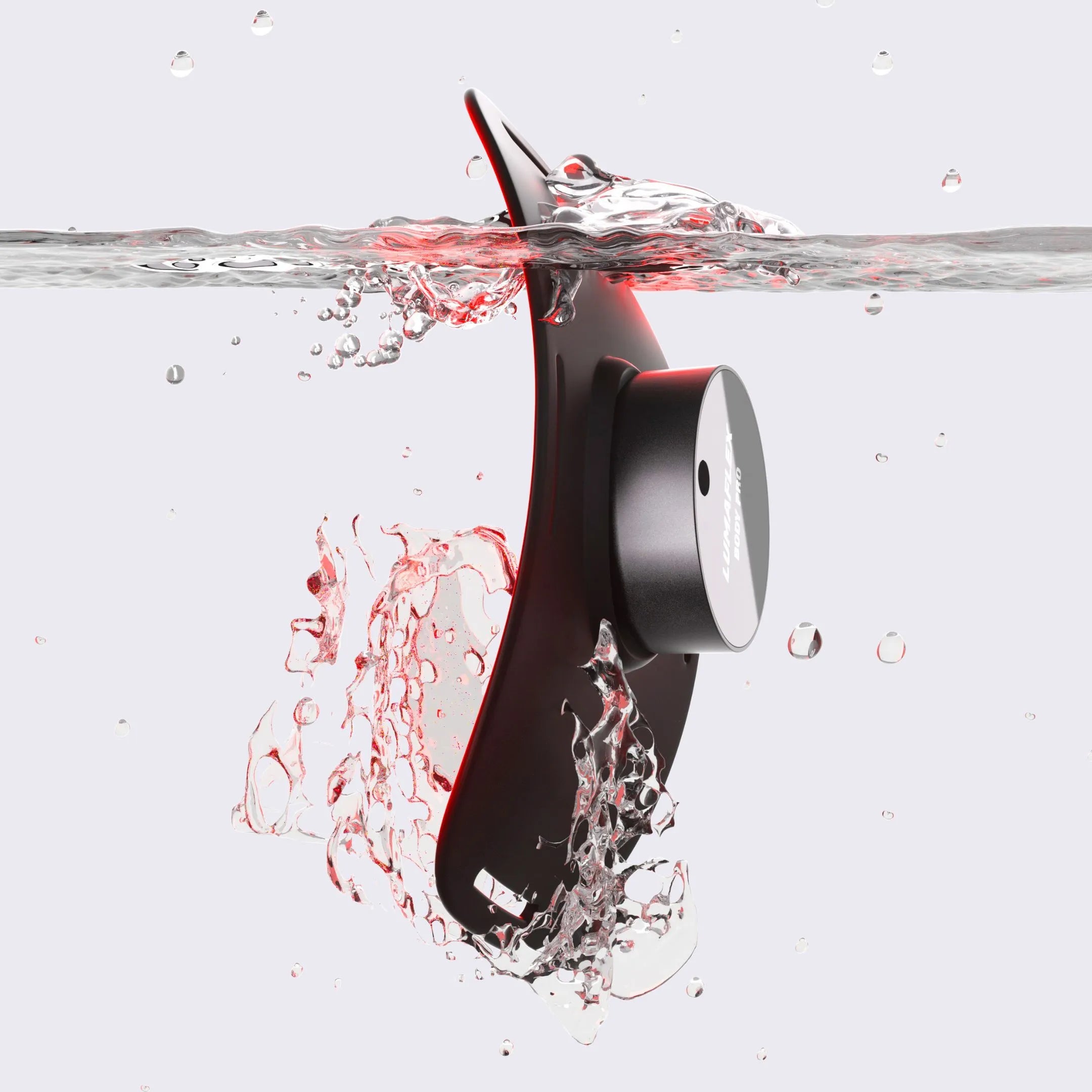
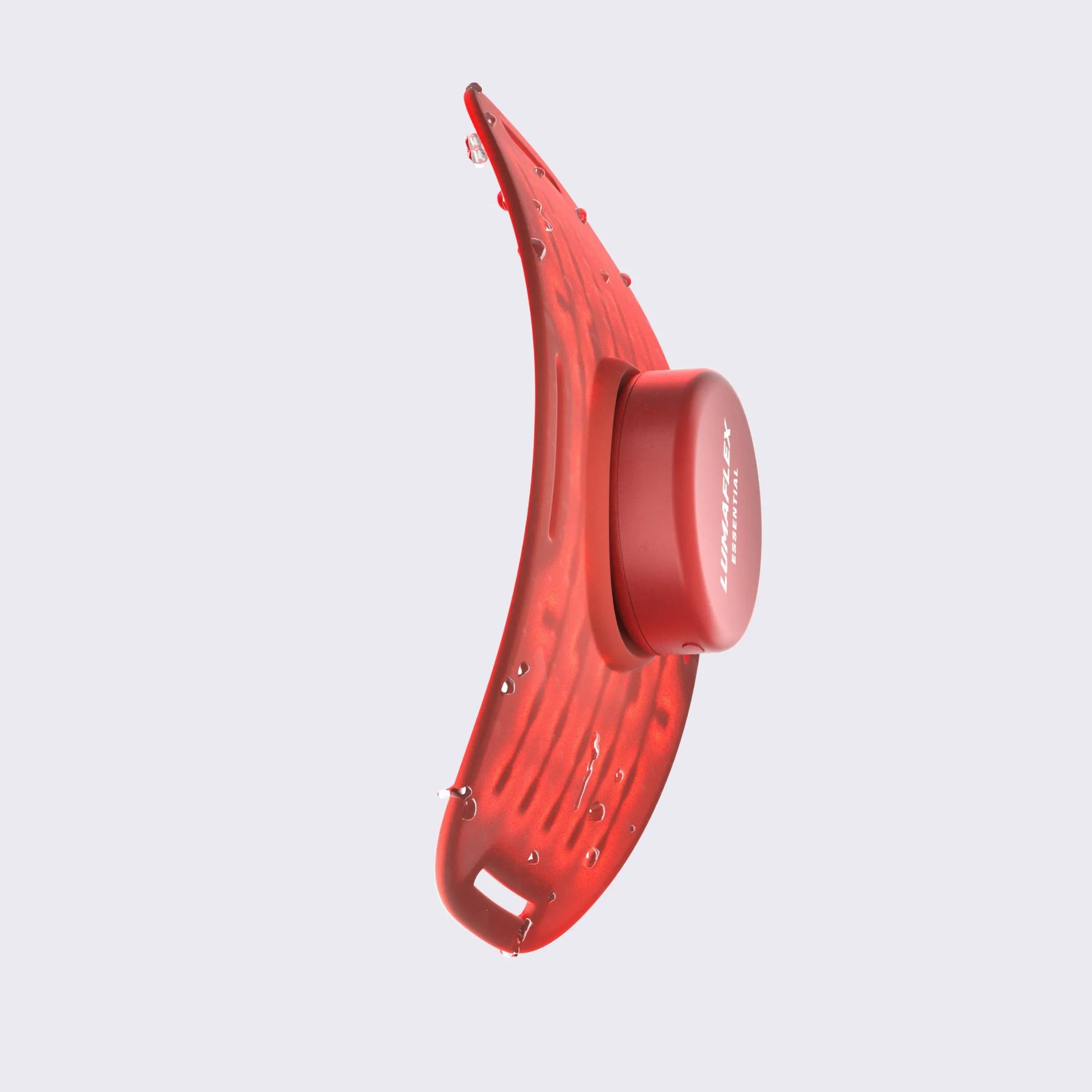
The Lumaflex Essential Pro is a flexible LED red light therapy device designed to deliver red and near infrared light to targeted areas of the body. Its wraparound design allows the panel to contour to different body regions so the light can be positioned close to the treatment area during a session.
The device can be operated through the Lumaflex mobile app, which allows users to adjust device settings and select different pulsed light frequencies measured in Hertz (Hz).
Pulsed light has attracted interest in photobiomodulation research because frequency patterns may influence how cells respond to light exposure. Scientists are studying how different pulsing rates affect biological activity, including cellular signaling and brain rhythms.
Some research has explored frequencies that overlap with natural gamma brain waves, around 40 Hz, which are associated with attention and cognitive processing. The relationship between light pulsing patterns and neurological activity is still being investigated.
Consumer devices such as Lumaflex are generally used for wellness and recovery applications, but they rely on the same photobiomodulation principles that researchers continue to study in laboratory and clinical settings.
Limitations of Red Light Therapy Research for Alzheimer’s
Current photobiomodulation research for Alzheimer’s disease remains at an early stage. Much of the available evidence comes from laboratory experiments, animal models, or small pilot studies in humans.
Several limitations affect how these findings should be interpreted:
- many studies involve small participant groups
- treatment protocols vary widely, including wavelength, dosage, and session duration
- long term safety and effectiveness have not yet been established in large clinical trials
Because of these limitations, red light therapy is not considered a treatment for Alzheimer’s disease. Larger and more consistent clinical studies are needed to determine whether photobiomodulation can produce reliable cognitive or neurological benefits.
For now, light therapy remains an emerging research area within the broader effort to understand and support brain health.
The Future of Photobiomodulation for Brain Health
Research into red light therapy and brain function is still developing, but several areas are likely to shape the next stage of investigation.
Future transcranial photobiomodulation studies are expected to focus on:
- larger randomized clinical trials
- clearer treatment protocols and dosing parameters
- improvements in light therapy device technology
- better understanding of how light affects brain metabolism and neural activity
These studies will help clarify whether photobiomodulation can produce consistent neurological benefits and which treatment settings are most effective.
Current findings suggest that red and near infrared light may influence biological pathways involved in Alzheimer’s disease, including cellular energy production, inflammation, and circulation. However, stronger clinical evidence is still needed before its role in neurological care becomes clear.
Frequently Asked Questions About Red Light Therapy and Alzheimer’s
Can red light therapy help Alzheimer’s disease?
Researchers are studying whether red light therapy, also called photobiomodulation, may influence biological processes linked to Alzheimer’s disease. Early laboratory studies and small human trials suggest light exposure may affect brain energy metabolism, inflammation, and blood circulation. However, current evidence is still limited, and larger clinical trials are needed to determine whether these effects translate into meaningful improvements in cognition.
What is 40 Hz light therapy?
40 Hz light therapy refers to light that pulses at 40 cycles per second, a frequency associated with gamma brain waves. Gamma oscillations are involved in attention, memory, and information processing. Some neuroscience studies are exploring whether light stimulation at 40 Hz may influence brain activity or help support processes involved in clearing proteins such as amyloid beta. This research is still experimental and remains under investigation.
What wavelength is used for brain photobiomodulation?
Studies on transcranial photobiomodulation typically use red and near infrared wavelengths between 630 nanometers and 900 nanometers. Commonly studied ranges include 670 nm and 810 nm, which are capable of penetrating tissue and interacting with cellular components involved in energy production and signaling pathways.
Is red light therapy safe for the brain?
Photobiomodulation uses non thermal light, meaning the wavelengths used do not heat or damage tissue when applied at appropriate levels. Early studies suggest the technique is generally well tolerated in research settings. However, long term safety and optimal treatment protocols for neurological applications still require further clinical study.
Is red light therapy approved to treat Alzheimer’s disease?
No. Red light therapy is not currently approved as a treatment for Alzheimer’s disease. Most studies examining photobiomodulation for neurological conditions are still in early clinical stages. Researchers continue to investigate how light based therapies might influence brain function and whether they could play a role in future therapeutic strategies.
Interested in exploring photobiomodulation technology?
Devices such as the Lumaflex Essential Pro are designed to deliver red and near infrared light used in photobiomodulation research. The device can also be controlled through the Lumaflex mobile app, allowing users to adjust light settings and pulsing frequencies.
Learn more about how Lumaflex devices are designed for flexible light therapy sessions.
Explore the Lumaflex Essential Pro
References
Hamblin, M. R. (2019). Photobiomodulation for Alzheimer’s disease: Has the light dawned? Photonics, 6(3), 77. https://doi.org/10.3390/photonics6030077
Zhang, J., Xing, D., & Gao, X. (2021). Dose–effect relationships for photobiomodulation in the treatment of Alzheimer’s disease. Journal of Physics D: Applied Physics, 54(31), 313001. https://doi.org/10.1088/1361-6463/ac0740
Su, Y., Wang, X., Zhou, Y., & Zhang, Y. (2023). Recent mechanisms of neurodegeneration and photobiomodulation in the context of Alzheimer’s disease. International Journal of Molecular Sciences, 24(11), 9272. https://doi.org/10.3390/ijms24119272