Red Light Therapy for IT Band Syndrome: The Runner & Cyclist Guide

Red Light Therapy for IT Band Syndrome. You know exactly what it feels like. Around mile four, or somewhere past kilometer forty on the bike, the outside of your knee starts to burn. It's not a dull ache. It's sharp and specific, and it shuts you down fast. IT band syndrome has a way of making even easy sessions feel like a negotiation.
Most athletes follow the same playbook: foam roll the lateral thigh, cut mileage, ice the knee, and wait. Then come back too soon and feel it again. This cycle is frustrating because the standard approach treats the symptom, tightness, without fully addressing the underlying problem, which is inflammation.
Red light therapy for IT band syndrome is gaining attention among endurance athletes for exactly that reason. The research on low-level laser therapy (LLLT) and tendon inflammation suggests it may help break the inflammatory cycle that keeps runners and cyclists sidelined. This article walks through what we know, what the science actually says, and how to use it practically alongside your rehab.
- 1. What Actually Causes IT Band Syndrome?
- 2. What Is Red Light Therapy (Photobiomodulation)?
- 3. What Does the Research Say? LLLT, Inflammation, and Tendon Recovery
- 4. Which Wavelengths Matter for IT Band Recovery?
- 5. How to Use Red Light Therapy for IT Band Syndrome
- 6. IT Band Recovery: Runners vs. Cyclists
- 7. Frequently asked questions (FAQs)
- 8. Getting Back to Training
- 9. References
What Actually Causes IT Band Syndrome?

The Biomechanics of Repetitive Lateral Knee Stress
The iliotibial band is a tough fibrous layer that starts from the hip and goes down on the outer side of the leg across the knee joint and ends up on the shin bone. The band cannot be flexed like a hamstring, nor does it have a separate blood supply.
With each movement of bending at the same arc of motion in the knee joint, the IT band glides across the lateral femoral condyle, which is a bony protrusion located at the side of the knee joint. If you do this ten thousand times while running or cycling for three hours, then you generate considerable friction between these two structures.
However, the risks are somewhat varied between running and cycling, but the underlying cause is identical. In running cases, hip abductor weakness, excessive hip drop during footstrike, and cadence inconsistency contribute to loading the IT band unevenly. While in cycling, the primary causes include having a saddle height that is set too high and incorrect cleat alignment, resulting in external leg rotation.
Why It's an Inflammatory Problem, Not Just a Tightness Problem
This is the part that gets missed in many of the recovery guides. The IT band syndrome is not necessarily caused by a tightness issue; rather, it's more of an inflammatory condition. The compression of the fat pad under the IT band by the IT band itself creates a local inflammatory response in the area. PGE2, which is a major pain and inflammatory mediator, builds up in the peritendinous area.
That’s why foam rolling will only take you so far. It tackles muscle tension at a source point, but it fails to address the inflammatory load at the location itself. And unless that inflammation is addressed, the tissue will remain sensitized. That’s the vicious cycle most athletes are stuck in.
What Is Red Light Therapy (Photobiomodulation)?
Photobiomodulation, also known as red light therapy or LLLT, involves the application of particular wavelengths of light in the form of red light and near-infrared light, which are employed to influence biological tissue at a cellular level. This type of therapy is not thermal therapy or ultraviolet light.
If you would like more information about how red light therapy works, you may check out this article; for now, this is what you should know.
How Light Interacts With Inflamed Tissue at the Cellular Level
When light of red or near-infrared wavelengths enters tissues, the protein called cytochrome C oxidase present in the mitochondria absorbs the light energy. The result of such absorption causes a cascade of actions, resulting in increased activities in mitochondria and the production of ATP molecules.
At an inflammatory site, this cellular activation has a secondary effect; it modulates the release of inflammatory cytokines and reduces the local concentration of prostaglandins like PGE₂. That's the connection to IT band syndrome. The same inflammatory mediator that accumulates at the lateral knee during overuse is the one that photobiomodulation has been shown to directly reduce.
What Does the Research Say? LLLT, Inflammation, and Tendon Recovery
The Bjordal Study: Measuring Inflammation Directly at the Tendon
The strongest evidence in favor of LLLT for tendon inflammation is found in a randomized, controlled trial performed by Bjordal, Lopes-Martins, and Iversen in 2006, published in the British Journal of Sports Medicine.
The subjects used in the experiment were people with bilateral tendinitis of the Achilles tendon that had been irritated by physical activity prior to the experiment. This is significant since the experiment was not designed to examine the effect of long-term low-level irritation of the tendons (chronic tendinopathy), but rather acutely inflamed tendons.
What distinguishes this research is the way in which it measured its results. Unlike most studies that use self-reporting of pain or blood indicators, this study utilized microdialysis to obtain measurements from within the peritendinous tissue using tiny probes. This is an exact measurement of inflammation, rather than an estimation.
The infrared laser used operated at 904 nm, delivering 5.4 joules per point. The results showed that PGE2 concentrations in the laser-treated tendons gradually decreased from baseline, falling to a ratio of 0.72 (95% CI 0.58 to 0.86) at 105 minutes post-treatment. The placebo group showed no comparable change. The study concluded that LLLT at this dose demonstrated measurable anti-inflammatory activity within a single session and may have potential in managing conditions involving an inflammatory component.
From Achilles to IT Band: Why the Mechanism Transfers
The Bjordal study didn't look at IT band syndrome specifically; it studied Achilles tendinitis. But the mechanism it documents is not injury-site-specific. PGE₂-driven peritendinous inflammation triggered by repetitive mechanical load is the same biochemical process whether it's happening at the Achilles, the patellar tendon, or the lateral femoral condyle, where the IT band compresses.
The tissue type is comparable. The inflammatory pathway is the same. What LLLT appears to do, reducing PGE2 concentrations in peritendinous tissue, is directly relevant to IT band syndrome at the lateral knee. The transfer of mechanism isn't a stretch; it's the logical application of the same evidence base.
LLLT's Role in Collagen Remodelling and Tissue Repair
In addition to the acute inflammatory response, however, there is evidence that indicates some additional LLLT-based mechanisms of action that are relevant in terms of the process of tendon regeneration and healing. Studies related to LLLT and tendinopathy indicate that such therapy has a beneficial effect on angiogenesis, cellular proliferation, and metabolism of cells. It should be pointed out that low-level laser has a positive impact on reducing the length of the inflammatory period and collagen fiber alignment.
A systematic review of LLLT for tendinopathy found consistent results compared to placebo and generally recommended it as a complement to exercise programs rather than a standalone intervention. That framing matters. The evidence supports LLLT as part of a broader recovery approach, not a replacement for the strengthening and load management that fix the underlying cause.
For a deeper look at the clinical evidence behind this approach, explore Lumaflex's clinical trials blog.
Which Wavelengths Matter for IT Band Recovery?
Not all red light devices deliver the same wavelengths, and the wavelength determines how deeply light penetrates tissue. For an overuse injury at the lateral knee and hip, this matters practically. For a thorough breakdown of wavelengths and their clinical applications, see the red light therapy pain, Hz and wavelength guide.
660nm: Surface-Level Inflammation and Connective Tissue
The 660nm red wavelength penetrates to roughly 2–5mm below the skin surface. It's effective for surface connective tissue inflammation, skin-level recovery, and the distal insertion point of the IT band at the tibial attachment. For lateral knee inflammation that's closer to the surface, 660nm contributes meaningfully to the treatment window.
810nm–850nm: Deeper Lateral Knee and Hip Penetration
Near-infrared wavelengths in the 810–850nm range penetrate significantly deeper — reaching muscle, joint capsule, and peritendinous tissue at the lateral femoral condyle. For IT band syndrome, this is the workhorse range. The iliotibial band's contact point with the lateral knee sits beneath subcutaneous tissue, and effective photobiomodulation needs to reach that depth to have a meaningful anti-inflammatory effect at the actual injury site.
904nm: The Wavelength Used in the Primary Study
The Bjordal 2006 study used a gallium arsenide infrared laser at 904nm — a wavelength with deep tissue penetration and well-documented anti-inflammatory properties in peritendinous tissue. It's the specific wavelength for which the microdialysis evidence of PGE2 reduction exists. Devices that include or approximate this near-infrared range are most directly supported by the tendon inflammation research.
How to Use Red Light Therapy for IT Band Syndrome

Where to Apply: Lateral Knee, Distal IT Band, and Hip
Placement is straightforward but specific. The three target zones for IT band syndrome are:
- Lateral femoral condyle — the primary pain site, on the outside of the knee where the IT band compresses the underlying fat pad. This is the most important application point.
- Distal IT band — the section of the band just above the knee, along the outer thigh. Apply here to address inflammation in the band itself and the tissue immediately surrounding it.
- Lateral hip / TFL — the tensor fascia latae at the hip is the proximal anchor of the IT band. For cyclists especially, hip tension upstream often contributes to lateral knee load. Treating the hip as a secondary zone is worth including in a full protocol.
Session Timing: Pre-Run, Post-Ride, or Recovery Day?
The research framing for LLLT in exercise-induced tendinitis suggests it's most effective applied to already-activated tissue — tissue that has been mechanically loaded. That points toward post-session treatment as the primary window.
Applied after running or cycling, red light therapy targets peritendinous tissue at its most inflamed. For recovery days, treatment continues to support cellular repair without the additional mechanical load of training.
Pre-session use is less well-supported by the tendinopathy evidence base for inflammation reduction, though some athletes report using it as part of a warm-up. The clearest application window is post-training and on recovery days.
Combining RLT with Hip Strengthening and Rehab
This is non-negotiable: red light therapy works best alongside rehabilitation, not instead of it. The Bjordal evidence shows LLLT can reduce peritendinous inflammation — but inflammation isn't the root cause of IT band syndrome. The root cause is a biomechanical load problem: hip abductor weakness, compensatory movement patterns, saddle fit, cadence — these create the conditions for the injury to recur.
RLT helps manage the inflammatory environment so you can train and rehab more effectively. Hip strengthening — particularly glute medius and hip abductor work — addresses why the IT band was overloaded in the first place. Used together, they're complementary tools. Used in isolation, neither is complete.
Range-of-motion work is also part of this picture. If you're using red light therapy to manage lateral knee inflammation while incorporating mobility into your recovery, the red light therapy for yoga and flexibility recovery article is a useful companion read.
Case series in runners suggest RLT protocols targeting 3–5 sessions per week, sustained for at least 2–4 weeks, are appropriate before reassessment. Consistency matters more than single-session duration.
Disclaimer: Red light therapy is a recovery support tool. It is not a substitute for a physiotherapy assessment or biomechanical correction of IT band syndrome. If your symptoms are severe, persistent, or worsening, consult a sports physiotherapist or physician.
Lumaflex for IT Band Recovery: Flexible, Targeted, Daily-Use Design
The practical challenge with IT band syndrome is that the treatment zone — the lateral thigh and knee — is an awkward area to treat with a flat panel device. You need something that conforms to the curve of the leg and can be positioned precisely over the lateral femoral condyle.
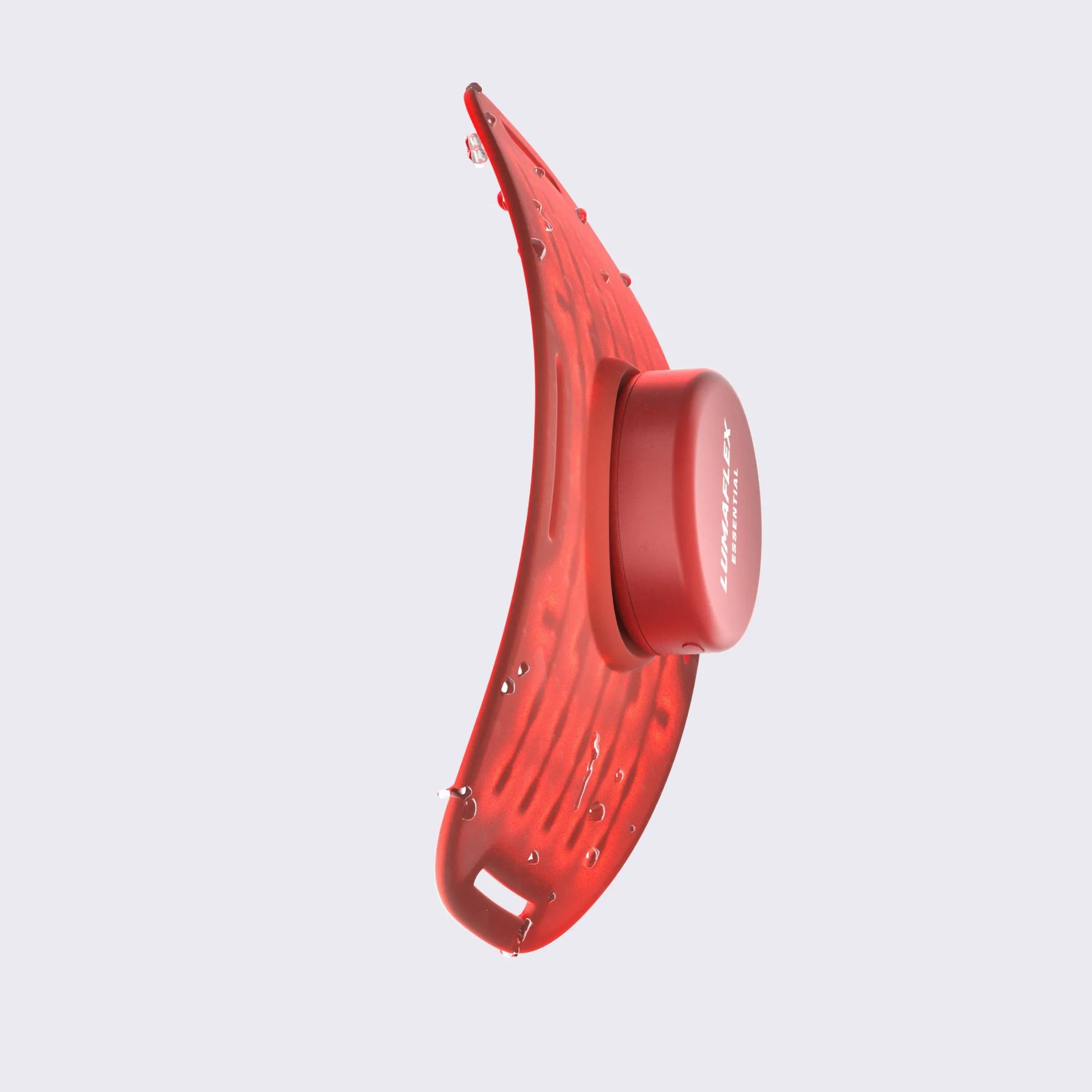
The Lumaflex Essential is designed for exactly this kind of targeted, daily-use application. It's flexible enough to wrap around the lateral knee and thigh, and lightweight enough to use post-run without it becoming another thing in your recovery routine.
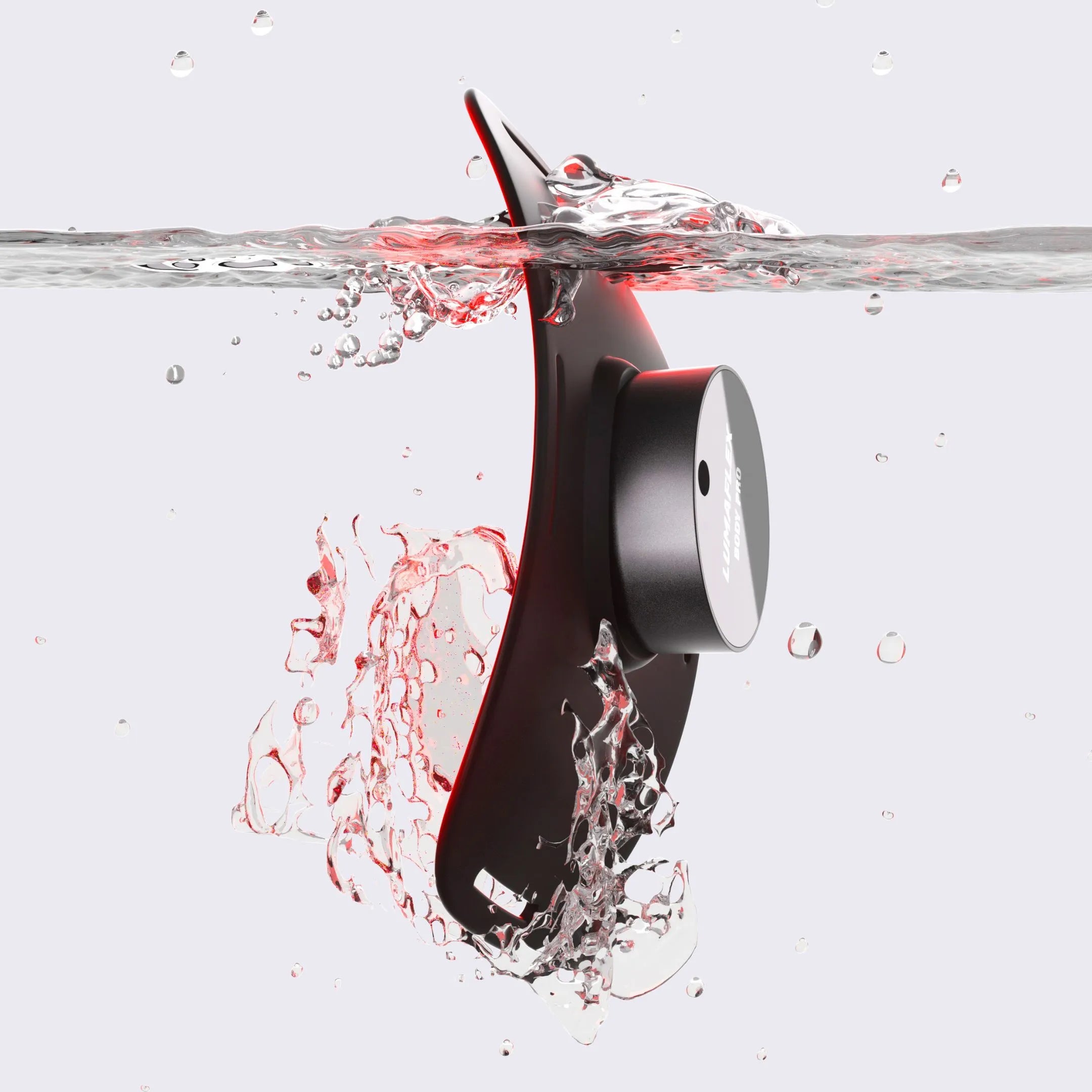
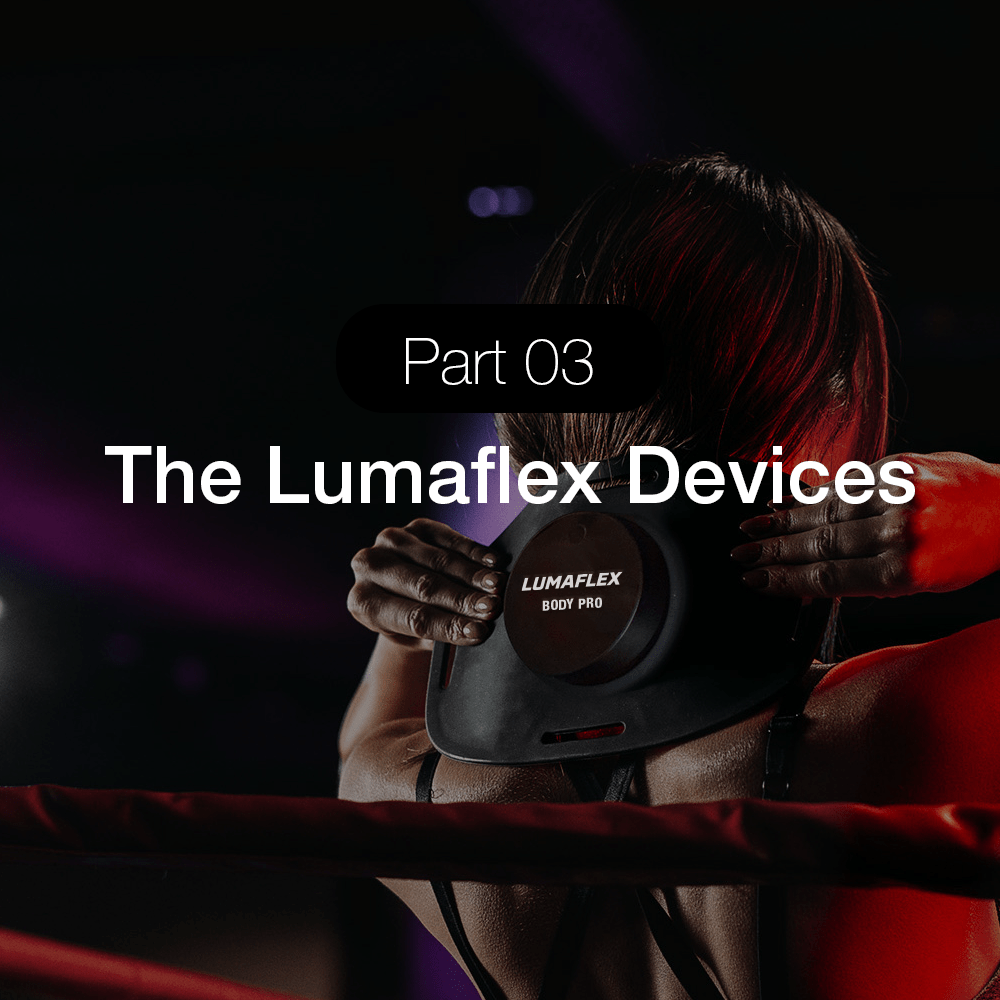
For athletes wanting broader coverage — treating the lateral knee, distal IT band, and hip in the same session — the Lumaflex Body Pro offers a larger treatment area. Not sure which fits your use case? The product comparison page breaks down the differences clearly.
IT Band Recovery: Runners vs. Cyclists

Runners: Lateral Knee Friction, Gait Correction, and RLT Timing
For runners, IT band syndrome tends to present with pain that builds predictably during a run — often appearing at the same distance each session. The injury is driven by the repeated flexion-extension cycle of the knee, with the IT band snapping over the lateral condyle most aggressively at around 30 degrees of knee flexion.
The RLT protocol for runners should prioritise post-run treatment on training days and include daily treatment during active flare-up periods. Because gait correction — increasing step rate, reducing hip drop — is often part of the fix, runners should expect a parallel rehab process. RLT supports recovery between runs; it doesn't replace the gait work.
One practical note: some runners find they can maintain reduced training volume during the treatment period without full rest. If you can run without pain through a modified session, RLT post-run can support recovery without enforcing a complete stop. That said, training through significant pain isn't recommended and your physiotherapist's guidance should take precedence.
Cyclists: Saddle Height, Cleat Alignment, and the RLT Window Between Sessions
Cyclists tend to experience IT band syndrome differently. Because the knee doesn't fully extend during the pedal stroke, the IT band doesn't snap over the condyle the same way it does in running. Instead, the problem in cyclists is often chronic compression and friction from a pedal stroke that repeatedly loads the lateral knee in the same position — thousands of times per ride.
Saddle height is the most common culprit. A saddle set too high increases lateral knee movement at the bottom of the stroke and loads the IT band unevenly. Cleat misalignment — particularly excessive heel-in position — can externally rotate the tibia and amplify lateral compartment stress.
For cyclists, the RLT window is well-suited to recovery between back-to-back ride days. Applied post-ride to the lateral knee and hip, it targets inflamed peritendinous tissue before the next training session adds more load. Cyclists doing two or more consecutive days of riding benefit most from consistent daily application.
A bike fit assessment that addresses saddle height and cleat position is essential alongside any recovery protocol. RLT manages the inflammatory environment; it doesn't correct a mechanical setup issue.
Can red light therapy help IT band syndrome
The evidence suggests it can support recovery as part of a broader rehab approach. Research on LLLT in exercise-activated tendon inflammation, including a 2006 randomized controlled trial that directly measured prostaglandin E₂ reduction in peritendinous tissue, demonstrates that specific wavelengths of infrared light can reduce the inflammatory mediators associated with overuse tendon injuries. IT band syndrome involves the same inflammatory pathway at the lateral knee. It's a promising tool, but it works best alongside hip strengthening and load management, not as a standalone treatment.
How long does it take to heal IT band syndrome?
IT band syndrome is notoriously slow to resolve; many athletes report timelines of 6–12 weeks for full recovery, depending on severity and how well the underlying biomechanical issues are addressed. Case series using RLT in runners suggest that consistent protocols of 3–5 sessions per week over 2–4 weeks can support faster resolution when combined with rehabilitation exercise. Without addressing the root cause, hip weakness, gait issues, and saddle fit recurrence are common regardless of what recovery tools you use.
What is the best treatment for IT band syndrome in runners?
There is no one-size-fits-all solution. However, an effective treatment should consider treating the inflammatory condition as well as its underlying causes. In this case, hip abductor strengthening exercises (especially glute medius strengthening), gait training, load management, and use of specific anti-inflammatory tools such as LLLT constitute the most effective treatment combination. Foam rolling of the lateral quadriceps and TFL will assist with muscle tightness that precedes the IT band but does not directly affect knee inflammation.
Does red light therapy reduce tendon inflammation?
Yes, this is the best-supported claim within the literature. According to the results of the Bjordal et al. (2006) study, the levels of PGE₂ decreased after low-level infrared laser therapy. Systematic reviews on low-level laser therapy for tendinopathy support the anti-inflammatory effect of the latter relative to placebo.
Where do you place red light therapy for IT band?
The primary placement is over the lateral femoral condyle, the outside of the knee, at the point where pain is most acute. Secondary placement along the distal IT band on the outer thigh and at the lateral hip over the tensor fascia latae completes the treatment area. A flexible device that can conform to the curve of the knee and thigh is most practical for this application.
Is red light therapy safe to use daily?
The power density and wavelength ranges that are applied in commercially available LLLT equipment are deemed safe when used daily, which is consistent with how the procedure was performed in research studies. When it comes to recovery from IT band syndrome, daily treatments are recommended for active episodes, with 3 to 5 treatments per week being sufficient for maintenance purposes.
Getting Back to Training
In spite of ITBS not being a career-threatening condition, the patient still needs to be patient and employ a multi-faceted strategy. Research into photobiomodulation provides athletes with an advantage that is not present in the conventional treatment method, which includes rest and ice packs, as it impacts inflammation.
You don't have to choose between training and recovering. Used consistently post-run, post-ride, and on recovery days, red light therapy gives your peritendinous tissue a measurable anti-inflammatory signal. Pair that with the hip work and load management that address why the IT band was overloaded in the first place, and you have a recovery stack that's grounded in actual physiology.
Disclaimer: The information presented in the article serves for informational purposes only and should not be considered as any kind of health advice. Red light therapy is an auxiliary recovery aid that can help to treat or cure IT band syndrome. Consult your personal physician for more information.
The Lumaflex Essential is built for this kind of targeted, daily-use application — flexible enough to wrap around your lateral knee or thigh, durable enough to be part of your daily training routine.
Recover between sessions, not instead of them. Explore the Lumaflex Essential.
References
Bjordal, J. M., Lopes-Martins, R. A. B., & Iversen, V. V. (2006). A randomised, placebo controlled trial of low level laser therapy for activated Achilles tendinitis with microdialysis measurement of peritendinous prostaglandin E2 concentrations. British Journal of Sports Medicine, 40(1), 76–80. https://doi.org/10.1136/bjsm.2005.020842
Abat, F., Alfredson, H., Cucchiarini, M., Madry, H., Marmotti, A., Mouton, C., Oliveira, J. M., Pereira, H., Peretti, G. M., Romero-Rodriguez, D., Spang, C., Stephen, J., van Dijk, C. N., & de Girolamo, L. (2017). Current trends in tendinopathy: Consensus of the ESSKA Basic Science Committee. Part II: Treatment options. Journal of Experimental Orthopaedics, 4(1), 38. https://doi.org/10.1186/s40634-017-0092-6
Andres, B. M., & Murrell, G. A. C. (2008). Treatment of tendinopathy: What works, what does not, and what is on the horizon. Clinical Orthopaedics and Related Research, 466(7), 1539–1554. https://doi.org/10.1007/s11999-008-0260-1
de Marchi, T., Schmitt, V. M., Sardinha Machado, C. J., Frigo, L., Rossetto, F. M., & Leal-Junior, E. C. P. (2017). Effect of low-level laser therapy (LLLT) on acute inflammation generated by eccentric exercise: A systematic review. Lasers in Medical Science, 32(6), 1289–1299. https://doi.org/10.1016/j.bjpt.2017.05.010
Leal-Junior, E. C. P., Vanin, A. A., Miranda, E. F., de Carvalho, P. D. T. C., Dal Corso, S., & Bjordal, J. M. (2015). Effect of phototherapy (low-level laser therapy and light-emitting diode therapy) on exercise performance and markers of exercise recovery: A systematic review with meta-analysis. Lasers in Medical Science, 30(2), 925–939. https://doi.org/10.1007/s10103-013-1465-4
Strauss, E. J., Kim, S., Calcei, J. G., & Park, D. (2011). Iliotibial band syndrome: Evaluation and management. Journal of the American Academy of Orthopaedic Surgeons, 19(12), 728–736. https://doi.org/10.5435/00124635-201112000-00003