Red Light Therapy for Loose Skin: Boost Elasticity Without Surgery

The short answer
Red Light Therapy for Loose Skin uses gentle red and near-infrared light to help your skin rebuild its support from within. Research shows it can stimulate collagen production, improve elasticity, and make skin feel firmer over time. While it does not tighten skin like surgery, consistent use with the right wavelengths and routine can lead to noticeable improvements in texture and overall skin quality, especially for mild to moderate sagging.
- 1. The short answer
- 2. What causes loose skin?
- 3. Skin structure: why the dermis is the target
- 4. What does research say about red light therapy and skin?
- 5. How red light therapy may help with loose skin
- 6. Practical protocol: how to use red light therapy for loose skin
- 7. How long before you see results?
- 8. Can red light therapy replace skin tightening procedures?
- 9. Who is likely to see the best results?
- 10. Frequently asked questions (FAQs)
- 11. Key Takeaways
- 12. References
What causes loose skin?
Loose skin results from various causes. The cause of loose skin determines the effectiveness of the interventions. The usual main causes of loose skin include:
Aging. The production of collagen and elastin decreases gradually from the mid-20s. The skin proteins that keep the skin firm gradually disappear. The skin's extracellular matrix (ECM) disorganizes. By the time visible laxity appears, the dermis has already been losing density for years.
Significant weight loss. With significant loss in body weight, there is a corresponding loss in the amount of subcutaneous fat. Nevertheless, the skin does not revert to its original form. This is because, when skin has been stretched over a larger area, it does not have enough elasticity., particularly in areas like the abdomen, inner arms, and thighs.
UV exposure. Chronic sun exposure degrades collagen fibers and impairs the skin's ability to repair them. Photoaging has been associated with a reduction in the number of functional fibroblasts.
Hormonal shifts. Estrogen is an important hormone with respect to skin thickness and collagen density. Decreasing estrogen levels, which occur with perimenopause and menopause, cause skin to thin and become crepey.

Loose skin vs. Crepey skin
Both terms are often used interchangeably, but loose skin refers to actual tissue laxity, whereas crepey skin is more of a texture. Crepey skin is skin that is thin and has small wrinkles, like crepe paper. It is often found on the inner arms, neck, and knees. The difference is important when discussing the possibility of any non-surgical technique. While both types of skin have decreased levels of collagen and elastin, crepey skin is more of an aesthetic texture, whereas loose skin is more of an actual volume issue.
Skin structure: why the dermis is the target
The structure of the skin is composed of three key layers. The epidermis is the outer layer of the skin, while the dermis is the next layer, which contains collagen and elastin fibers. These fibers are secreted by fibroblasts. This is the key layer that gives the skin structural integrity, hence the strength. Below the dermis is the hypodermis, which is composed of fat and connective tissue that provides volume and insulation.
When it comes to skin tightening and rejuvenation, the dermis is where the work happens. Fibroblasts are the key cell type.This is because the key cell type is the fibroblast. This cell type is responsible for the production of collagen types I and III, as well as elastin. This production is continuous when the cell type is healthy. This production is interrupted by aging, UV rays, or cell stress, causing the fibroblast cell type to slow down, hence reducing collagen production.
The extracellular matrix can be defined as the framework on which the cells of the skin are located. This is the framework that gives the skin structural integrity. Its disruption causes the skin to stretch or loosen. Any intervention aimed at tightening loose skin must target the dermis, hence the fibroblast cell type.
What does research say about red light therapy and skin?
Significantly more research on photobiomodulation has emerged in the last decade or so, and a portion of that research has focused on skin quality, elasticity, and dermal parameters.

Skin elasticity and collagen markers
A study carried out in Skin Research and Technology investigated the effects of photobiomodulation (PBM) on skin rejuvenation, with emphasis on elasticity and skin markers. Participants showed improvements in skin firmness indicators and overall skin quality following consistent light therapy. This study confirms the general mechanistic theory that the stimulation of fibroblasts by certain wavelengths of light increases skin elasticity by increasing collagen synthesis.
Mechanistic evidence: cellular repair and mitochondrial activation
Research published in Zoological Research in 2024 offers mechanistic evidence for the initiation of cellular repair processes following photobiomodulation. The research indicates the role of mitochondrial activation in the initiation of cellular repair. The mitochondrial activation occurs when the light energy absorbed by the cytochrome c oxidase in the mitochondria leads to the production of ATP. The increase in ATP production leads to fibroblast activity and the subsequent collagen synthesis response. This process offers an explanation for the gradual effects of photobiomodulation. The cellular mechanisms need consistent stimulation over time to produce the necessary effects.
Clinical skin improvements
A clinical skin study measured improvements in elasticity, texture, and density of skin tissue in subjects who utilized non-invasive PBM compared to baseline measurements. This supports the practical extension of the cellular evidence to show how specific wavelengths of light can actually make an impact on skin tissue if consistently and correctly applied.
What the evidence does and does not confirm
Research supports improvement in skin elasticity, texture, and collagen markers. It does not support the claim that red light therapy replicates the structural tightening achieved through surgery, radiofrequency, or high-intensity procedures. Most existing trials are also limited by relatively small sample sizes and shorter follow-up periods. What the evidence consistently shows is that PBM influences the biology of skin repair in ways that produce gradual, measurable improvements in skin quality, particularly when applied with appropriate wavelengths and sufficient consistency.
How red light therapy may help with loose skin
Collagen synthesis
PBM stimulates fibroblast activity, prompting increased production of Type I and III collagen. This is the primary structural mechanism behind skin firmness improvements.
Elastin support
Skin elasticity depends on elastin fiber integrity. PBM may help maintain or partially restore elastic fiber structure within the ECM.
ATP production
Cytochrome c oxidase absorbs red and NIR light, boosting mitochondrial ATP output. This energy surplus supports cellular repair and regeneration in dermal cells.
ECM remodeling
Improved organization of the extracellular matrix contributes to firmer skin appearance and improved dermal density over time.
Circulation
Enhanced local blood flow supports nutrient and oxygen delivery to skin tissue, creating conditions that favor collagen synthesis and repair.
Red vs. near-infrared: surface vs. deep skin effects
Not all wavelengths reach the same tissue depth. Understanding the difference between red and near-infrared light is essential for targeting the right layer of skin.
| Wavelength | Primary target | Best for |
| 630 to 660 nm (red) | Epidermis and upper dermis | Collagen stimulation, surface texture, skin tone |
| 810 to 850 nm (near-infrared) | Deeper dermis and subcutaneous tissue | Deeper ECM remodeling, circulation, tissue repair |
For skin tightening specifically, a layered wavelength approach that combines red and near-infrared light addresses both the upper and deeper dermal layers, giving a more complete cellular stimulus than either wavelength alone.
Practical protocol: how to use red light therapy for loose skin
Face vs. body application
Facial skin is thinner and has a higher density of fibroblasts relative to surface area. This means light penetration is effective at shorter exposures, and results in texture and elasticity may appear somewhat sooner than in body areas.
Body skin, particularly on the abdomen, inner arms, and thighs, is thicker and more metabolically demanding. These areas typically require longer, more consistent treatment to produce visible changes. Near-infrared wavelengths are especially valuable for body application, as they penetrate more deeply into the dermis and underlying tissue.
Regardless of area, clean, dry skin with no barriers such as heavy creams or oils is important for optimal light transmission.
Loose skin is not just about applying light to a general area. Results depend on targeting the right tissue depth, selecting the correct wavelength combination for each zone, and building a protocol structured around how collagen remodeling actually works biologically.
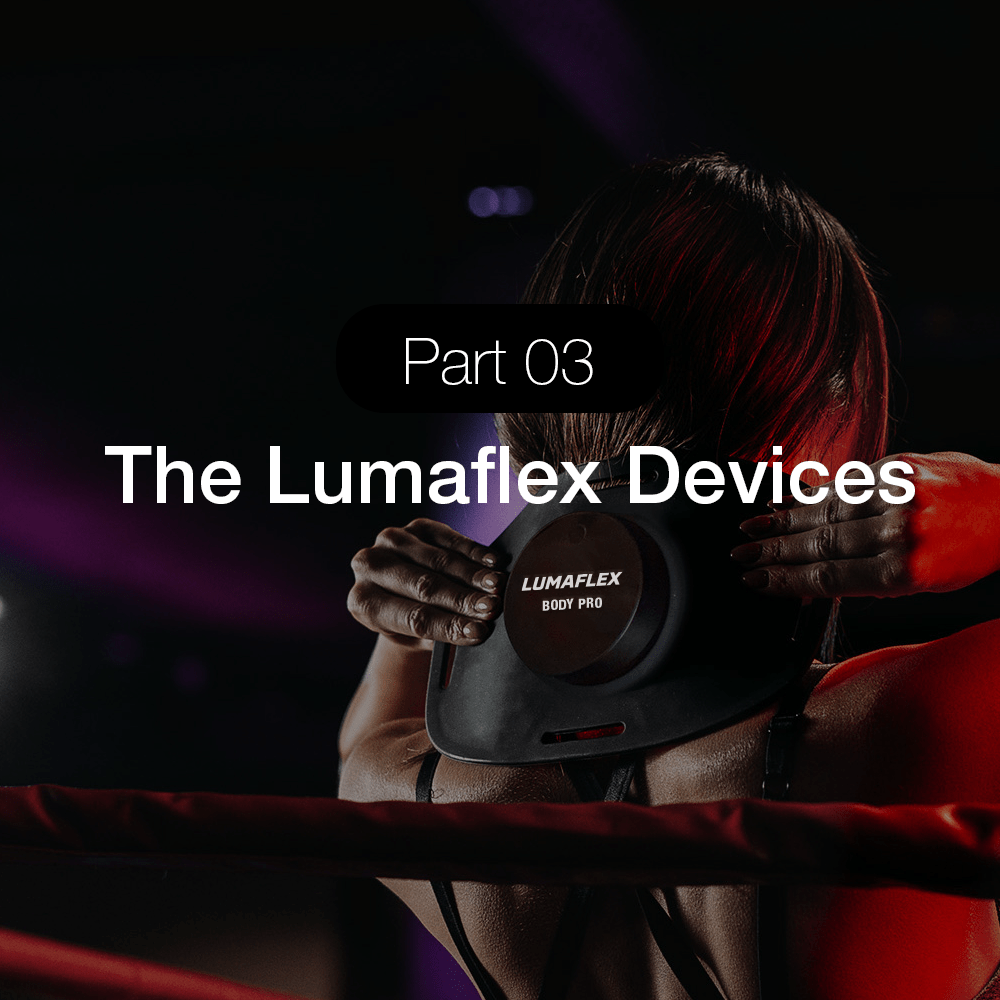
The Lumaflex Academy breaks this down at the treatment level: how to map facial zones for collagen stimulation, when to shift from red to near-infrared on body areas, and how to structure session frequency for the initial versus maintenance phase.
If you want measurable improvements in skin quality rather than guesswork, this is where the protocol lives.
Explore the Lumaflex AcademyHow long before you see results?
Skin surface appears smoother. Pore appearance and overall tone begin to improve.
Skin may feel firmer to the touch as collagen production begins to accumulate.
More visible improvements in skin density and firmness, particularly with consistent use.
Results depend heavily on three factors: age, the severity of the skin laxity at baseline, and consistency of application. Older skin with significant collagen depletion will require longer to respond than moderately aged skin with early-stage laxity. Post-weight-loss skin with significant structural stretching may show improvement in quality and tone but will not fully resolve through light therapy alone in severe cases.
Can red light therapy replace skin tightening procedures?
The direct answer is no, and positioning it otherwise would be misleading. Here is an honest comparison of where PBM sits relative to other common approaches:
Non-invasive, no downtime, gradual results. Works best for mild to moderate laxity. Supports collagen synthesis and ECM health over time.
Delivers heat energy to the dermis to stimulate collagen contraction. More immediate tightening effect, particularly for moderate laxity. Some downtime with certain devices.
Creates controlled micro-injuries that trigger a healing response and collagen production. More aggressive stimulus than PBM, with recovery time depending on depth.
Directly addresses structural excess. Appropriate for significant laxity that cannot be resolved through non-invasive methods. Significant recovery and cost.
The most suitable applications for red light therapy are as a non-invasive method for early-stage laxity, as a secondary maintenance method for a more aggressive procedure, or as a general method for skin health for those wanting to maintain collagen levels. PBM is now commonly used as a secondary method for those undergoing microneedling or RF treatments, as these methods together seem to have benefits for both healing and maintenance. However, it is not suitable as a replacement for procedures for those with more advanced laxity.
Who is likely to see the best results?
Red light therapy for loose skin is best used in certain situations. Those with mild or moderate laxity due to early aging or gradual weight changes will likely benefit the most. Those in their 30s or 40s who are experiencing the early onset of lax skin will likely benefit the most from red light therapy.
Those with lax skin resulting from weight loss will likely benefit from red light therapy in terms of skin quality, texture, and elasticity. However, the degree of laxity will affect the overall response. Those with mild or moderate laxity will likely benefit the most. Those with more severe laxity, such as that which occurs with significant weight loss after bariatric surgery, will not likely benefit significantly.
Red light therapy is also useful as a follow-up treatment after a clinical procedure. After RF or microneedling, red light therapy can be used to enhance the collagen-remodeling process in the skin.
Does red light therapy actually tighten loose skin?
Research shows that red light therapy may help increase the elasticity of the skin and promote the production of collagen. The former may help the skin become firmer in appearance and feel over time. However, this does not mean the skin has been structurally tightened like in surgery.
How long does it take to see results?
The skin may already show positive changes in texture and tone in as little as two to four weeks of continuous use. Noticeable improvements in elasticity and firmness may be seen in six to twelve weeks. The quality of the effects may be seen in the cumulative effects of the therapy. The more the user sticks to the therapy, the better the effects.
What wavelength is best for skin tightening?
The range of red light between 630-660 nm targets the upper dermis. It is associated with the stimulation of collagen. The range of near-infrared light between 810-850 nm targets the deeper dermis and the subcutaneous tissue. A device with the capability of delivering two wavelengths will cover the tissue depth required in the case of loose skin.
Can it help with loose skin after weight loss?
It may have some benefit for improving skin quality, texture, and elasticity for those experiencing mild to moderate looseness. Severe looseness resulting from weight loss and significant structural looseness will not be improved by non-invasive means. For those in the moderate range, PBM treatments will have a significant impact on improving density and firmness.
Is red light therapy better than microneedling or RF?
All have different mechanisms for achieving results and are better for different levels of laxity. Microneedling and RF have a more intense collagen stimulus and can achieve results for moderate to advanced laxity faster. Red light therapy is non-invasive and doesn’t require a recovery time. It can be used for maintenance or for mild laxity.
Can I use red light therapy on body areas like my stomach and arms?
Yes. Body areas can be treated with PBM. However, they may need longer and more consistent application compared to the face because the skin thickness and the body surface area to be treated are larger. Near-infrared light can be used for body application because it has deeper penetration.
Key Takeaways
- Research supports PBM's role in fibroblast stimulation, collagen production, and improved skin elasticity, but does not confirm surgical-level tightening.
- Results are gradual and cumulative, typically developing over six to twelve weeks of consistent use.
- Red light (630 to 660 nm) targets the upper dermis; near-infrared (810 to 850 nm) reaches deeper tissue layers.
- Best outcomes are seen in mild to moderate laxity, early aging, and as maintenance support after clinical procedures.
- Consistent protocol-driven use produces better results than occasional or inconsistent sessions.
- Red light therapy complements but does not replace higher-intensity procedures for advanced laxity.
This article is for informational purposes only and does not constitute medical advice. Results vary based on individual skin condition, severity of laxity, age, and consistency of use. Consult a qualified healthcare or aesthetic professional before beginning any treatment protocol.
References
Avci, P., Gupta, A., Sadasivam, M., Vecchio, D., Pam, Z., Pam, N., & Hamblin, M. R. (2013). Low-level laser (light) therapy (LLLT) in skin: Stimulating, healing, restoring. Seminars in Cutaneous Medicine and Surgery, 32(1), 41–52. https://pubmed.ncbi.nlm.nih.gov/24049929/
Barolet, D., & Boucher, A. (2010). Prophylactic low-level light therapy for the treatment of hypertrophic scars and keloids: A case series. Lasers in Surgery and Medicine, 42(6), 597–601. https://doi.org/10.1002/lsm.20952
Calderhead, R. G., & Vasily, D. B. (2016). Low Level Light Therapy with Light-Emitting Diodes for the Aging Face. Clinics in plastic surgery, 43(3), 541–550. https://doi.org/10.1016/j.cps.2016.03.011
Hamblin, M. R. (2017). Mechanisms and applications of the anti-inflammatory effects of photobiomodulation. AIMS Biophysics, 4(3), 337–361. https://doi.org/10.3934/biophy.2017.3.337
Liebert, A. D., Bicknell, B. T., & Adams, R. D. (2014). Protein conformational modulation by photons: a mechanism for laser treatment effects. Medical hypotheses, 82(3), 275–281. https://doi.org/10.1016/j.mehy.2013.12.009
Weiss, R. A., McDaniel, D. H., Geronemus, R. G., & Weiss, M. A. (2005). Clinical evaluation of non-ablative photorejuvenation using light therapy. Journal of Drugs in Dermatology, 4(6), 680–684. https://pubmed.ncbi.nlm.nih.gov/26155326