Red Light Therapy Frequency: What Each Hz Does to Your Body

Red Light Therapy Frequency. Walk into almost any conversation about red light therapy and you will hear about wavelengths. Red light at 630nm for the skin. Near-infrared at 850nm for the muscles. Wavelength gets all the attention, and fairly so because it determines how deep the light travels into your tissue.
But there is a second variable that most devices either ignore or bury in their specs: frequency, measured in Hz. This is not a minor technical detail. The frequency at which your device pulses its light is a biological signal. It tells your nervous system, your mitochondria, and your inflammatory pathways how to respond. Change the frequency and you change the outcome, even if the wavelength stays the same.
This guide covers what red light therapy frequency actually is, why specific Hz ranges produce specific effects in the body, and how to match your frequency settings to what you are actually trying to achieve.
Frequency is not just a setting on your device. It is a timing signal your cells respond to. The right Hz at the right wavelength is the difference between a session that works and one that just produces light.
- 1. Frequency vs. Wavelength: Two Different Variables, One Complete Therapy
- 2. Red Light Therapy Frequency Chart: Hz Ranges and What They Do
- 3. Specific Hz Frequencies and Their Uses
- 4. How Frequency Affects the Body: The Mechanisms
- 5. Wavelength and Frequency Pairing: How to Match Them
- 6. Application Protocols by Goal
- 7. Sample Protocols: Hz + Wavelength Combined
- 8. Applying Frequency-Specific Protocols with Lumaflex Devices
- 9. Start With What You Are Treating
Frequency vs. Wavelength: Two Different Variables, One Complete Therapy
Wavelength (nm): Penetration Depth
Wavelength determines how far light travels through your skin and into underlying tissue. Shorter wavelengths like 630nm and 660nm interact mainly with the surface layers of the skin, targeting collagen production, wound healing, and surface inflammation. Longer wavelengths like 810nm, 850nm, 904nm, and 1064nm travel deeper, reaching muscle tissue, nerves, joints, and even brain tissue through transcranial application.
Wavelength is fixed by the physical design of the LEDs in a device. You cannot change it on the fly.
Frequency (Hz): The Timing Signal
Frequency is different. Rather than determining where the light goes, frequency determines how the light is delivered. At 40 Hz, the light pulses 40 times per second. At 10 Hz, it pulses 10 times per second. Each pulse delivers a burst of photonic energy followed by a brief pause, creating a rhythmic signal that your cells and nervous system can detect and respond to.
This pulsed delivery has two documented advantages over continuous light exposure. First, it prevents the cellular adaptation effect where mitochondria become less responsive to a constant light source over repeated sessions. Second, different pulsing rhythms appear to entrain different biological processes, from metabolic activity in skin fibroblasts to neural oscillations in the brain.
How They Work Together
The way to think about it: wavelength gets the light to the right location in your body, and frequency determines what that light tells those cells to do once it arrives. A session at 850nm with 10 Hz will produce a different response than 850nm with 80 Hz, even though the light is penetrating to the same depth.
Understanding this relationship is what separates protocol-based therapy from simply turning a device on and hoping for results.

Red Light Therapy Frequency Chart: Hz Ranges and What They Do
The Lumaflex frequency system organizes the 1-100 Hz range into four functional bands, each tied to a distinct biological response profile.
| Frequency Range | Hz Values | Primary Effects | Best For |
| Reset & Restore | 1-5 Hz | Deep relaxation, sleep support, parasympathetic activation | Wind-down sessions, sleep prep, stress relief |
| Calm & Focus | 6-20 Hz | Nervous system balance, mood regulation, surface pain relief | Daily maintenance, skin healing, hair growth (10 Hz) |
| Repair & Recover | 21-50 Hz | Inflammation reduction, tissue repair, muscle relaxation, skin renewal (20-30 Hz) | Post-workout, injury recovery, skin brightening, joint support |
| Activate & Energize | 51-100 Hz | Deep tissue stimulation, neural activation, performance support | Pre-training, chronic pain (80-100 Hz), cognitive sessions (40 Hz) |

These bands are not arbitrary groupings. They reflect how the body's biological systems respond to rhythmic stimulation at different rates. The nervous system, the immune system, and the cellular energy system all have preferred operating frequencies that pulsed light can interact with.
Specific Hz Frequencies and Their Uses
Within each band, individual frequencies carry more specific associations. Here is what the research and clinical application literature points to for key Hz values.
1-5 Hz: Deep Relaxation and Sleep Preparation
At the lowest end of the range, pulsed light at 1-5 Hz corresponds roughly to the delta and theta brainwave frequencies associated with deep sleep and profound relaxation. Sessions in this range are typically used in the evening as part of a wind-down routine, or during high-stress periods when parasympathetic nervous system activation is a priority. The slow, repetitive pulse rate appears to reduce arousal and support the transition toward rest.
7-10 Hz: Nervous System Balance and Skin Healing
The 7-10 Hz window is one of the most studied in photobiomodulation research. At 10 Hz specifically, studies on near-infrared transcranial therapy have shown associations with improved mood, reduced anxiety, and enhanced focus. For skin applications, 10 Hz is commonly cited in protocols targeting wound healing, hair follicle stimulation, and early-stage inflammatory conditions. The alpha brainwave frequency of approximately 8-12 Hz overlaps with this range, which may partly explain the mood and cognitive associations.
20-30 Hz: Skin Renewal and Tissue Repair
This mid-range band sees more activity in the fibroblast and keratinocyte pathways that govern skin turnover and collagen production. The 20-30 Hz range is regularly used in skin-focused protocols pairing 630nm and 660nm wavelengths, where the goal is improved skin texture, brightness, and anti-aging effects. The pulsing rhythm at this frequency appears to enhance cellular signaling associated with repair without triggering the more stimulatory responses seen at higher Hz.
40 Hz: Cognitive Activation and the Gamma Frequency
40 Hz deserves its own discussion because the science behind it is unusually specific. Gamma brainwave oscillations at approximately 40 Hz are associated with high-level cognitive processing, memory consolidation, and neural synchrony. Research out of MIT and other institutions has explored 40 Hz light and sound stimulation as a tool for supporting brain health, particularly in the context of neurodegeneration and cognitive decline.
In red light therapy, 40 Hz pulsing combined with near-infrared wavelengths capable of transcranial penetration, most notably 810nm and 850nm, is increasingly used in protocols targeting cognitive performance, mental clarity, and neurological recovery. This is the frequency most commonly cited by practitioners using photobiomodulation for brain health applications.

50 Hz: Targeted Discomfort and Muscle Relaxation
The 40-70 Hz band broadly covers muscle-related applications, and 50 Hz sits in a useful middle position for targeted pain sessions. Some users and practitioners report that 50 Hz provides a balance between the neural stimulation of higher frequencies and the relaxation-dominant effects of lower bands, making it useful for localized discomfort like menstrual cramping or tension-related muscle pain.
80-100 Hz: Deep Tissue Recovery and Chronic Conditions
At the upper end of the range, 80-100 Hz is associated with deep tissue stimulation and is the preferred range for chronic pain management, post-surgical recovery, and intense athletic recovery. The high pulse rate drives more aggressive cellular activity, supports nerve sensitivity modulation, and is often paired with the deepest-penetrating wavelengths such as 904nm and 1064nm. Users dealing with joint conditions, chronic inflammation, or recovery from significant physical events typically start in this range.
How Frequency Affects the Body: The Mechanisms
Mitochondrial Response and ATP Production
The primary cellular target of red and near-infrared light is cytochrome c oxidase, the enzyme in the mitochondrial respiratory chain that absorbs photons and converts that energy into ATP. Pulsed light, rather than continuous light, appears to drive more efficient ATP production by allowing the enzyme to cycle through its absorption phases without becoming saturated. Different pulsing rates may favor different aspects of this cycle, which helps explain why frequency selection influences outcomes at the cellular energy level.
Nervous System Modulation
The nervous system is inherently rhythmic. Neurons fire in patterns, and the body's autonomic nervous system alternates between sympathetic and parasympathetic dominance based on internal and external signals. Low-frequency pulsed light, particularly in the 1-10 Hz range, appears to nudge the autonomic balance toward parasympathetic activity, producing measurable effects on heart rate variability, cortisol regulation, and perceived stress. Higher frequencies have the opposite lean, supporting alert, active states.
Inflammation Signaling
Inflammation is not simply on or off. The inflammatory cascade involves multiple phases, signaling molecules, and cellular actors. Different frequency bands appear to interact with different stages of this process. The 21-50 Hz repair and recovery band has the strongest association with pro-resolution inflammatory signaling, the phase where the body actively clears inflammatory byproducts and begins tissue reconstruction. The 80-100 Hz band, meanwhile, is more associated with pain signal modulation through effects on nociceptive nerve endings.
Neural Entrainment
Neural entrainment refers to the tendency of the brain's electrical activity to synchronize with external rhythmic stimuli. The 40 Hz gamma frequency is the most studied in this context, but entrainment effects have been observed across the spectrum. When a device pulses light at a frequency that corresponds to a biologically relevant brainwave band, the brain can begin to match that rhythm, producing changes in cognitive state, arousal, and emotional tone. This mechanism is part of why frequency selection matters so much for applications targeting brain health, sleep, and mood.
Wavelength and Frequency Pairing: How to Match Them
Frequency selection does not happen in isolation. The most effective sessions pair a frequency range with a wavelength that can physically reach the tissue you want to affect. Here is a practical pairing reference:
| Wavelength | Penetration Depth | Primary Target | Pair With |
| 630 nm | Superficial (~1-2mm) | Skin surface, collagen, wound healing | 10-30 Hz (Calm & Repair) |
| 660 nm | Shallow (~3-5mm) | Enhanced circulation, anti-aging, acne | 10-30 Hz (Calm & Repair) |
| 810 nm | Mid-depth (~20-30mm) | Muscle tissue, brain (transcranial) | 40 Hz (neural), 21-50 Hz (recovery) |
| 850 nm | Mid-deep (~30-40mm) | Deep muscle, nerve tissue, cellular energy | 40-70 Hz (Activate) |
| 904 nm | Deep (~50-60mm) | Joints, ligaments, bone-adjacent tissue | 80-100 Hz (Deep Repair) |
| 1064 nm | Very deep (60mm+) | Deep nerves, chronic joint pain | 80-100 Hz (Deep Repair) |
The key principle: there is no benefit to running a deep-tissue frequency like 80-100 Hz through a 630nm wavelength, because 630nm does not reach the deep tissue where that frequency would be relevant. Pairing logic matters as much as the individual settings.
Application Protocols by Goal
Brain Health (10 Hz, 40 Hz, and the Cognitive Stack)
The two anchor frequencies for brain-focused sessions are 10 Hz and 40 Hz, both paired with near-infrared wavelengths that can penetrate the skull. 10 Hz supports mood regulation, reduces anxiety, and is used in recovery-phase protocols. 40 Hz targets the gamma oscillation associated with cognitive function and is the primary frequency in emerging neurological applications. Some practitioners layer both in a single session, beginning with 40 Hz for activation and ending with 10 Hz for recovery.
Skin Health (10-30 Hz Range)
Skin-focused sessions rely primarily on the 10-30 Hz range paired with 630nm and 660nm wavelengths. For anti-aging and collagen support, 20-30 Hz is the standard starting point. For wound healing, active breakouts, or hair follicle stimulation, 10 Hz is more commonly used. Sessions target surface tissue and do not require the higher-frequency stimulation needed for deeper structures.
Pain Management (Low and High Frequency Strategy)
Pain management uses both ends of the frequency spectrum, but for different purposes. The 6-20 Hz range addresses surface and nerve-adjacent discomfort through nervous system calming and local blood flow improvement. The 80-100 Hz range targets deeper pain signals, chronic conditions, and post-injury recovery by modulating nociceptive sensitivity and driving cellular repair in affected tissue.
The choice between low and high frequency depends on the nature and depth of the pain. Chronic deep joint pain responds better to 80-100 Hz with 904nm or 1064nm wavelengths. Tension headaches or surface-level nerve irritation tend to respond better to the lower ranges.
Hair and Scalp Health (10 Hz + Recovery Ranges)
Hair growth protocols consistently point to 10 Hz as the primary frequency for scalp applications, combined with 630nm red light. The mechanism involves improved microcirculation in the scalp and stimulation of follicle-adjacent cells in the anagen (growth) phase. Recovery-range sessions at 20-30 Hz are sometimes used alongside, targeting the broader scalp tissue health that supports follicle function.
Sample Protocols: Hz + Wavelength Combined
The following protocols are starting points. Individual response varies and sessions should be adjusted based on tolerance and observed results over two to four weeks of consistent use.
| Protocol | Hz Setting | Wavelength(s) | Goal | Duration |
| Post-Workout Recovery | 40-70 Hz | 850 nm + 810 nm | Muscle repair, inflammation reduction | 10 min |
| Skin Renewal | 10-30 Hz | 630 nm + 660 nm | Collagen support, brightness, anti-aging | 10 min |
| Deep Pain Relief | 80-100 Hz | 904 nm + 1064 nm | Chronic pain, joint support | 10 min |
| Sleep & Wind-Down | 1-5 Hz | 850 nm | Relaxation, nervous system reset | 10 min |
| Cognitive & Focus | 40 Hz | 810 nm | Neural activation, brain health | 10 min |
These protocols are designed as educational starting points, not medical prescriptions. Begin with the recommended settings, monitor your response over several sessions, and adjust frequency within the relevant band based on how your body responds.
Applying Frequency-Specific Protocols with Lumaflex Devices
Most red light therapy devices on the market offer a fixed frequency or a small number of presets. The challenge with presets is that they do not account for the specificity that makes frequency selection meaningful. A single "recovery" mode cannot adequately serve both a 30-year-old athlete post-workout and a 60-year-old managing chronic knee pain, because those two scenarios call for different frequency ranges, durations, and wavelength pairings.
App-Based Hz Calibration
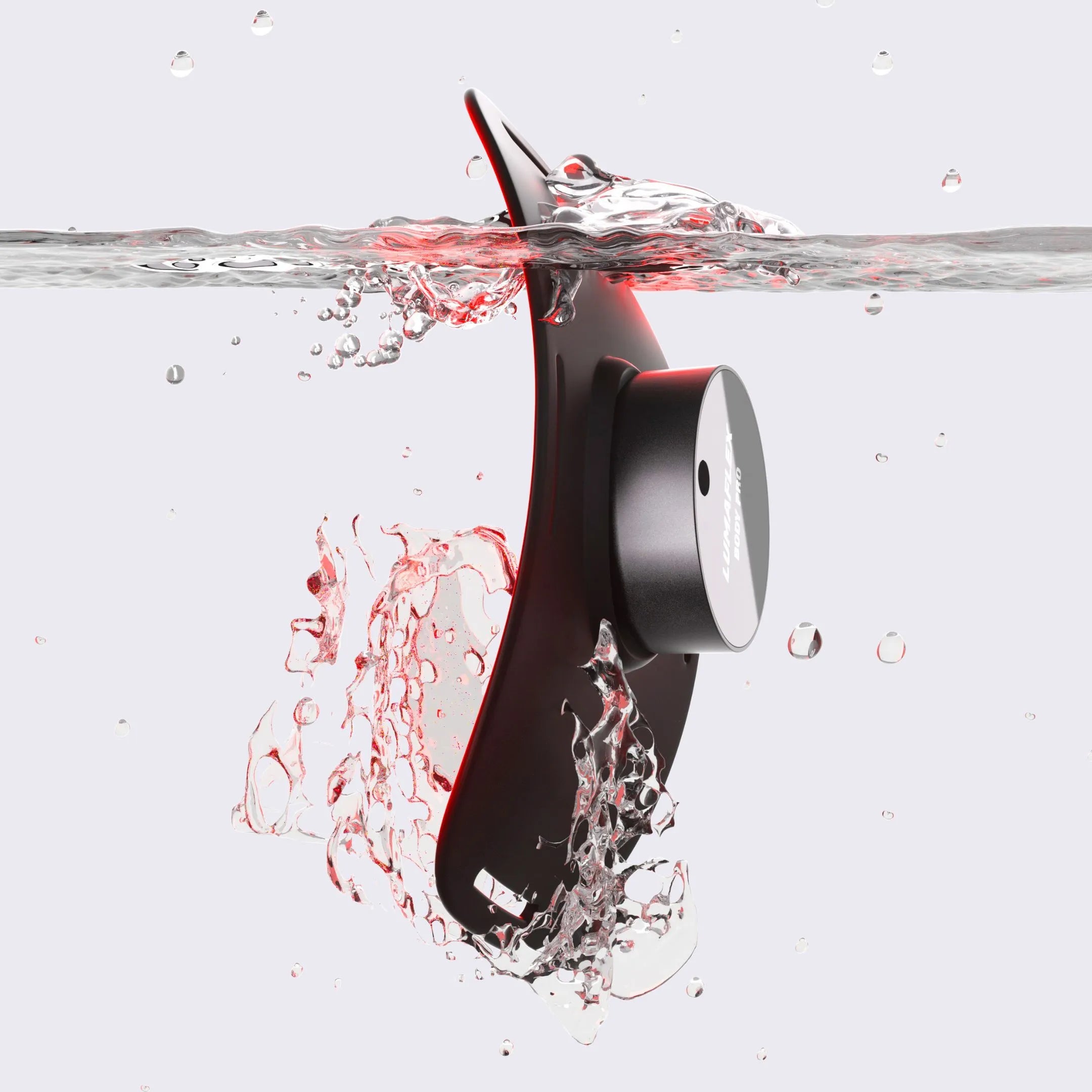
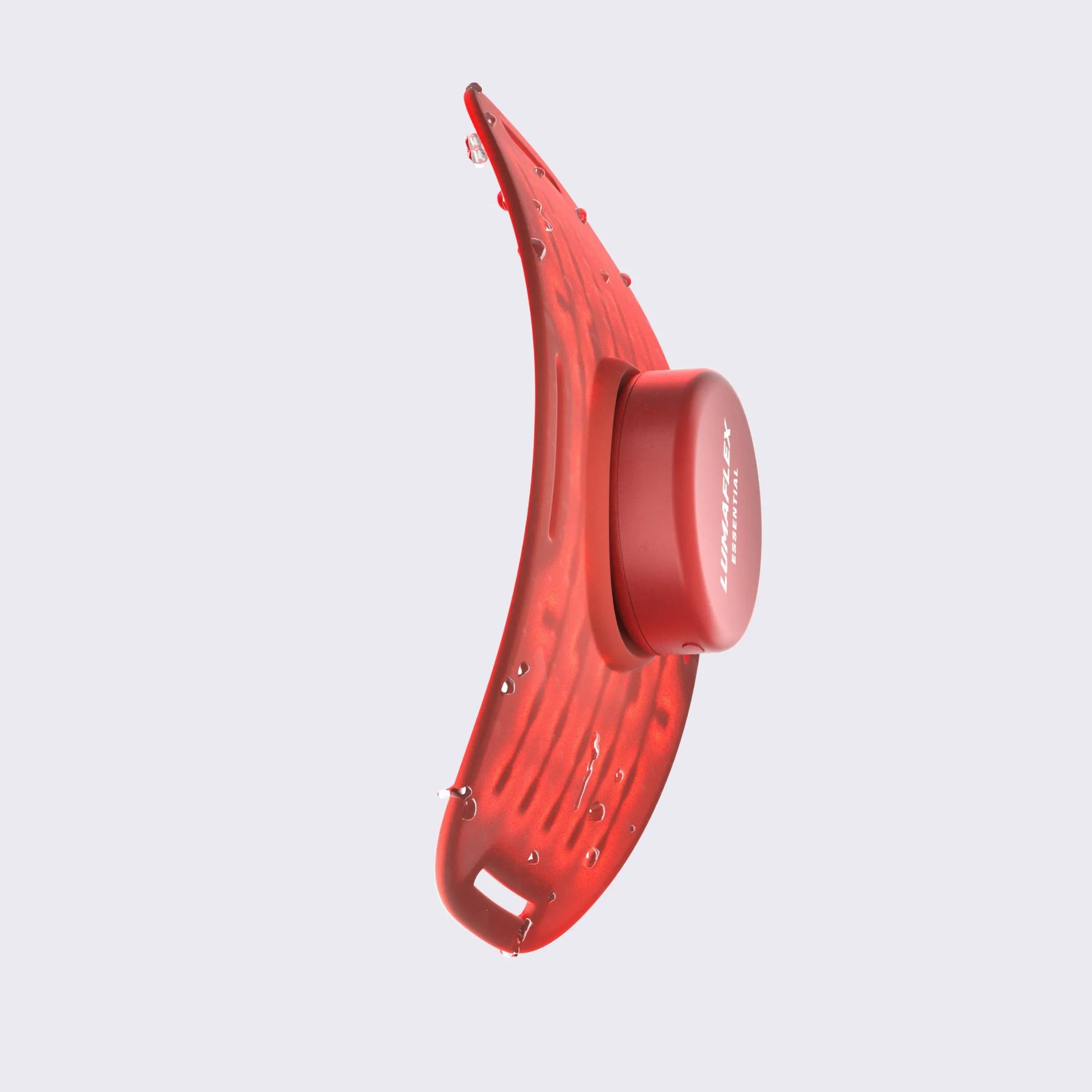
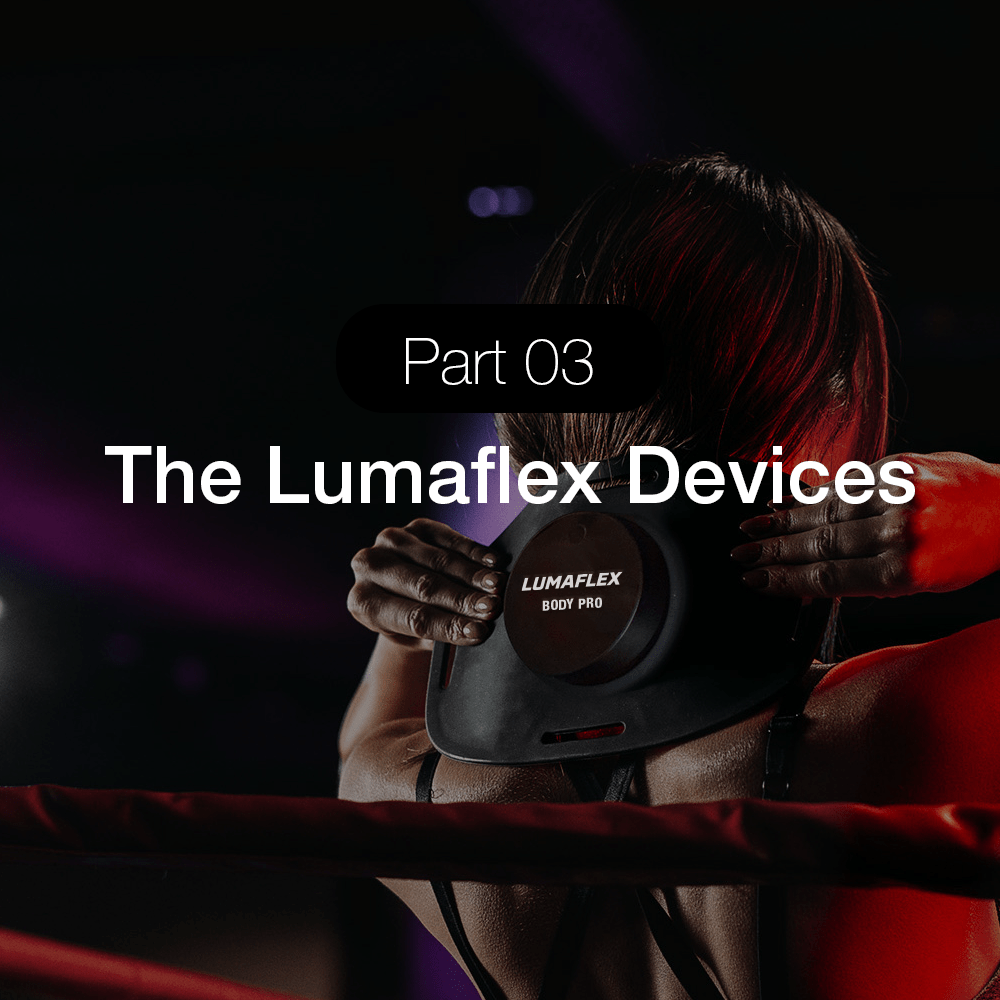
The Lumaflex Body Pro and Lumaflex Essential Pro both connect via Bluetooth to the Lumaflex app, which allows users to set a precise Hz value anywhere in the 1-100 Hz range. Rather than selecting from a handful of presets, users can dial in exactly the frequency that corresponds to their current goal, whether that is 10 Hz for a skin and scalp session, 40 Hz for a cognitive focus session, or 80 Hz for deep recovery work.
This matters in practice because the difference between 30 Hz and 40 Hz is not trivial when one targets skin repair and the other targets gamma neural activation. Coarse preset systems that lump those together produce less precise outcomes.
Quick-Start Modes and Custom Settings
For users who prefer guided protocols, the Lumaflex app also includes Quick Start Modes optimized for specific goals, including pain relief, muscle recovery, and skin rejuvenation. Each mode applies a predetermined frequency setting matched to its intended application. Users who want to go deeper can override any preset and set their own Hz value, giving both entry-level users and more experienced practitioners access to the same device.
The Essential Pro: Full-Spectrum Wavelength Coverage
The Essential Pro extends this approach with six therapeutic wavelengths (630nm, 660nm, 810nm, 850nm, 904nm, and 1064nm), covering the full penetration depth range from superficial skin to deep joints and nerves. Paired with app-controlled frequency settings, this makes it possible to construct sessions that address multiple tissue depths within a single 10-minute treatment, or to target very specific depths with precision wavelength and frequency pairing.
For users building a serious protocol practice, the Lumaflex Academy provides structured courses covering the science behind photobiomodulation, wavelength behavior, and how to incorporate frequency-based protocols into consistent routines.
Start With What You Are Treating
Frequency selection does not need to be complicated. The simplest approach is to identify the primary outcome you want from a session and look up the frequency band that corresponds to it.
• Recovery after physical activity: 40-70 Hz with 850nm
• Sleep and stress: 1-5 Hz with 850nm
• Skin and scalp: 10-30 Hz with 630nm or 660nm
• Deep pain or chronic conditions: 80-100 Hz with 904nm or 1064nm
• Cognitive support: 40 Hz with 810nm
From there, track your sessions and refine the settings over time. Photobiomodulation responds to consistency more than intensity, and precise frequency selection compounds that consistency into more predictable outcomes.
For a full breakdown of how to use the Lumaflex app to program these exact frequency settings on your device, visit the Lumaflex App Frequency guide.