How to Use Red Light Therapy for Bruises: Step-by-Step Protocol (2026)
Yes, red light therapy for bruises helps heal it faster. It works by stimulating ATP production in your cells, improving circulation to clear pooled blood, and reducing inflammation. Start within 24 hours of injury (once bleeding has stopped), use 10–20 minutes per session once or twice daily, and position the device directly over the bruised area. Most surface bruises respond visibly within 5–10 days of consistent treatment.
Table of content
What Happens When You Bruise

A bruise forms when blunt trauma ruptures small blood vessels beneath the skin. Blood leaks into surrounding tissue, causing discoloration, swelling, and tenderness. No skin surface is broken — the blood is trapped underneath, and your body has to break it down and clear it on its own.
That clearing process is what takes time. Without intervention, the average bruise takes 10–14 days to fully fade. Red light therapy speeds up the process by working directly with your body's cellular repair systems — not masking the bruise, but accelerating the biology that resolves it.
There are three mechanisms at work:
ATP stimulation. Red and near-infrared light is absorbed by mitochondria in your cells, triggering a significant increase in ATP (adenosine triphosphate) production. ATP is cellular energy — more of it means faster repair across every stage of healing.
Improved circulation and lymphatic drainage. RLT increases nitric oxide in treated tissue, dilating blood vessels and improving microcirculation. This helps move pooled blood away from the bruise faster. The lymphatic system, which clears cellular debris, is also stimulated — accelerating removal of damaged red blood cells.
Reduced inflammation. Red light modulates the inflammatory response, helping the tissue shift from acute inflammation toward active recovery more quickly. Less prolonged inflammation means less swelling, less tenderness, and faster visible fading.
What Causes Bruises?
A bruise, or contusion, is the bursting open of small blood vessels next to the skin surface by some form of impact or trauma. The color changes because of blood leakage into surrounding tissues. The following factors contribute to one being prone to bruising:
Trauma or Injury: Trauma or injury from an object is the most frequent cause of bruises.
Medical Conditions: For instance, if your blood doesn't clot or other blood disorders increase the bruising tendency.
Medications: Blood thinner drugs increase the tendency to bruise.
Age: As we age, skin thins, and the blood vessels weaken, increasing the chances of bruising.
How Long Does It Take for a Bruise to Heal?
Stage 1 (Days 1-2): The bruised area is red because fresh blood gathers under the skin.
Stage 2 (Day 3-5): When hemoglobin in the blood breaks down, a bruise can change color to blue, purple, or dark purple depending on how deep the injury is.
Stage 3 (Day 6—Day 10): The color is changing because of the body breaking up its hemoglobin, which is changing from green.
Stage 4 (Day 11 - Day 14): The bruise appears yellow or brown while healing. People with health problems in how their blood clots usually take longer.
How Does Red Light Therapy for Bruises Work in Healing?

Inhibition of ATP Production: ATP stands for Adenosine triphosphate which is like a power supply for the cells. It gives the cells the zest to heal themselves, therefore healing faster.
Increase blood circulation: RLT, with better oxygen and nutrient content, increases the regeneration of tissues.
Reduces Inflammation: Red light decreases the severity of inflammation and swelling, leading to pain because of a bruise.
Encourages Collagen Productions: Collagen is crucial to skin repair. The treatment enhances collagen production, restoring health more quickly and rapidly at damaged sites.
Benefits of Red Light Therapy for Bruises
Speeds up Recovery: It reduces the time required to heal a bruise. Red light increases cellular repair and shortens the time for recovery.
Non-Invasive and Pain-Free: Compared to other treatments, red light therapy is non-invasive. RLT doesn't require downtime for minor or severe injuries.
Safe and Natural: Since it uses natural light waves, the treatment is safe and side effect-free, with few allergic reactions.
Easy Application: The therapy helps lighten bruises. Its countless benefits, including healthy skin, faded scars, and pain relief, make it worthy of use in countless treatments.
Combination Friendly: Topicals or other therapies like massage enhance results when combined with RLT.

Before You Start: Timing Matters
The best time to start is within 24 hours of injury — but only once active bleeding has stopped.
Do not apply red light therapy while the area is still actively bleeding. Increased circulation at that stage can worsen blood leakage under the skin. Wait until the bruise has stabilized, which is typically within a few hours of impact.
If you missed the early window, don't stop — RLT remains effective at every stage of bruise healing. Begin as soon as you can and maintain daily sessions until the bruise fades.
Steps to Use Red Light Therapy for Bruise Recovery
Step 1: Clean and Prepare the Skin
1. Cleansing the skin: Wash the bruised area with mild soap and warm water to remove any oils, sweat, or topical products.
2. Gently pat dry: Pat the skin dry with a soft towel after cleaning. Avoid rubbing, as it can make it worse.
3. No lotions or creams: Do not apply arnica gel, aloe vera, vitamin K cream, or any other topical before the session. Some compounds interfere with light absorption. Apply them after the session instead.
Step 2: Choose the Right Wavelength for Your Bruise
Not all bruises are the same depth, and wavelength determines how far the light penetrates.
630–660 nm (red light) targets surface tissue. Use this for skin-level discoloration, facial bruising, post-injection or post-filler bruising, and small contusions.
810–850 nm (near-infrared) penetrates deeper into muscle and joint tissue. Use this for deep bruises, hematomas, bruising near joints, and post-surgical bruising.
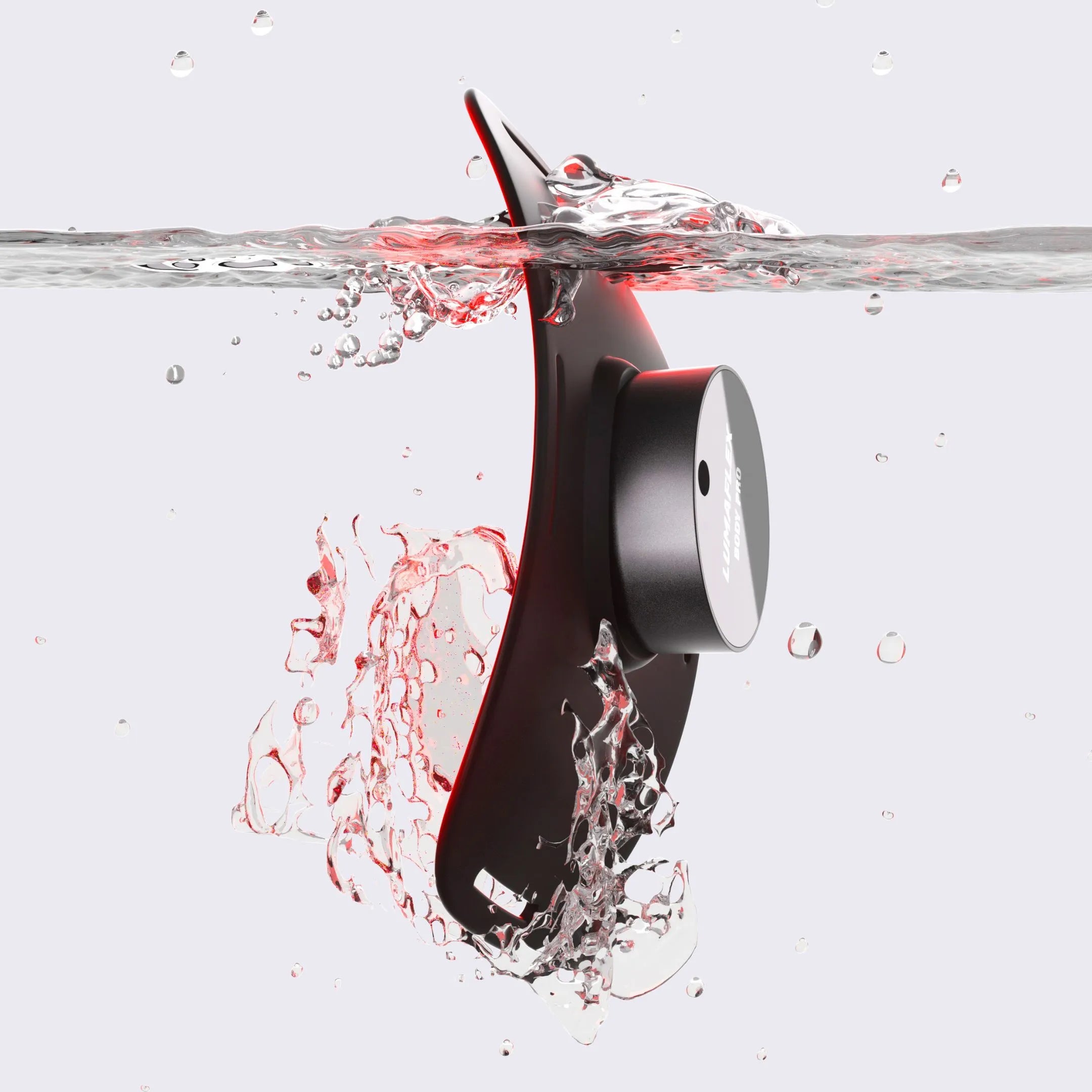
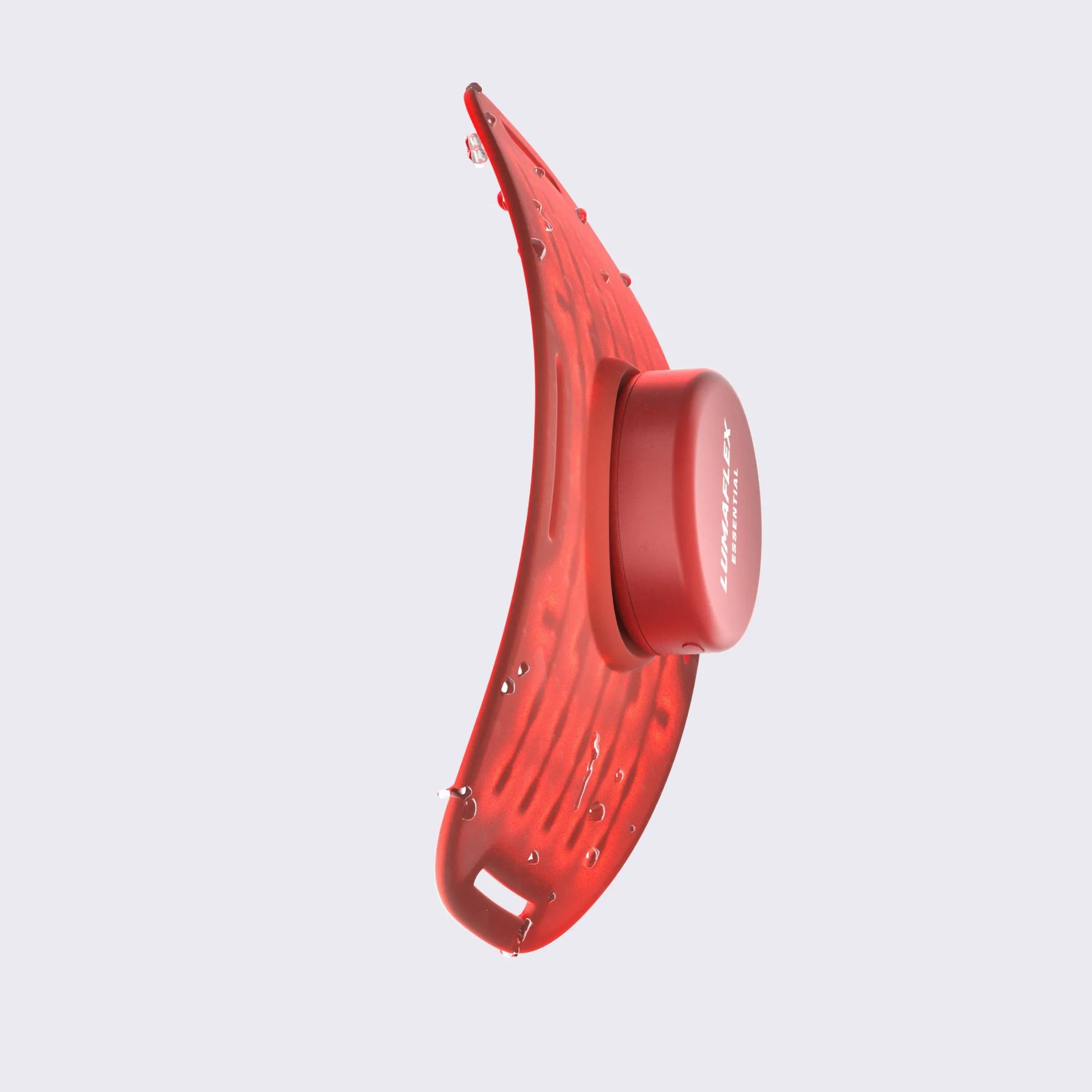
Combined red + NIR gives you full coverage across both depths. Lumaflex devices deliver both wavelengths simultaneously, which is why they work across such a wide range of bruise types and locations.
If you are unsure which applies to your bruise, use a device with both wavelengths and let the tissue absorb what it needs.
Step 3: Position the Device
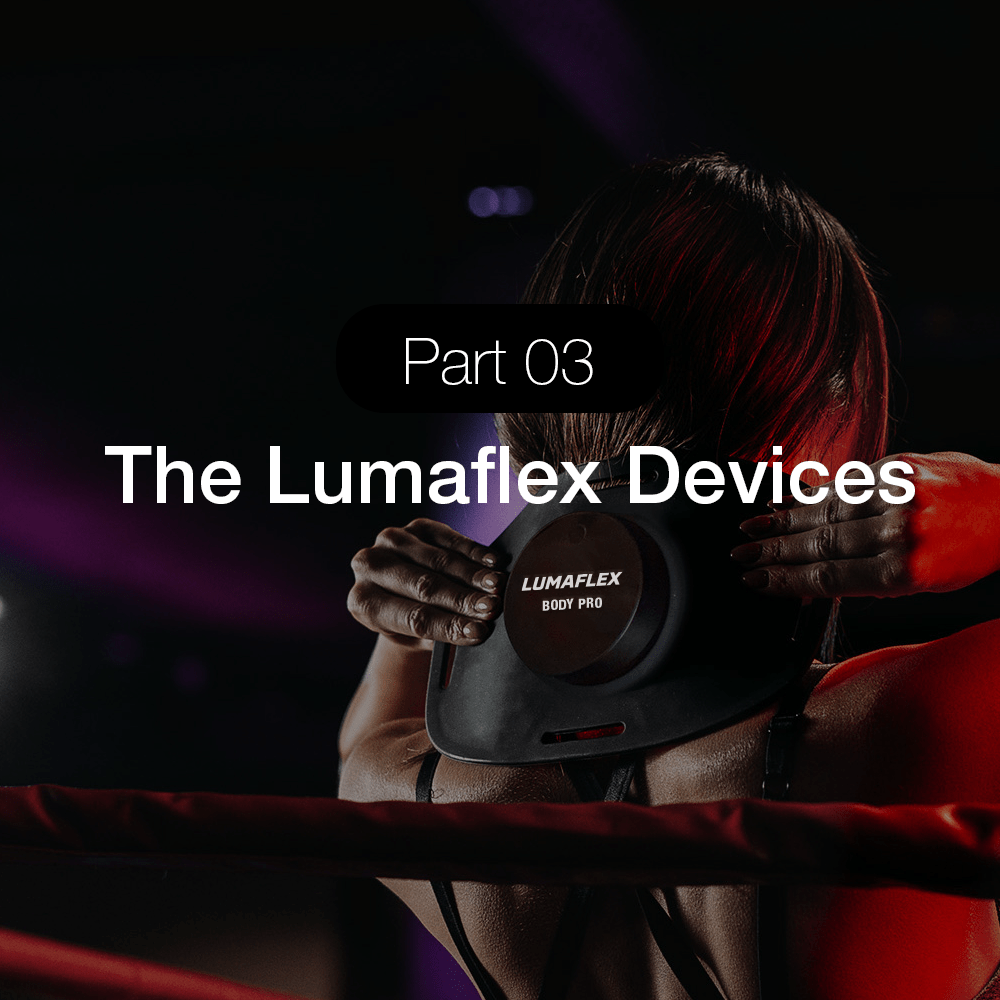
Place the device directly over the bruised area. For flexible wrap devices like Lumaflex, wear it in contact with the skin. For panel-style devices, position 0–4 inches from the surface depending on device intensity.
Make sure the light covers the full bruised area, including a 1–2 cm margin around the visible bruise edge. For joint bruises — knee, elbow, ankle — sit or lie in a position that fully exposes the area and keeps it stable for the full session.
For facial bruising, maintain 2–4 inches of distance from the skin and keep the device below eye level. Never direct light toward open eyes.
Step 4: Put On Eye Protection
Always wear the protective goggles included with your device. If treating areas near the face, keep your eyes firmly closed. Red and near-infrared light will not burn skin, but direct prolonged exposure to the eyes is not recommended.
Step 5: Run the Session
Duration: 10–20 minutes per area. Start at 10 minutes for your first few sessions, then extend to 20 as you confirm your skin is responding well.
Frequency: Once or twice daily during the first week. Once daily from week two onward until the bruise has fully resolved.
Do not assume longer sessions produce better results — overexposure does not increase benefit and may cause mild skin irritation. Consistency across days matters far more than session length.
Step 6: Apply Topicals and Post-Session Care
Once the session is complete, this is the ideal time for any topicals you are using:
- Arnica gel or cream — the most widely studied topical for bruise discoloration and swelling. Apply and allow it to absorb.
- Vitamin K cream — supports coagulation and helps reduce residual pigmentation, especially effective in the later stages when the bruise is turning yellow-green.
- Aloe vera gel — anti-inflammatory and soothing; a good option if the treated skin feels warm or sensitive.
After applying your topical, drink a full glass of water. Cellular repair is resource-intensive and adequate hydration supports the process. If the bruised area is on a limb, elevating it after the session can further reduce swelling.

Step 7: Repeat Daily Until the Bruise Resolves
This is the most important step. A single session produces some benefit, but the compounding effect of daily treatment is where the real acceleration happens. Do not stop after the bruise looks better — residual pooled blood and pigmentation remain even when the surface appearance improves.
Continue daily sessions until the area has fully returned to normal skin tone. For most surface bruises this takes 5–10 days. For deeper bruises and hematomas, allow 2–4 weeks.
A Note on Deep Bruises and Hematomas
A hematoma is a larger, more significant collection of blood that pools and sometimes clots in a defined space beneath the skin. Hematomas are common after surgery, heavy-impact sports injuries, and severe trauma. They can take weeks to resolve without intervention.
For hematomas, prioritize near-infrared wavelengths (810–850 nm). The deeper penetration is necessary to reach the pooled blood and stimulate the vascular and lymphatic activity needed to break down clotted material. Use 15–20 minute sessions and maintain daily consistency for 2–4 weeks. For large or painful hematomas, confirm with a healthcare provider before beginning home treatment.
What Not to Do
Do not use red light therapy if:
- The skin is broken, open, or infected at the treatment site
- The bruise is still actively bleeding
- You are taking photosensitizing medications — certain antibiotics, diuretics, and retinoids increase light sensitivity; check with your prescriber
- You are pregnant — insufficient safety data exists for RLT during pregnancy; consult your provider
- You suspect an underlying fracture — RLT does not replace imaging or orthopedic evaluation
Avoid applying heat (heating pads, hot baths, hot compresses) in the first 48 hours after injury. Heat increases blood flow and can worsen swelling at the acute stage. Red light therapy does not generate tissue heat and is safe from day one.
Frequently Asked Questions
Does red light therapy actually help bruises heal faster?
Yes. Red light therapy stimulates ATP production in cells, improves circulation to clear pooled blood, and reduces inflammation — the three main drivers of bruise resolution. Most surface bruises respond visibly within 5–10 days of consistent daily treatment.
When should I start red light therapy on a bruise?
Within 24 hours of injury, once active bleeding has stopped. Do not apply while the area is still actively bleeding — increased circulation at that stage can worsen leakage under the skin.
How long should each session be?
10–20 minutes per area, once or twice daily. Start at 10 minutes and extend to 20 once you confirm your skin is responding well. Consistency across days matters more than session length.
What wavelength is best for bruising?
630–660 nm (red) for surface bruises and discoloration. 810–850 nm (near-infrared) for deep bruises, hematomas, and joint bruises. A device that combines both wavelengths provides the broadest coverage.
Can I use red light therapy on facial bruises or post-filler bruising?
Yes. Keep the device 2–4 inches from the face, wear eye protection, and start at 10-minute sessions. RLT is commonly used to reduce bruising after cosmetic injections.
Is red light therapy safe for bruises?
Yes, when used correctly. Avoid use on broken or open skin, actively bleeding tissue, and around unprotected eyes. Consult a healthcare provider if you take photosensitizing medications or have a clotting disorder.
Conclusion: Red Light Therapy for Bruises
Red light therapy works on bruises because it addresses the root biology — not just the surface appearance. ATP stimulation, improved circulation, and reduced inflammation combine to move each stage of the healing process faster than the body manages on its own.
The protocol is straightforward: clean skin, right wavelength, 10–20 minutes, once or twice daily, starting as early as possible. The results compound with consistency.
For a wearable device that delivers both red and near-infrared wavelengths in a flexible format you can wear directly over the bruise, see the Lumaflex Essential Pro and the Body Pro Kit. Both are FDA 510(k) cleared and HSA/FSA eligible.