Red Light Therapy for Athletes: Inside the Fort Lauderdale Lions' 2026 Grid League Season

The Fort Lauderdale Lions Beat Tampa Bay Brigade 23–16. Here's What the Recovery Stack Behind That Result Actually Looks Like
Red Light Therapy for Athletes: The Miami International Fitness Expo floor is not a quiet place to compete. Thousands of attendees, vendor noise, the ambient energy of an industry that never stops moving. And right in the middle of it, the Fort Lauderdale Lions and Tampa Bay Brigade were running Grid League races.
The Lions won. Final score: 23–16.
That margin matters, because Tampa Bay is not a soft opponent. The Brigade took the very first United Grid League championship in 2017, and they've been a measuring stick for every South Division team since. Beating them by seven points, in a format that's decided race by race across eleven events, is a result built over months of preparation. Not just one good afternoon.
So what does that preparation actually look like?
- 1. The Fort Lauderdale Lions Beat Tampa Bay Brigade 23–16. Here's What the Recovery Stack Behind That Result Actually Looks Like
- 2. What Grid League Competition Physically Demands
- 3. A Rebuilt Team, A Real Win
- 4. What Recovery Looks Like Behind the Scenes
- 5. What Red Light Therapy Does and Why It Works for This
- 6. What the Research Actually Says
- 7. Beyond the Match: What the Partnership Actually Means
- 8. Frequently Asked Questions on Red Light Therapy for Athletes
- 9. If You're Thinking About Adding It to Your Training
- 10. References
What Grid League Competition Physically Demands
If you haven't watched a Grid League match, the format takes some explaining, but not much. Two coed teams go head-to-head in a series of short, sprint-style races on a marked arena floor called the Grid. Each race is its own event: a different combination of Olympic lifting, gymnastics movements, and bodyweight work, completed as fast as possible. Win the race, earn the point. The team with the most points at the end wins the match.
What makes it genuinely brutal is the coed structure. Men and women compete on the same team, often in the same race, sometimes head-to-head against the other team's opposite gender. There's no resting into a specialized role. A Grid League athlete needs explosive strength, gymnastic capacity, and the ability to repeat that output across eleven events in a single night.
Recovery, in that context, isn't a passive thing. It's part of the competitive strategy.
A Rebuilt Team, A Real Win
The Lions came into 2026 with significant changes. New ownership took over in early spring, and Paul Moran, someone who has spent close to a decade inside the Grid League ecosystem, stepped in as head coach. That's a lot of organizational change to absorb heading into a season.
New leadership structures can work against teams, especially in sports that depend on chemistry and coordinated effort. What the Lions showed at the Miami Expo is that they absorbed those changes and arrived prepared. Their partnership with LumaFlex as title sponsor for the 2026 season was announced before the season started. Part of what that partnership actually means, in practice, is that the athletes had access to a specific recovery protocol built into their preparation from day one.
That's not incidental. Teams that manage recovery well tend to show up to competition more ready than teams that don't, even when the training load is identical.
What Recovery Looks Like Behind the Scenes
Lions athlete Darren Lasso (@ayo_itsdlasso on Instagram) spoke about this directly when the partnership was announced:
"Their flexible, wearable red light panel is quick and efficient to use and has been an important part of my recovery both on and off season, helping me with muscle soreness and faster muscle repair. Excited to be back on the Grid floor this season with the squad feeling stronger and more prepared than ever."
What's useful about that quote is its specificity. He's not describing a vague wellness boost. He's describing two concrete things: muscle soreness reduction and faster muscle repair. Those are measurable outcomes, and they're the exact physiological targets that red light therapy research focuses on.
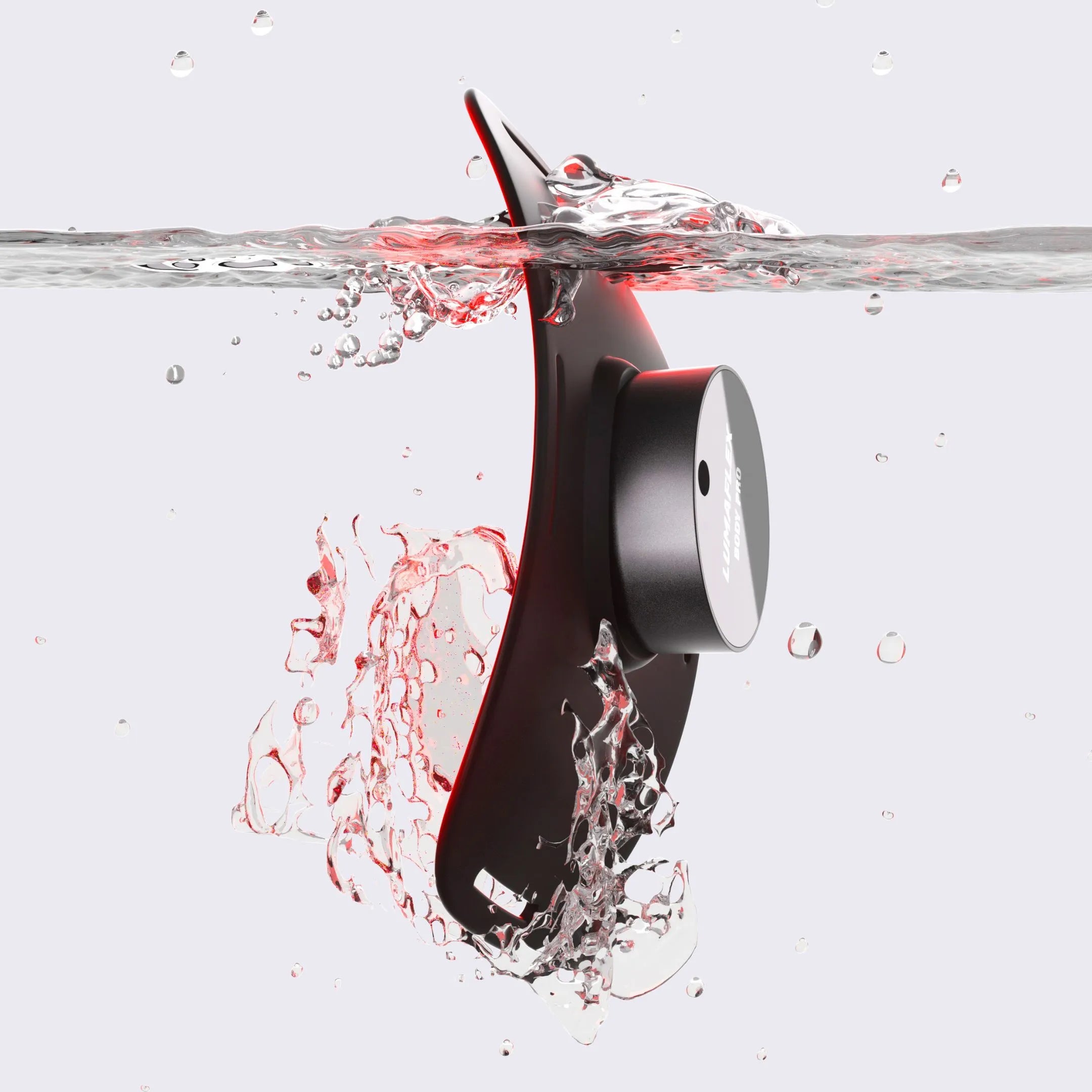
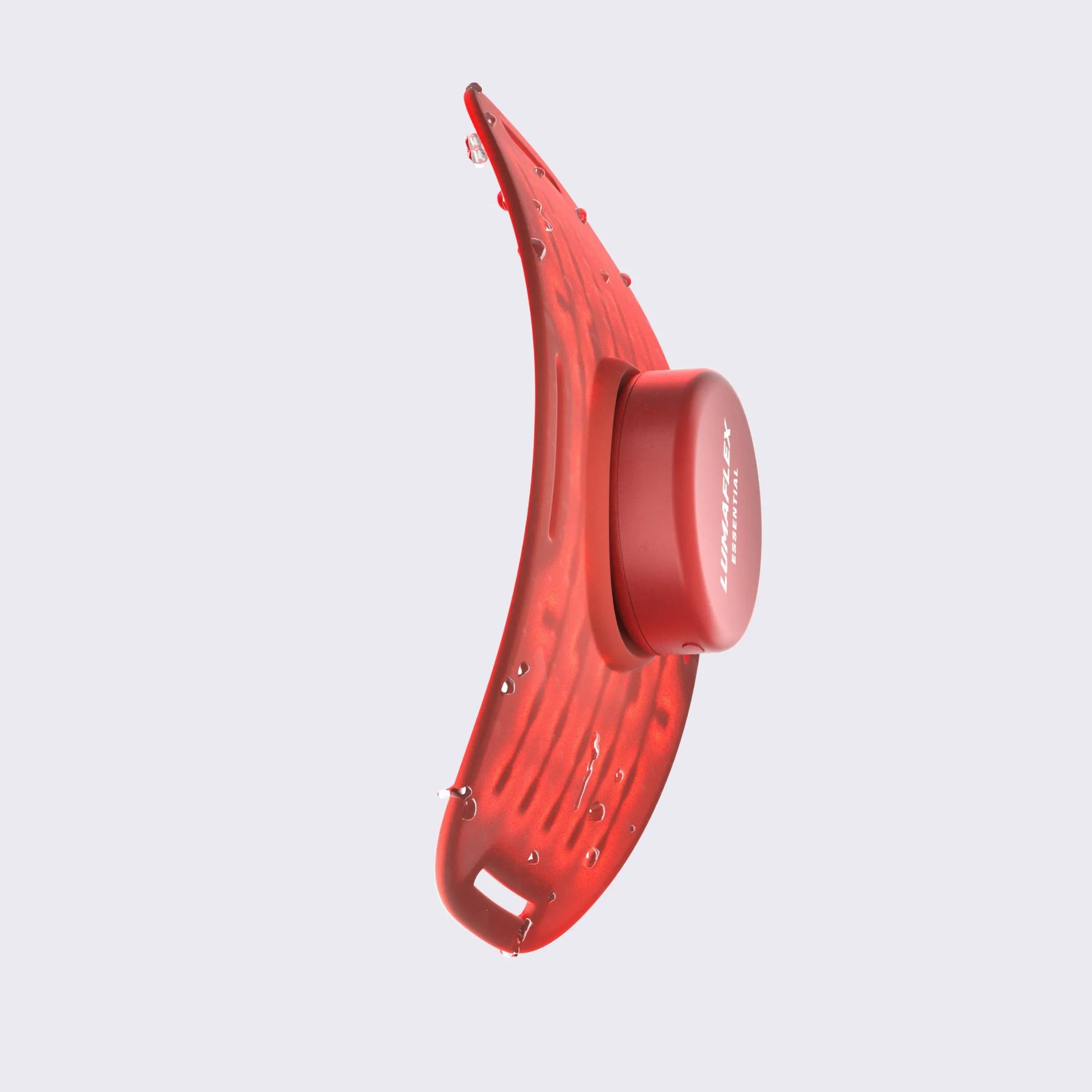
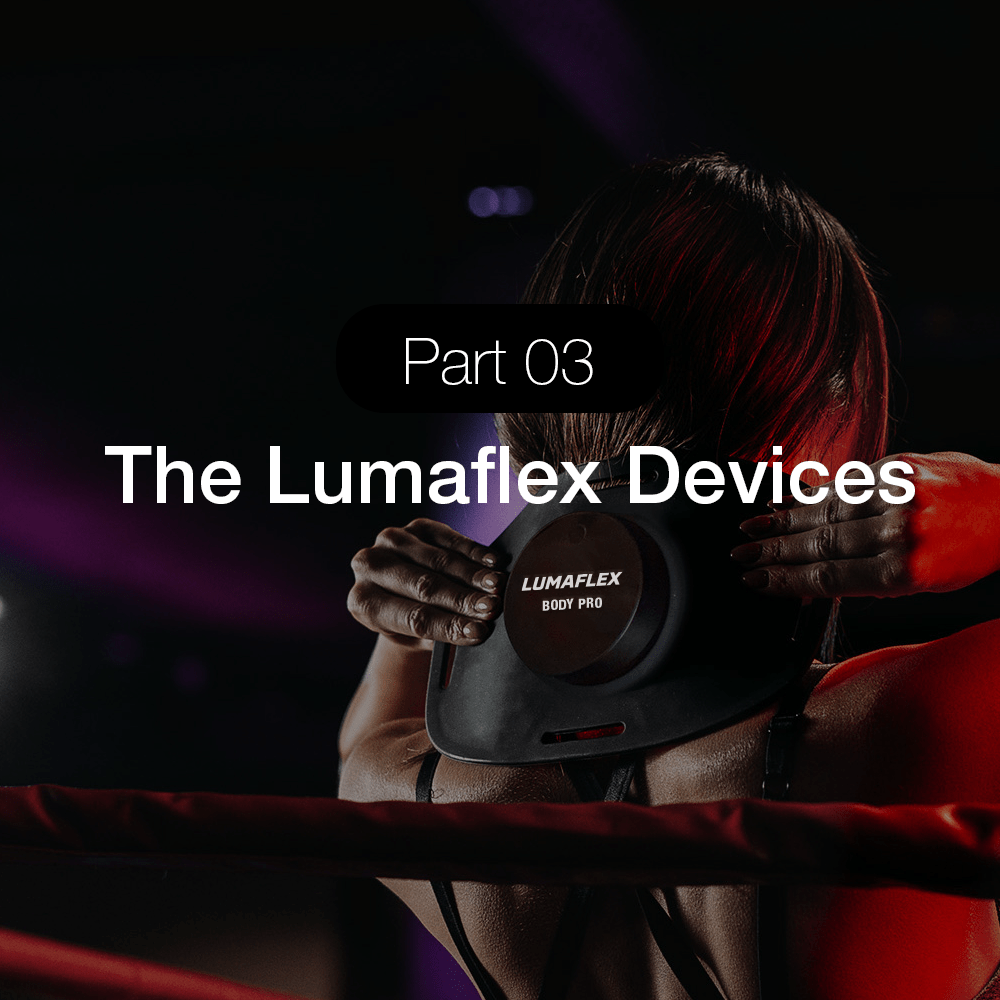
The device he's referencing is LumaFlex's flexible, wearable red light panel, designed to wrap around specific muscle groups rather than requiring an athlete to sit stationary in front of a large panel. For a team sport athlete who might need to target a shoulder after one race and a quad after another, that form factor actually matters.
What Red Light Therapy Does and Why It Works for This
Red light therapy, also called photobiomodulation (PBM), delivers specific wavelengths of light to muscle tissue. Typically red light in the 630–660nm range and near-infrared at around 850nm. At those wavelengths, light penetrates beyond the skin and reaches the mitochondria inside muscle cells, where it activates an enzyme called cytochrome c oxidase.
That activation triggers a cascade: more ATP (adenosine triphosphate) produced, less oxidative stress generated, and inflammatory cytokines reduced at the site of tissue damage.
In plain terms, your cells recover faster because they have more energy to do the repair work, and less inflammation slowing that process down.
For athletes doing the kind of multi-event, full-body output that Grid League demands, this matters at a practical level. The soreness that sets in 24–48 hours after competition, known as delayed onset muscle soreness (DOMS), is driven largely by that inflammatory response. Reducing it means athletes can train harder in the days after a match, not just feel better on the couch.
Want to understand more about how red light therapy works at the cellular level and what conditions it's been studied for? That's a good place to start.

What the Research Actually Says
The evidence base for photobiomodulation in sports has grown considerably in recent years, and it's worth knowing what the current literature actually says rather than leaning on outdated citations.
A 2025 systematic review published in the International Journal of Innovative Technologies in Social Science (Miejska-Kamińska et al.) examined PBM's effect on muscle regeneration and physical performance across clinical trials and experimental studies involving physically active people. The review found that photobiomodulation supported regenerative processes through mitochondrial stimulation and ATP production, with observed outcomes including accelerated recovery, improved muscle strength and endurance, and reduced injury risk. The researchers noted that dosimetry, getting the wavelength and energy density right, is a key variable in outcomes.
That last point is relevant. Not all red light devices are equivalent, and the difference between a device that delivers clinically relevant parameters and one that doesn't matters significantly for whether you see results.
A 2026 review in Quality in Sport (Słuchocka et al.) reinforced this, finding that PBM produced reduced muscle fatigue, accelerated soft-tissue and bone repair, and neuroprotective effects across athletic and clinical settings. Again, with outcomes dependent on adherence to specific wavelength and dosimetry protocols. The review covered literature through 2024 and included both sports performance and broader clinical indications.
For athletes looking at red light therapy for muscle recovery and injury prevention, the research is pointing in a consistent direction: the mechanism is real, the outcomes are measurable, and protocol matters.
Beyond the Match: What the Partnership Actually Means
The Lumafex and Fort Lauderdale Lions partnership isn't structured as a logo placement. The Lions are the main fitness content partners for Lumaflex for the 2026 season, which means what the athletes do in training, in recovery, and on the Grid floor becomes part of how LumaFlex shows its products working in real athletic contexts.
That's a different kind of partnership than a jersey sponsor. The athletes are demonstrating, not endorsing.
There's also an educational dimension worth noting. LumaFlex offers a recovery specialist course that's fully accredited by ACE (American Council on Exercise), NASM (National Academy of Sports Medicine), and AFAA. Fitness professionals can earn continuing education credits while learning how to apply red light therapy protocols for clients. That accreditation isn't window dressing. It's the governing bodies of personal training and fitness certification treating photobiomodulation as a legitimate clinical tool worth formalizing.
If you're a trainer working with competitive athletes, or athletes who train like them, that course is worth knowing about.

Frequently Asked Questions on Red Light Therapy for Athletes
Does red light therapy actually reduce muscle soreness?
Research supports it. The mechanism is reduced inflammatory response and increased cellular ATP production at the site of muscle damage. The effect on delayed onset muscle soreness (DOMS) has been documented in multiple clinical trials, with some studies showing meaningful reduction in soreness markers compared to placebo. For broader context on pain relief and red light therapy, the evidence is consistent with what's seen in muscle recovery applications.
When should athletes use it, before or after training?
Both have rationale. Pre-session application can prime mitochondria for the energy demand ahead and may reduce exercise-induced oxidative stress. Post-session is when the repair mechanisms matter most. Red and near-infrared light therapy supports cellular recovery, and applying it in the hours after competition or before sleep positions that repair work during the body's natural recovery window. For athletes comparing red light therapy against other modalities like cold exposure, the comparison of cryotherapy and red light therapy breaks down the practical differences in when each works best.
How often do athletes use red light therapy?
Daily use is common among athletes integrating it seriously into training. The wearable panel format that LumaFlex uses makes consistent daily application practical. It's a 10–15 minute session, not a clinic visit.
Is red light therapy only useful for elite athletes?
The Grid League athletes are the proof of concept, but the physiology doesn't change based on competition level. Muscle soreness, inflammation, and recovery lag happen at every level of training. The application is the same whether someone is competing on the Grid floor or just trying to bounce back faster between sessions.
If You're Thinking About Adding It to Your Training
Lumafex is the official title partner of the Fort Lauderdale Lions for the 2026 United Grid League season. The same device the team uses in their recovery protocol, the Essential Pro, is available directly through lumaflex.com.
The recovery specialist course accredited by ACE, NASM, and AFAA is also available for fitness professionals looking to formalize how they apply photobiomodulation with clients.
The Lions beat Tampa Bay 23–16 on May 23rd at the Miami International Fitness Expo. The season is still going. Watch what happens next.
References
Miejska-Kamińska, M., Szczęsna, E., Sośniak, I., Jurczenko, L., & Semianiuk, A. (2025). The effect of red light therapy (photobiomodulation) on muscle recovery and physical performance in athletes. International Journal of Innovative Technologies in Social Science, 4(3[47]). https://doi.org/10.31435/ijitss.3(47).2025.3876
Słuchocka, J., Lewalski, T., Florczyk, M., Płuciennik, L., Lewalski, O., & Jeruć, K. (2026). Red light revolution: Harnessing photobiomodulation for peak athletic performance and systemic healing. Quality in Sport, 53. https://doi.org/10.12775/QS.2026.53.69750