Red Light Therapy for Weightlifters: Recovery, Strength, and Performance

Weightlifting creates a recurring demand on the body. You train hard enough to create a stimulus, allow the body to adapt, and then need to perform another quality session before soreness, fatigue, or reduced strength interferes with the plan.
That is where red light therapy, also called photobiomodulation (PBM), may fit. For lifters, the most relevant research concerns delayed-onset muscle soreness (DOMS), muscle function, and the return of strength after demanding exercise. Evidence that PBM directly increases muscle mass is much less established.
A 2026 meta-analysis of 13 randomized controlled trials found that PBM was associated with lower DOMS and better strength measures at several points after exercise. The evidence base remains relatively small, and the protocols varied substantially between studies. [1]
For a weightlifter, the more useful question is practical: where could PBM fit into a training week, and what can you reasonably expect from it?
Table of contents
What Weightlifters Actually Need From Recovery
For a lifter, recovery means restoring enough comfort, muscle function, and readiness to complete the next productive session. It does not require eliminating every trace of soreness or fatigue.
A hard squat, deadlift, bench press, or high-volume bodybuilding session can produce several different responses: local soreness, temporary reductions in force, general fatigue, changes in muscle-damage markers, and reduced readiness for another workout.
Soreness, fatigue, and strength are different outcomes
DOMS describes the soreness and stiffness that can develop after unfamiliar or strenuous exercise. Strength recovery refers more directly to the return of force-producing capacity. Performance is broader still, covering the ability to produce force, repeat quality sets, maintain technique, and tolerate the planned training volume.
If PBM reduces soreness or helps restore muscle function, that may make a training week easier to manage. It does not establish that the light itself increases hypertrophy or replaces the stimulus created by progressive resistance training.
What Does the Research Say About Red Light Therapy for Weightlifters?

The evidence suggests that PBM can influence some exercise-related outcomes, particularly DOMS and short-term muscle-function measures. The findings are less consistent for performance, and the studies do not use one standardized PBM protocol.
Research varies in wavelength, irradiance, fluence, treatment area, timing, exercise type, participant training status, and the outcome being measured.
A 2026 meta-analysis examined PBM specifically for DOMS and strength loss after exercise. The researchers identified 5,597 records and included 13 studies in the final analysis. DOMS outcomes favored PBM at several time points, including immediately after exercise and through 72 hours. Peak-torque outcomes also favored PBM at several points through 96 hours. [1]
That gives the current evidence a useful direction for lifters: PBM may help with soreness and short-term restoration of muscle function after strenuous exercise. It does not show that every weightlifter will experience the same effect from every device or protocol.
A 2024 meta-analysis reached a broader conclusion after analyzing 34 randomized controlled trials. Pooled results showed improvements in muscle endurance and recovery of muscle strength, but the results differed according to participants' activity levels. The analysis reported significant benefits in some subgroups while finding no significant benefit for physically active participants in its subgroup analysis. [2]
That limitation is particularly relevant to experienced lifters. Evidence from mixed populations cannot automatically be treated as evidence that a trained weightlifter will see the same response.
A 2023 review of 15 randomized clinical trials also found mixed results across muscle damage, soreness, lactate, oxygen-related measures, and performance outcomes. The authors noted that more research was needed to establish how PBM should be applied in sport. [3] A 2021 sports review similarly found both positive and null findings across different exercise settings and PBM protocols. [4]
What research says about muscle soreness
The clearest application for red light therapy after lifting is DOMS.
The 2026 meta-analysis found lower soreness-related outcomes at several post-exercise time points, including the first 72 hours. [1]
For a weightlifter, that could matter after a high-volume leg session, a new exercise variation, or a training block that exposes the same muscle group repeatedly.
Lower soreness can make normal movement and warm-up work more comfortable. It does not prove that the muscle has completely returned to baseline.
What research says about strength recovery
The same 2026 analysis found favorable peak-torque results immediately after exercise and at 24, 48, 72, and 96 hours. [1]
That is potentially more meaningful for strength athletes than soreness alone because a training program depends on repeated force production.
The 2024 meta-analysis also reported a pooled improvement in recovery of muscle strength, although its subgroup findings show why the result should be interpreted cautiously in trained populations. [2]
A single PBM session should therefore never be treated as a promise that you will regain a missed personal record or eliminate the effects of accumulated fatigue.
What research says about exercise performance
Pre-exercise PBM has been studied as a potential ergogenic strategy. Some trials and reviews have reported improvements in selected performance measures, while others have found no meaningful difference.
The 2023 review of sports-performance trials illustrates this variability: some studies reported improvements in measures such as muscle soreness or muscle damage, while others found no change in those same categories. [3]
This is one reason laboratory performance findings should be translated carefully into weightlifting. An isolated strength test is different from a full squat or deadlift session involving multiple sets, technical demands, accumulated fatigue, and a prescribed training volume.
Why results differ between studies
PBM studies can differ in:
wavelength and whether red, near-infrared, or multiple wavelengths are used
irradiance and fluence
treatment timing relative to exercise
treatment area and device geometry
exercise type, intensity, and volume
participant training status
muscle group being treated
outcome measured and time point assessed
That article explains why irradiance, treatment time, fluence, wavelength, treatment area, and device geometry need to be considered together. A dose reported in a research paper should not automatically be treated as a home-device prescription.
Can Red Light Therapy Reduce Muscle Soreness After Lifting?
It may reduce DOMS after demanding exercise, particularly during the first few days afterward. The 2026 meta-analysis found improvements in soreness measures at multiple post-exercise time points. [1]
For a weightlifter, the practical value is fairly simple. If soreness is less disruptive after a heavy lower-body session, walking, warming up, and approaching the next planned workout may be easier.
That can be useful during periods of frequent lower-body training or when a program introduces unfamiliar exercises or higher-than-usual volume.
Still, soreness is only one signal.
If a muscle remains weak, technique deteriorates, fatigue is accumulating, or pain becomes sharp and localized, lower soreness should not be interpreted as clearance to train harder. PBM should never be used to mask symptoms that may indicate an injury.

What that means for your next session
Use PBM as one piece of your readiness assessment.
Look at the planned load, movement quality, strength, sleep, and overall fatigue alongside soreness. A lifter who feels less sore but is still unable to produce normal force may need to adjust the session.
The goal is to support the training plan you already have, rather than using light therapy as a reason to add more volume.
Can Red Light Therapy Help You Regain Strength Between Sessions?
Current evidence suggests that PBM may support the return of strength after strenuous exercise. The 2026 meta-analysis found favorable peak-torque results through 96 hours after exercise. [1]
This could be relevant to lifters who train a muscle group more than once a week or combine heavy compound work with higher-volume accessory sessions.
Progressive training depends on repeated exposure to productive loads. When accumulated fatigue reduces force output, bar speed, technique, or the ability to complete planned sets, the quality of that training stimulus can change.
PBM cannot create progressive overload. Its potential role is narrower: helping a lifter manage some of the effects that occur between demanding sessions.
Should Weightlifters Use Red Light Therapy Before or After Training?
Timing depends on the outcome you are trying to address.
For post-training soreness and muscle function, after-exercise use fits the available evidence more directly. Pre-exercise PBM has also been studied, but performance findings are less consistent

Before lifting: performance and readiness
Some studies have applied PBM before exercise and reported improvements in endurance, fatigue, or strength-related tests. Other trials have found no meaningful performance difference. [2][3]
The 2024 meta-analysis is particularly useful here because it found pooled benefits across its overall sample but differences between activity-level subgroups. That makes it difficult to treat pre-exercise PBM as a universal performance enhancer for experienced lifters. [2]
If you use PBM before lifting, it should complement your normal warm-up, movement preparation, and gradual loading.
After lifting: soreness and muscle function
Post-training use aligns more closely with the outcomes currently supported by the research.
A session may be most relevant after demanding work that leaves a particular muscle group sore or temporarily fatigued. Follow the device's intended exposure rather than extending the session simply because the workout was difficult.
What if you want to use it both ways?
There is no need to automatically schedule two full PBM sessions around every workout.
Total exposure depends on the device, treatment area, output, timing, and frequency. More light is not automatically better.
→ Red Light Therapy Dosage: How Much Light Do You Need?
Use that guide to understand how treatment time and irradiance determine fluence before changing the duration of a session.
What About Muscle Growth and Hypertrophy?
This is where the evidence needs the most careful interpretation.
Research on PBM has examined muscle performance, soreness, muscle damage, and strength-related outcomes. Those findings do not establish that red light therapy directly increases muscle mass in weightlifters.
A recovery aid could theoretically help someone maintain training consistency, but that is an indirect training effect. It is different from demonstrating that PBM itself produces hypertrophy.
Progressive resistance training remains the direct stimulus that the training program is designed to provide. Nutrition, energy intake, sleep, and appropriate programming also influence the long-term adaptation.
For now, red light therapy is better discussed as a potential training-support tool than as a muscle-building treatment.
Which Muscle Groups Should Weightlifters Treat?
Prioritize the areas that received substantial training load or that are likely to affect your next session.

Legs after squats and lower-body sessions
Squats, lunges, leg presses, Romanian deadlifts, and other lower-body movements can create substantial local fatigue and soreness.
Depending on the device's treatment area, a lifter may target the quads, hamstrings, glutes, or another area directly exposed to the training load.
Positioning matters. A small wearable device and a larger panel do not deliver light across the body in the same geometry.
Back and shoulders after upper-body training
Rows, pull-ups, deadlifts, presses, and bodybuilding movements can load overlapping muscle groups.
Target the areas most relevant to the session and consider the device's treatment area rather than assuming one placement covers every tissue involved.
Smaller areas exposed to repeated loading
Forearms, elbows, knees, and shoulders can experience repeated stress during strength training.
Persistent, sharp, swollen, or worsening symptoms should be assessed clinically rather than treated as ordinary post-workout soreness.
How to Fit Red Light Therapy Into a Weightlifting Routine
The easiest way to make PBM part of a training routine is to give each session a clear purpose.
On heavy training days
A post-workout session may fit after demanding lower- or upper-body training when soreness or temporary muscle-function changes are the main concern.
Keep the exposure consistent rather than changing the duration based on how hard the workout felt.
Between training sessions
A session on a non-training day may fit when the same muscle group is scheduled again soon.
It should remain a low-friction part of the routine rather than turning every rest day into another task.
During high-volume blocks
High-volume phases provide a useful opportunity to track whether PBM changes anything meaningful for you.
Record practical measures such as perceived soreness, warm-up quality, repeat performance, and how the target muscle feels at the next session.
A training log gives you more useful information than assuming the device is helping.
During a deload
A deload already reduces training stress.
PBM can remain part of the routine if it is useful to you, but a deload is not a reason to increase exposure or chase a larger dose.
How Much Red Light Therapy Do Weightlifters Need?
There is no single dose that applies to every weightlifting goal or device.
Exposure depends on factors including irradiance, treatment time, fluence, wavelength, treatment area, device geometry, and frequency.
The physical relationship is:
Fluence (J/cm²) = Irradiance (mW/cm²) × Time (seconds) ÷ 1,000
Why 10 minutes does not mean the same thing on every device
A 10-minute setting tells you how long the session lasts. It does not, by itself, tell you the amount of optical energy delivered per square centimeter.
For example, a device delivering 75 mW/cm² for 10 minutes produces a different calculated fluence from one delivering 60 mW/cm² for the same duration.
That is why comparing devices by timer alone can be misleading.
Check whether the manufacturer reports average or peak irradiance, particularly when pulsing is involved.
→ Red Light Therapy Dosage: How Much Light Do You Need?
That guide goes deeper into irradiance, fluence, wavelength, measurement conditions, and why research doses cannot simply be copied onto a home device.
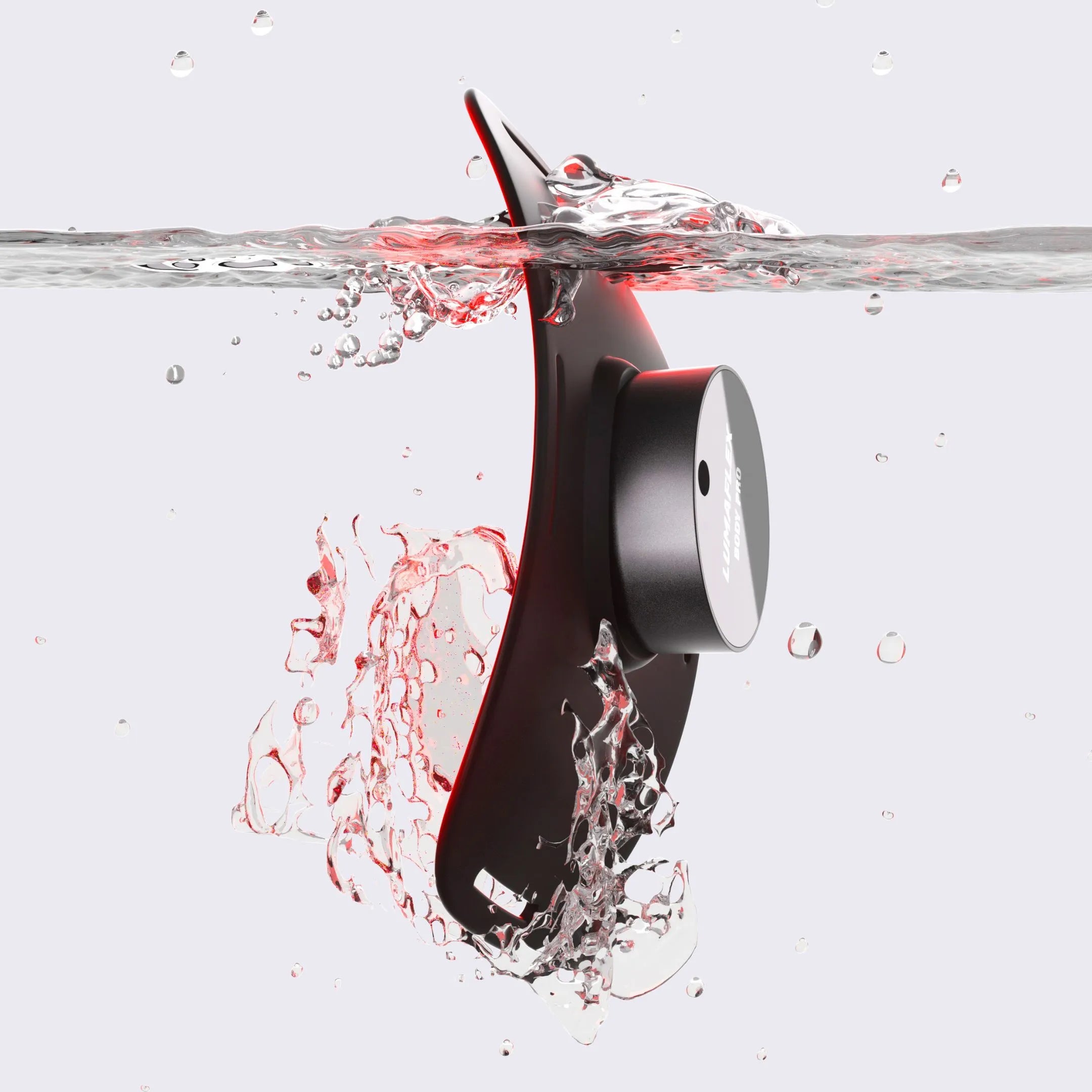
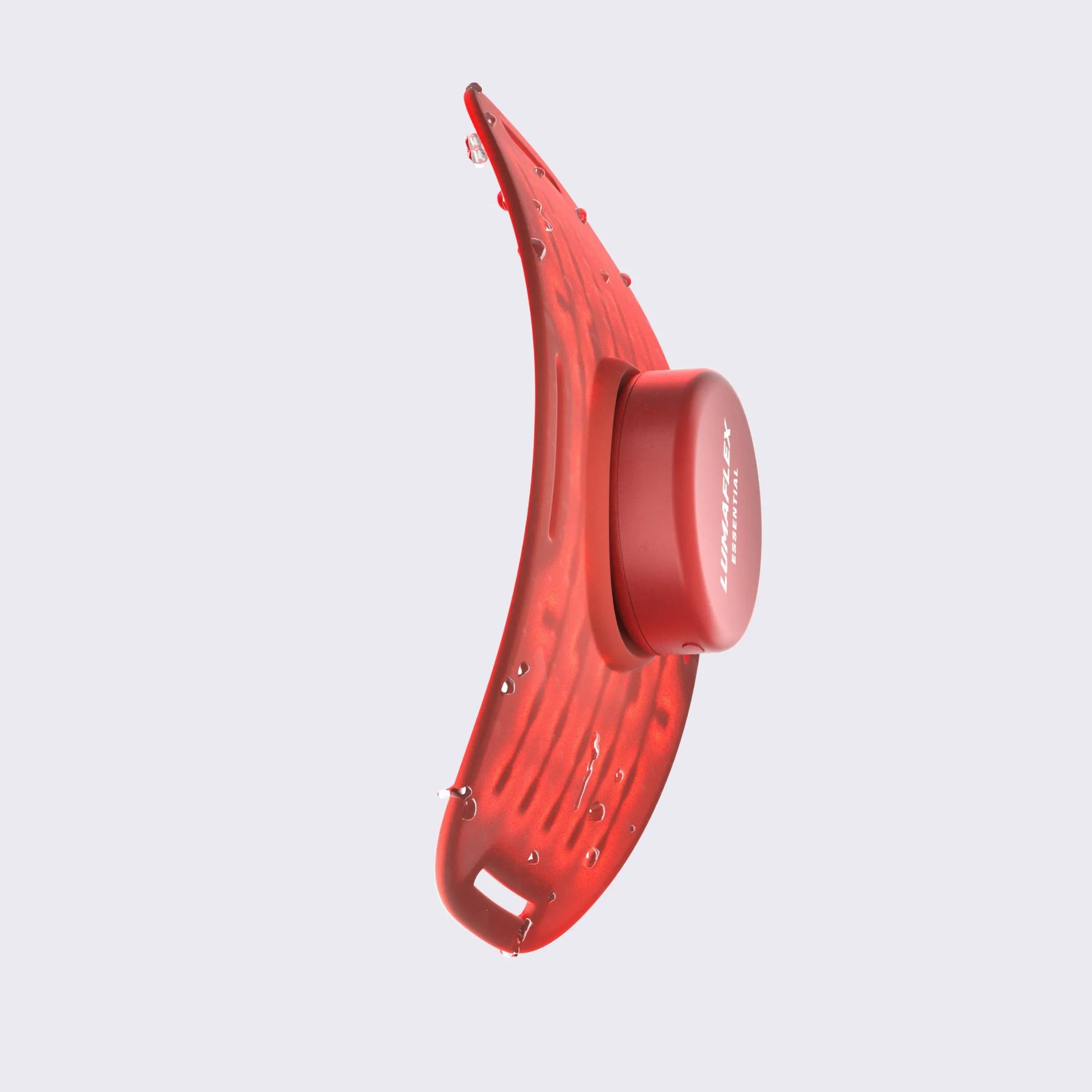
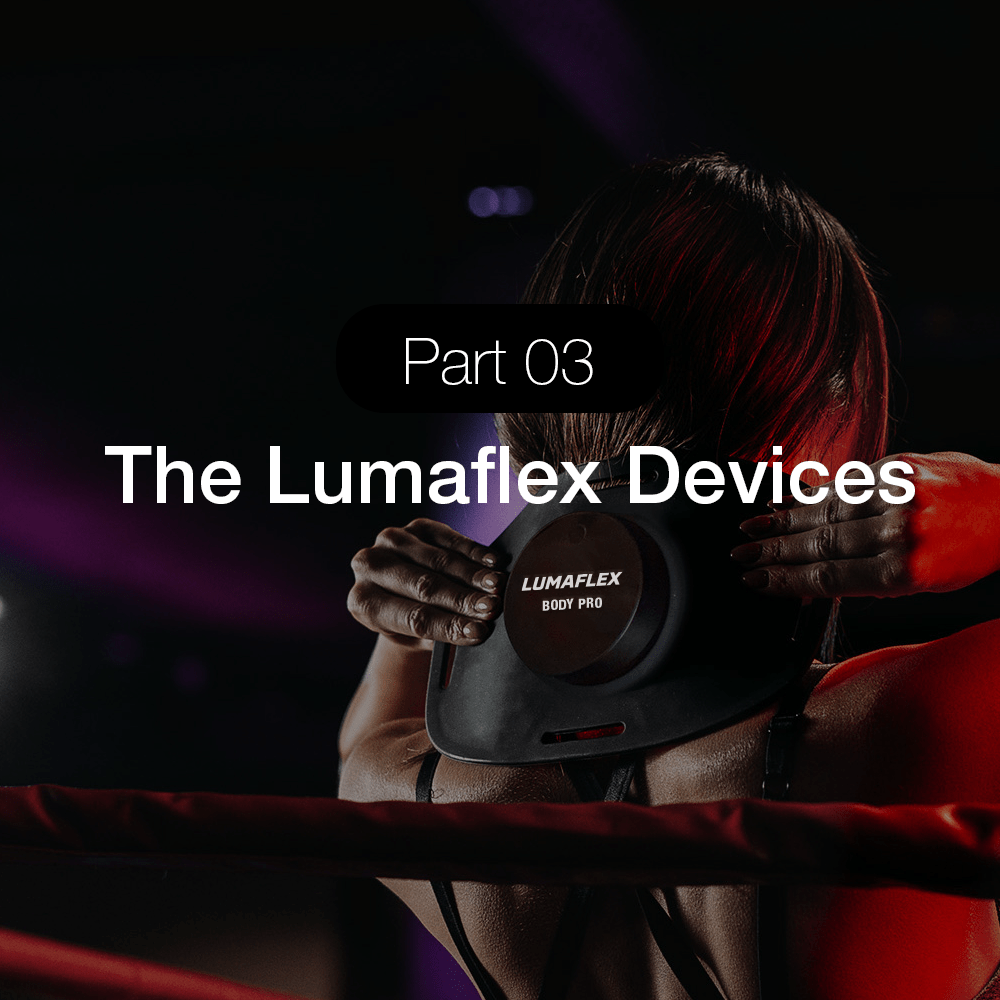
Lumaflex's wearable devices are designed for targeted treatment and timed sessions. The Essential and Body Pro use 630 nm red and 850 nm near-infrared light, while the Essential Pro uses a six-wavelength configuration listed by Lumaflex.
When comparing devices, consider the wavelength configuration, treatment area, published output, and intended application together.
What Red Light Therapy Can't Replace in a Weightlifting Program
PBM can be one part of a training-support routine. It cannot compensate for an unsuitable program.
Protein and overall nutrition, adequate energy intake, sleep, sensible programming, appropriate rest, progressive overload, deloading, and injury assessment remain fundamental.
If you are consistently struggling to train well, look first at the total workload and the basics surrounding it. Training volume, intensity, sleep, food intake, stress, and scheduling can all affect how prepared you are for the next session.
Light therapy cannot correct an excessive training load.
Red Light Therapy for Weightlifters: FAQs
Does red light therapy help weightlifters?
It may help with some exercise-related outcomes, particularly DOMS and short-term strength measures after demanding exercise. The size and consistency of the effect depend on the PBM protocol, the outcome being measured, and the population studied.
Can red light therapy reduce DOMS?
Current evidence suggests that PBM may reduce DOMS during the first several days after exercise. Lower soreness does not necessarily mean that muscle function has completely returned to baseline.
Should I use red light therapy before or after lifting?
Post-training use aligns more directly with the current evidence on soreness and short-term muscle function. Pre-exercise PBM has produced mixed findings, with results varying across studies and participant groups.
Can red light therapy improve strength?
PBM may support the return of strength measures after strenuous exercise. That is different from increasing long-term strength adaptation, which still depends on progressive resistance training and an appropriate training program.
Does red light therapy increase muscle growth?
Direct evidence that PBM increases hypertrophy in weightlifters is limited. Evidence for soreness and post-exercise muscle function should not be presented as proof that red light therapy directly builds muscle.
Can I use red light therapy every day?
That depends on the device protocol, treatment area, total exposure, and training context. Follow the manufacturer's intended use rather than assuming daily treatment is necessary.
How long should a red light therapy session last after lifting?
Use the intended session length for the specific device and application. Minutes alone do not define the dose because irradiance differs between devices.
Check the published irradiance and fluence rather than relying on the timer alone.
Build a Smarter Training Week With PBM
Weightlifting asks you to repeat high-quality work while managing the effects of previous sessions. That makes soreness, strength restoration, fatigue, and readiness more useful measures than a vague idea of “faster recovery.”
The current PBM evidence is most relevant to DOMS and short-term muscle-function outcomes. Evidence for direct hypertrophy remains limited, while pre-exercise performance findings are more variable.
Used within a sensible training program, red light therapy may be worth incorporating as a targeted support tool. Track what actually changes: soreness, warm-up quality, strength measures, and how well you can execute the next planned session.
CTA link → Explore LumaFlex devices and choose a configuration that fits the way you train.
Sources
2026 meta-analysis: Can photobiomodulation therapy attenuate delayed-onset muscle soreness and strength loss after exercise in healthy individuals or athletes? A meta-analysis of randomized controlled trials. Meta-analysis of 13 randomized controlled trials examining DOMS and strength outcomes after exercise.
Li BM, Qiu DY, Ni PS, et al. (2024). Can pre-exercise photobiomodulation improve muscle endurance and promote recovery from muscle strength and injuries in people with different activity levels? A meta-analysis of randomized controlled trials. Lasers in Medical Science, 39(1), 132. The review included 34 randomized controlled trials and analyzed outcomes according to activity level.
González-Muñoz A, et al. (2023). Effects of Photobiomodulation in Sports Performance: A Literature Review. Applied Sciences, 13(5), 3147. The review included 15 randomized clinical trials and reported mixed findings across sports-performance outcomes.
Ailioaie LM, Litscher G. (2021). Photobiomodulation and Sports: Results of a Narrative Review. Life, 11(12), 1339. The review examined human and experimental PBM research across sports settings and highlighted substantial variation in protocols and outcomes.