Can Red Light Therapy Help a New Tattoo Heal?

Yes, red light therapy may support some of the biological processes involved in tattoo healing. Photobiomodulation (PBM), commonly called red light therapy, has been studied for its effects on inflammation, cellular signaling, and tissue repair.
A new tattoo creates a controlled injury as needles repeatedly puncture the skin to deposit pigment. Research on wounds and other skin injuries provides a basis for looking at whether PBM could also support recovery after tattooing.
The tattoo-specific evidence is limited, but one animal study offers an interesting starting point. Researchers found improved healing-related outcomes when PBM was used after laser tattoo removal. Laser tattoo removal creates a different type of skin injury from ordinary tattooing, so those findings cannot be directly applied to a fresh tattoo. Still, they provide a reason to investigate PBM further.
So, can red light therapy help a new tattoo heal? The research suggests that PBM could support some aspects of skin recovery, but we do not yet know whether it shortens the healing time of a fresh tattoo or what treatment parameters would be appropriate. For now, proper tattoo aftercare remains an important part of recovery.
- What happens to your skin when you get a tattoo?
- How might red light therapy support skin recovery?
- What does tattoo-specific research tell us?
- Can red light therapy affect a tattoo or its pigment?
- Is red light therapy safe on a new tattoo?
- When can you use red light therapy after getting a tattoo?
- What benefits might red light therapy offer during skin recovery?
- Red light therapy versus standard tattoo aftercare
- What does research still not tell us?
- Considering red light therapy for skin recovery?
- Frequently asked questions (FAQs)
- So, can red light therapy help a new tattoo heal?
- References
What happens to your skin when you get a tattoo?
A fresh tattoo is a controlled injury to the skin. Tattoo needles repeatedly penetrate the skin and deposit pigment into the dermis. The body then begins a normal process of inflammation, repair, and remodeling.

What is normal during tattoo healing?
Some temporary changes are expected while the skin recovers:
Redness and tenderness
Mild swelling
Peeling or flaking
Itching
A small amount of clear fluid
The American Academy of Dermatology notes that these can occur during normal tattoo healing. Spreading redness, increasing pain, pus, fever, or other worsening symptoms, however, can signal an infection or another complication. [2]
Tattoo Healing Is Not the Same as Wound Healing
Tattooing is different from a burn, surgical wound, or laser tattoo-removal procedure, even though some of the same repair processes are involved. Research from these areas can help us understand how PBM might interact with healing skin, but those findings cannot automatically be applied to a fresh tattoo.
The tattoo also leaves pigment within the dermis while the surface of the skin recovers. Healing can vary depending on factors such as the tattoo’s size, location, color, technique, aftercare, and the condition of the skin.
How might red light therapy support skin recovery?
Red and near-infrared light used in photobiomodulation (PBM) can influence biological signaling in cells. Research has examined several possible effects, including changes in inflammatory signaling, cellular activity, blood flow, and tissue repair. [3] [4]

Could it affect inflammation?
Possibly. Inflammation is part of the normal response to tattooing, and PBM has been studied for its effects on inflammatory pathways.
That does not mean the normal redness of a fresh tattoo needs to be treated. Some redness and tenderness are expected during healing. Spreading redness, increasing pain, drainage, or fever are different and can indicate a complication that needs medical attention.
Could it support cellular activity?
Red and near-infrared light can interact with light-sensitive molecules, or chromophores, in cells. One area of research involves mitochondrial signaling and changes in cellular energy availability.
These effects may help explain why PBM is being studied in tissue repair, but laboratory or mechanistic findings alone cannot tell us how much they would affect the healing of a fresh tattoo.
Could it support tissue repair?
PBM has been studied in wound-healing models involving epithelialization, collagen deposition, angiogenesis, and wound closure. Results have varied, however, and studies use different wavelengths, doses, treatment schedules, devices, and types of wounds.
A 2025 systematic review and meta-analysis of PBM for burn wounds found no statistically significant benefit in some of the pooled outcomes, including wound retraction and collagen deposition, while also reporting substantial variation among the underlying studies. [5]
Where does that leave tattoo healing?
The biology gives us a reasonable basis for studying PBM during tattoo recovery. What remains unclear is whether these effects translate into faster or better healing after an ordinary tattoo, and what combination of wavelength, dose, and timing would be appropriate.
What does tattoo-specific research tell us?
Tattoo-specific research on PBM is limited, but two published reports offer useful insights. One suggests that PBM may influence healing after a tattoo-related procedure, while the other highlights a potential safety concern when light is applied over dark tattoo pigment

A study after laser tattoo removal
Imrigha and colleagues studied PBM in rats with black tattoo ink following Q-switched Nd:YAG laser tattoo removal. After the laser treatment created a skin injury, the researchers applied 808 nm diode-laser PBM at a fluence of 5 J/cm² each day. They then examined the tissue during healing, including changes in epithelialization and collagen deposition. [6]
The PBM-treated groups showed greater epithelialization and collagen deposition than the comparison groups, which the researchers interpreted as signs of improved healing.
This is interesting because it suggests that PBM may influence tissue repair in tattooed skin after laser treatment. However, laser tattoo removal and tattooing create different types of skin injury. A Q-switched Nd:YAG laser is used to disrupt tattoo pigment, while tattooing uses repeated needle punctures to deposit pigment in the dermis.
So the study gives us evidence that PBM can affect healing in a tattoo-related skin injury, but it does not tell us whether the same effect occurs after getting a new tattoo.
A case of light therapy over a black tattoo
Another published report looked at what happened when low-level light therapy was applied directly over a tattoo. Ingenito described a case involving a 22-year-old man who developed a small blister within seconds of receiving light therapy over a black tattoo on his shoulder. The treatment used a 760–1000 nm wavelength range at 10 J/cm². The authors suspected that components of the black pigment, including iron oxides or metal salts, contributed to localized heating. [1]
This was a single case, so it does not show that red or near-infrared light routinely damages tattoos. It does, however, show that tattoo pigment can affect how light interacts with the skin. Wavelength, dose, exposure, and pigment composition may all be relevant when light is applied over tattooed areas.
Can red light therapy affect a tattoo or its pigment?
Tattoo pigments can interact with light in different ways. The response can depend on the pigment’s color and composition, wavelength, irradiance, fluence, treatment time, distance, device design, and condition of the skin.

Is red light therapy the same as tattoo-removal laser treatment?
No. They use light for different purposes.
Tattoo-removal lasers deliver high-energy pulses designed to target and disrupt tattoo pigment. PBM uses different light-delivery parameters and is intended to influence biological processes in tissue rather than break apart the ink.
Can red light therapy fade or damage tattoo ink?
There is currently not enough evidence to say that PBM routinely fades, changes, or damages tattoo pigment. More research would be needed to determine whether different tattoo colors or pigment formulations respond differently to red and near-infrared light.
However, tattoo pigment should not be treated as irrelevant. The 2016 case report discussed earlier, involving blistering over a black tattoo, suggests that pigment composition may affect how tattooed skin responds to light exposure. [1]
What should you consider when using light over a tattoo?
Wavelength, dose, exposure time, and the condition of the skin all matter. This is particularly relevant while a tattoo is still healing, when the skin is already responding to the tattooing process.
Is red light therapy safe on a new tattoo?
Red light therapy may be useful during skin recovery, but a fresh tattoo needs more consideration than fully healed skin. The skin is still repairing itself, and there is no established PBM protocol specifically for newly tattooed skin.
Fresh tattoo
Follow your tattoo artist’s aftercare instructions first. Keep the tattoo clean as directed, protect the area from unnecessary friction, and give the skin time to recover.
If you are considering PBM during this stage, check the device’s instructions as well. Non-invasive does not mean that every wavelength, dose, or treatment schedule is appropriate for actively healing skin.
Tattoo that is still peeling or irritated
Peeling, itching, tenderness, and mild redness can be part of normal tattoo healing. However, increasing pain, significant swelling, blistering, unusual drainage, or worsening irritation are reasons to stop and reassess rather than adding another treatment.
Red light therapy should not be used as a way to manage a possible infection or other complication.
Fully healed tattoo
Fully healed tattooed skin is different from a fresh tattoo because the original injury has resolved. At this point, using PBM over the area becomes less about supporting the initial healing process and more about the device, treatment goal, light parameters, and individual skin response.
There is still limited research on how different tattoo pigments respond to red and near-infrared light, so the earlier evidence about pigment and light exposure remains relevant.
When to contact a healthcare professional
Some redness and soreness are expected after tattooing, but symptoms that spread or become worse deserve attention. Seek medical advice for increasing warmth or pain, pus or other drainage, fever or chills, marked swelling, unusual blistering, a widespread rash, or other signs of infection or an adverse reaction. The American Academy of Dermatology recommends medical evaluation when tattoo-related redness, pain, or other symptoms worsen rather than improve. [2]
When can you use red light therapy after getting a tattoo?
There is no established waiting period for using PBM after getting a tattoo. Rather than relying on a fixed rule such as “wait seven days” or “wait two weeks,” consider how the tattooed skin is healing.
| Skin status | Practical approach |
| Freshly tattooed or actively recovering | Follow your tattoo artist’s aftercare instructions and check your device’s guidance before using PBM over the area. |
| Peeling, oozing, significantly irritated, or unusually painful | Give the skin time to recover. Increasing pain, significant swelling, blistering, or unusual drainage should be assessed rather than treated with PBM. |
| Fully recovered | The original tattoo injury has resolved. At this stage, consider the device’s treatment parameters, the tattoo pigment, and your intended use. |
The condition of the skin is more useful than a fixed number of days. Tattoo healing varies from person to person, and your tattoo artist or healthcare professional may recommend a different approach based on how your skin is recovering.
What benefits might red light therapy offer during skin recovery?
PBM has been studied in several areas that overlap with the skin’s healing process. These findings help explain why red and near-infrared light are being investigated for recovery after tissue injury, although tattoo-specific research is still limited.
| Area of interest | What PBM research has explored |
| Inflammatory signaling | Effects on inflammatory signaling and the body’s response to tissue injury |
| Cellular activity | Changes in cellular signaling and mitochondrial activity |
| Tissue repair | Processes such as epithelialization, collagen deposition, angiogenesis, and wound closure |
| Comfort | Effects on pain and other sensory responses in some research settings |
These findings give us plausible reasons to study PBM during tattoo recovery. They do not tell us that a particular device, wavelength, dose, or treatment schedule will produce the same effect in a fresh tattoo. That question still needs tattoo-specific human research.
Red light therapy versus standard tattoo aftercare
Red light therapy and tattoo aftercare serve different purposes. Aftercare protects the recovering skin, while PBM is being studied for its potential effects on the healing process.
| Standard tattoo aftercare | Red light therapy |
| Essential during recovery | Potentially complementary |
| Follows your tattoo artist’s instructions | Uses red and/or near-infrared light |
| Keeps the tattoo clean and protected | May influence processes involved in tissue repair |
| Helps you recognize signs of complications | Fresh-tattoo healing has not been well studied |
| Comes before any optional treatment | Should be used according to device guidance |
If you decide to explore PBM while a tattoo is healing, think of it as an addition to your normal aftercare, not a replacement for it. The tattoo still needs the same basic care whether or not you use red light therapy.
What does research still not tell us?
We have some evidence about PBM, skin repair, and tattoo-related procedures, but we still don't have enough research to establish how red light therapy should be used on a fresh tattoo.
The biggest gaps are:
The right treatment
We still don't know which wavelength, irradiance, dose, treatment time, or treatment schedule would be appropriate for a healing tattoo.
The role of tattoo pigment
More research is needed to determine whether black, gray, red, yellow, and other pigments interact differently with red and near-infrared light. Researchers also need to understand whether pigment affects light absorption, local heating, pigment retention, or the tattoo's final appearance.
The timing and healing response
Studies have not yet established whether PBM affects healing time, discomfort, or skin recovery after ordinary tattooing, or whether the response changes according to the tattoo's size, depth, location, technique, or stage of healing.
Answering these questions would require human studies with standardized tattooing and PBM protocols, comparison groups, objective measures of healing, monitoring for adverse effects, and follow-up of the tattoo's final appearance.
Considering red light therapy for skin recovery?
If you're considering red light therapy while your skin is recovering from a tattoo, the device itself is only part of the question. Wavelength, irradiance, treatment duration, treatment distance, and the area being treated can all affect the amount of light the skin receives.
At-home PBM devices vary in how they deliver red and near-infrared light, so their instructions should be followed rather than applying settings from one device to another. This is particularly relevant when treating recently tattooed skin, where there is still limited research on appropriate exposure.
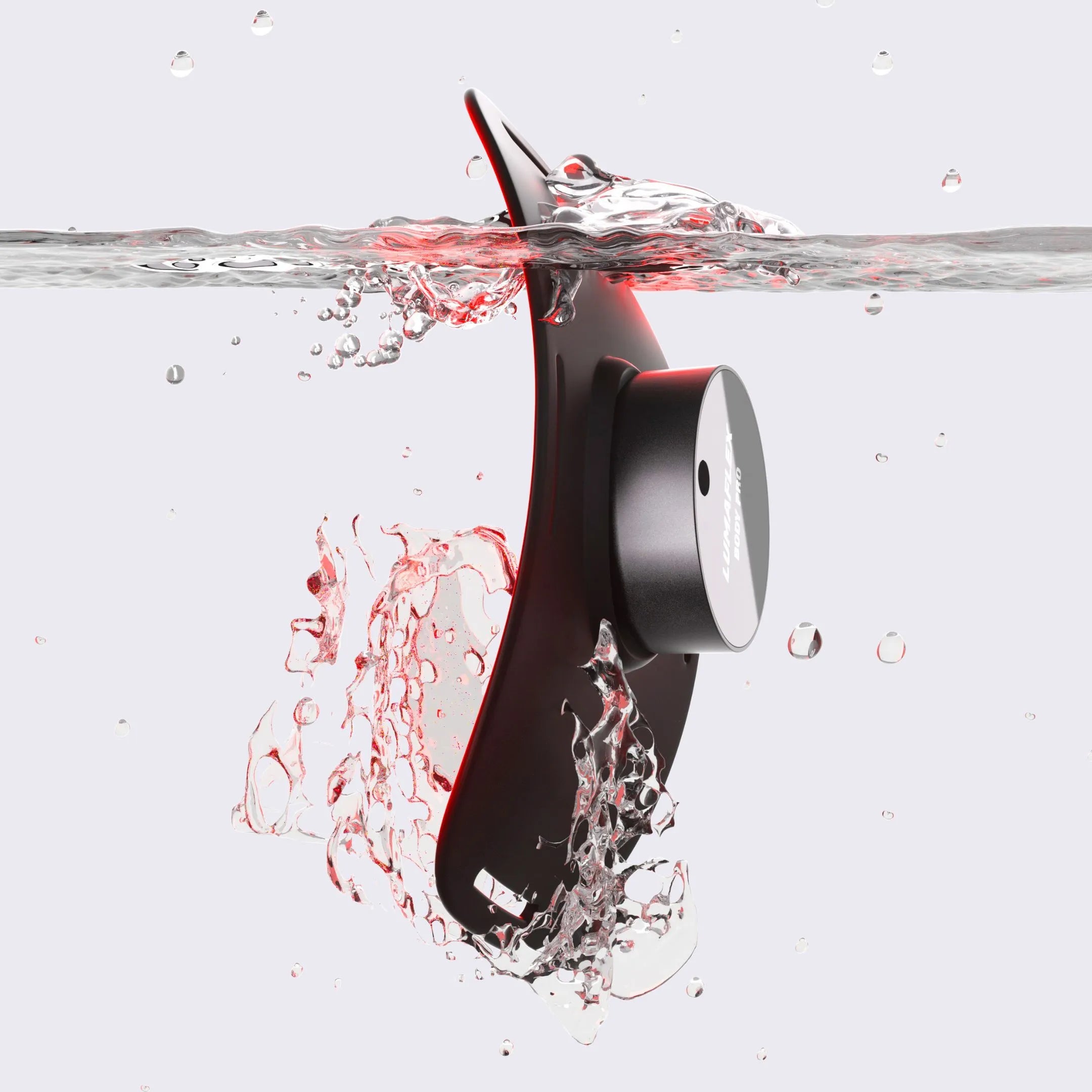
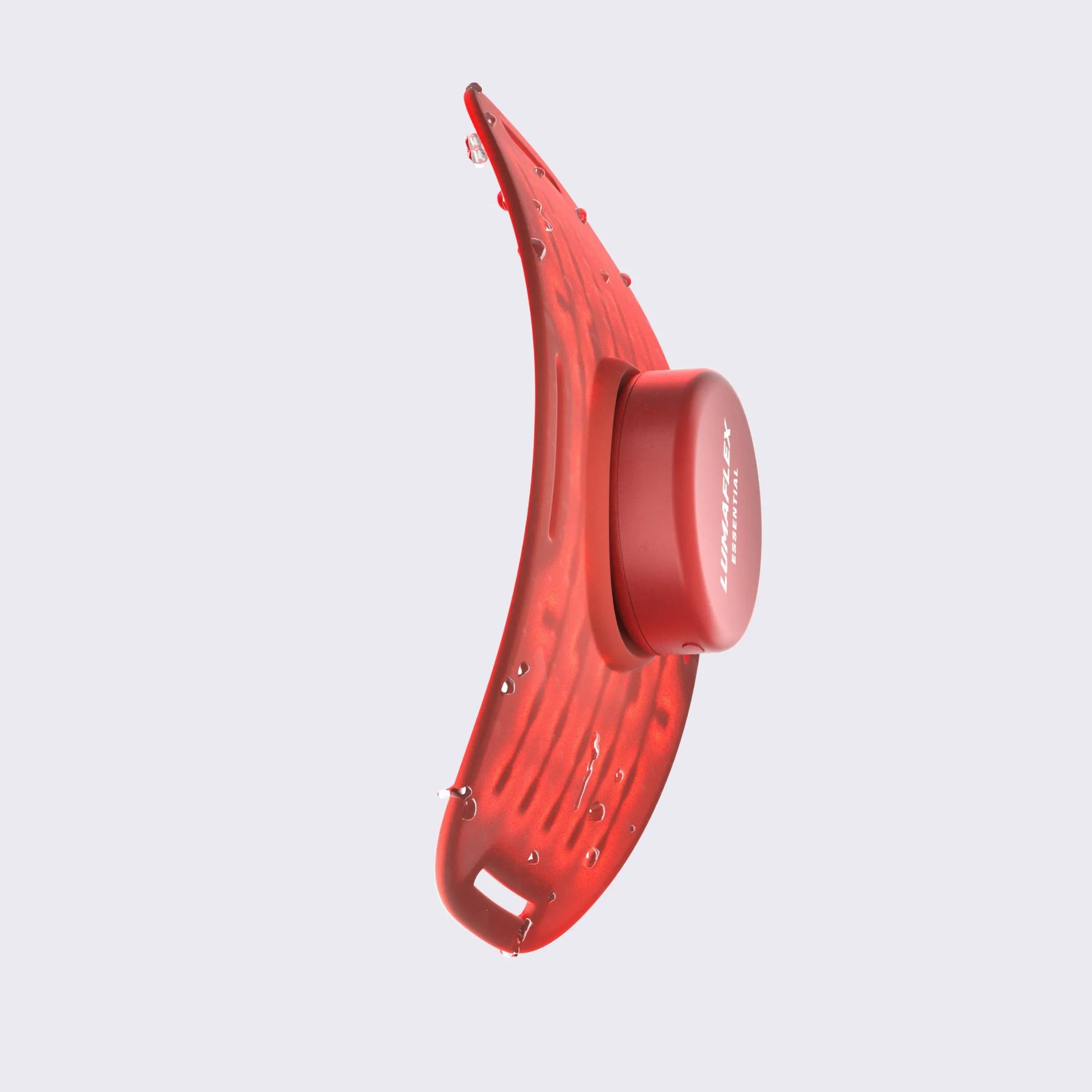
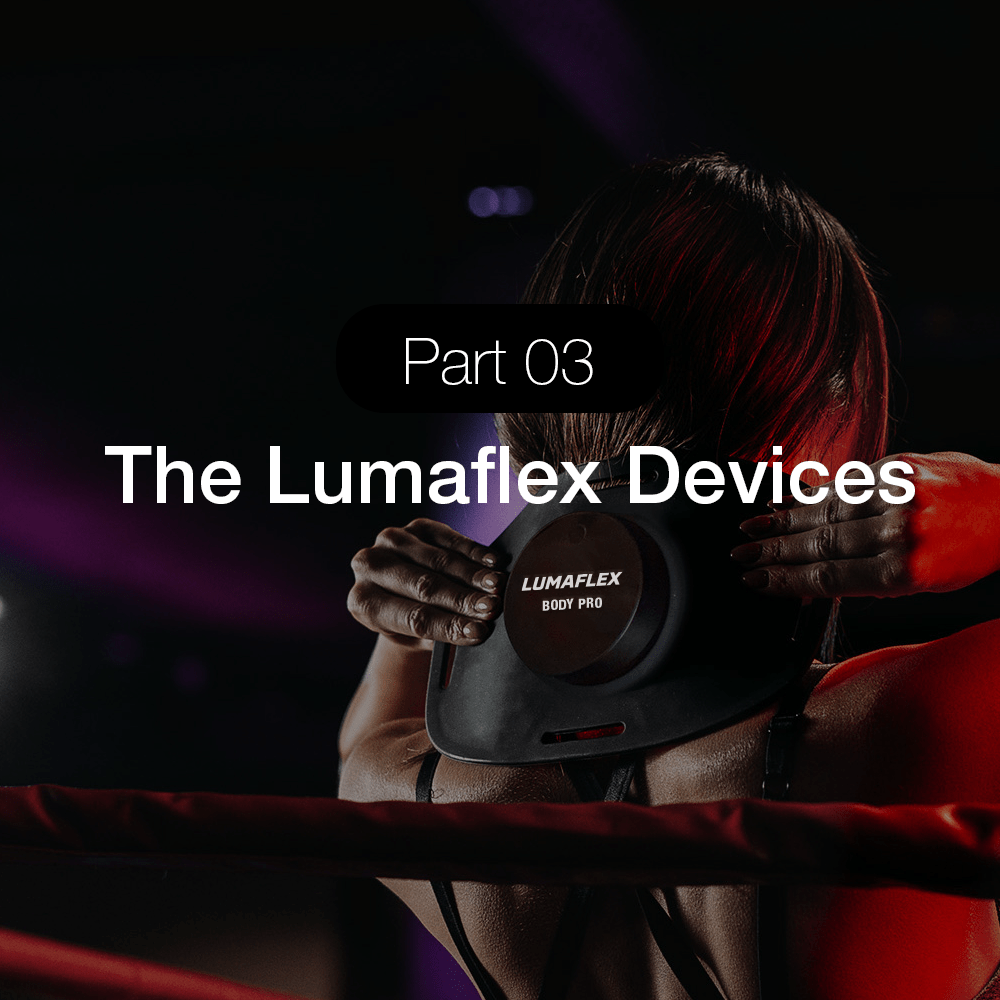
Lumaflex is designed for home use with red and near-infrared light. Its instructions should be followed when using the device, including any guidance that applies to recently tattooed, irritated, or otherwise recovering skin.
Frequently asked questions (FAQs)
Can red light therapy help a new tattoo heal?
It may support some processes involved in skin recovery, but we don't yet know whether it makes a new tattoo heal faster. An animal study found improved healing-related outcomes when 808 nm PBM was used after laser tattoo removal, although laser removal creates a different type of skin injury from tattooing. [6]
Can you use red light therapy on a fresh tattoo?
There is no established PBM protocol specifically for fresh tattoos. During the early healing period, follow your tattoo artist's aftercare instructions and your device's directions for use. If the tattoo is unusually painful, blistered, significantly swollen, or showing signs of infection, have the skin assessed rather than using light therapy to manage those symptoms.
Is red light therapy safe on tattoos?
It can depend on the device, wavelength, dose, exposure, tattoo pigment, and condition of the skin. A 2016 case report described blistering after low-level light therapy was applied over a black tattoo. This does not establish that PBM routinely damages tattoos, but it shows why pigment and treatment parameters deserve consideration. [1]
Can red light therapy damage tattoo ink?
There is no good evidence that ordinary PBM routinely damages or removes tattoo ink. PBM and tattoo-removal lasers work differently: tattoo-removal lasers use specialized high-energy pulses to target pigment, while PBM is intended to influence biological processes in tissue. Whether particular pigments respond differently to red or near-infrared light remains an area for further research.
Can red light therapy fade tattoos?
Red and near-infrared PBM should not be considered a tattoo-removal treatment. Tattoo removal relies on specialized laser treatment to target and disrupt pigment. Current evidence does not establish that typical PBM fades tattoos or changes their final color.
When can you use red light therapy after getting a tattoo?
There is no scientifically established waiting period such as seven or fourteen days. The condition of the skin is more useful than a fixed number. Fresh, peeling, oozing, or irritated skin needs appropriate aftercare, while fully healed skin presents a different situation.
Can red light therapy help tattoo redness or itching?
There is not enough direct research to say that PBM reduces the redness or itching associated with a healing tattoo. Some redness, tenderness, and itching can be part of normal recovery. Symptoms that worsen or occur with spreading redness, increasing pain, drainage, significant swelling, or fever should be medically assessed.
So, can red light therapy help a new tattoo heal?
Red light therapy may support some of the biological processes involved in skin recovery, but we do not yet know whether it can make a new tattoo heal faster.
The research gives us some reason to keep investigating. A 2017 rat study found improved healing-related outcomes when PBM was used after laser tattoo removal, while a 2016 case report described blistering after low-level light therapy was applied over a black tattoo. [1] [6] These findings highlight both the potential for PBM to influence tissue repair and the importance of considering tattoo pigment when light is applied to tattooed skin.
For someone with a new tattoo, standard aftercare remains the starting point. There is no established PBM protocol or universal waiting period for freshly tattooed skin, so how the tattoo is healing, the device being used, and the tattoo's pigment all matter.
If the tattoo develops spreading redness, increasing pain, significant swelling, unusual blistering, drainage, or fever, seek medical advice rather than trying to manage those symptoms with light therapy.
References
[1]: https://pubmed.ncbi.nlm.nih.gov/27814854/ Ingenito T. “Low level light therapy and tattoos: A case report.” Physiotherapy Theory and Practice. 2016.
[2]: https://www.aad.org/public/everyday-care/skin-care-basics/tattoos/tattoo-skin-reactions “Tattoos: 7 unexpected skin reactions and what to do about them.” American Academy of Dermatology.
[3]: https://pubmed.ncbi.nlm.nih.gov/22243614/ Chung H, Dai T, Sharma SK, Huang YY, Carroll JD, Hamblin MR. “The nuts and bolts of low-level laser (light ) therapy.” Annals of Biomedical Engineering. 2012;40(2):516–533.
[4]: https://pubmed.ncbi.nlm.nih.gov/28098368/ Hamblin MR. “Mechanisms and applications of the anti-inflammatory effects of photobiomodulation.” AIMS Biophysics. 2017;4(3 ):337–361.
[5]: https://pubmed.ncbi.nlm.nih.gov/39172550/ Pradal LA, de Freitas E, Azevedo MRB, et al. “Photobiomodulation in burn wounds: A systematic review and meta-analysis of clinical and preclinical studies.” Photobiomodulation, Photomedicine, and Laser Surgery. 2025.
[6]: https://journals.uob.edu.ly/index.php/ASJ/article/view/4129 Imrigha O, et al. “Photobiomodulation therapy on wound treatment subsequent to Q-switched Nd:YAG laser tattoo removal in rat model.” Journal of Biophotonics. 2017;10:1287–1291.