Red Light Therapy for Myofascial Pain and Trigger Points

A trial can show that people move their necks better after light treatment and still fail to show that the light reduced their pain. That split is the most useful thing to understand about red light therapy for myofascial pain. Photobiomodulation (PBM) has a plausible biological rationale and a growing clinical literature, but the recent trials do not point in a single direction, and the differences between them say more than any headline result.
This article covers what myofascial pain and trigger points are, how PBM might act on them, what the key studies found, why their outcomes diverge, and what that means for anyone considering a home device.
What Is Myofascial Pain Syndrome?
Myofascial pain syndrome (MPS) is a pain condition centred on muscle and its surrounding fascia. Its hallmark is the myofascial trigger point: a tender spot in a taut band of muscle that hurts when pressed and can send pain to other areas.
How trigger points contribute to muscle pain
Pressing on an active trigger point reproduces the person's familiar pain, and sometimes causes pain elsewhere, known as referred pain. The taut band can also limit how far the muscle stretches. A recent clinical review of MPS notes that the condition can overlap with other pain disorders and that diagnostic criteria are not fully standardised, which is one reason studies in this area are hard to compare.

Common symptoms and affected areas
The upper trapezius, the muscle running from the neck across the top of the shoulder, is the site most often studied. People describe a deep ache, tenderness to the touch, stiffness when turning the head, and pain that spreads into the neck, shoulder or head. The jaw muscles are another studied site, in what is called myofascial pain dysfunction syndrome. For readers weighing options for the neck and shoulder in particular, see our guide to neck pain treatment options.
Myofascial pain versus ordinary muscle soreness
A muscle knot after a hard week is not automatically a trigger point, and delayed-onset muscle soreness after training is a different process altogether. Soreness typically resolves within days. Myofascial pain persists, and a clinician identifies trigger points by examination. Fibromyalgia is also distinct: it involves widespread pain rather than localized trigger points, and we cover it separately in red light therapy for fibromyalgia. Exercise-related recovery is a separate topic too; see red light therapy for muscle recovery.
How Photobiomodulation May Affect Pain

Red and near-infrared light in PBM
Photobiomodulation applies red or near-infrared light to tissue, with the aim of triggering biological responses without heating it. Clinical studies use several wavelengths and delivery methods, including low-level laser therapy (LLLT) and other PBM devices. Near-infrared wavelengths are generally associated with deeper tissue reach, a topic covered in how deeply red and near-infrared light can penetrate {{link: How Deep Does Red Light Therapy Penetrate?}}. For the broader mechanism background, see how photobiomodulation works {{link: Photobiomodulation Explained}}.
Proposed cellular and pain-related mechanisms
The leading hypotheses involve light absorption by components of the cell's energy-producing machinery, with downstream effects on cellular energy, inflammation signalling and local blood flow. Effects on nerve signalling have also been proposed as a route to pain modulation. These are proposals developed largely in laboratory and mixed clinical settings, and they are not specific to trigger points.
Why biological mechanisms do not automatically establish clinical benefit
A mechanism that works in cells does not guarantee a measurable change in a patient's pain. That is why the clinical trials below matter more than the mechanism, and why a plausible explanation should never be read as proof that a device treats myofascial pain.
What Clinical Studies Have Found
Three sources show the range of results. They differ in design, population and outcome, which is the point.
| Study | Population and intervention | Main findings | What it can and cannot tell us |
| Alayat et al., 2022 (meta-analysis) | 17 studies, 944 patients with upper-trapezius MPS | Improvements in pain and pressure pain threshold | Suggests a signal across trials, but pools varied protocols and study quality |
| Silva et al., 2026 (randomised, sham-controlled) | 52 adults with chronic trapezius pain and trigger points; 808 nm LLLT, 16 J per trigger point, eight sessions | No significant between-group difference in pain or trigger-point count; cervical function improved in the treatment group | One well-controlled protocol; separates pain from function |
| Salari et al., 2025 (randomised, triple-blind) | 22 patients with myofascial pain dysfunction syndrome; 630 nm and 810 nm PBM versus sham | Both groups improved in pain and mouth opening; no significant between-group difference | Small trial in the jaw, not the trapezius |
Findings from the upper-trapezius meta-analysis
The 2022 meta-analysis is the most encouraging of the three. Pooling 17 studies and 944 patients, it reported improvements in pain and in pressure pain threshold, the amount of pressure a person tolerates before it becomes painful. A pooled result is not a guarantee, though. The included studies used different wavelengths, doses and treatment schedules, and varied in quality. The review supports the idea that PBM has been associated with improvement in trapezius pain; it does not say which protocol works or that every device would.
The 2026 sham-controlled trial for trapezius trigger points
This trial tested 808 nm laser therapy delivering 16 joules to each trigger point over eight sessions in 52 adults. Compared with sham treatment, it found no significant difference in pain or in the number of trigger points. Cervical function, however, improved in the treatment group. A tighter design than many earlier studies produced a split result: function moved, pain did not separate from sham. That is a more informative finding than a simple "it works" or "it doesn't."
The 2025 trial involving myofascial pain dysfunction syndrome
In 22 patients with myofascial pain dysfunction syndrome, PBM at 630 nm and 810 nm was compared with sham. Pain and maximum mouth opening improved in both groups, with no significant difference between them. When a sham group improves as much as the treated group, the improvement cannot be credited to the light. Time, expectation and natural fluctuation in symptoms all contribute. With only 22 participants, the trial is also small, and a jaw condition cannot be assumed to behave like trapezius pain.
Why the results differ across studies
Several factors plausibly explain the divergence:
- Comparator. Studies without a sham control can overstate benefit, because everyone who is treated expects to improve.
- Outcome. Pain scores, pressure sensitivity, trigger-point counts and function do not always move together.
- Site and condition. Trapezius trigger points and jaw dysfunction are different problems.
- Protocol. Wavelength, dose and session number vary widely, which makes pooled results hard to translate.
- Sample size. Small trials can miss real effects or exaggerate chance ones.
Which Outcomes Matter When Evaluating PBM?
Pain intensity and pressure pain threshold
Pain intensity is how much it hurts, usually reported on a rating scale. Pressure pain threshold is measured at the trigger point with a device. The meta-analysis reported improvement in both, but the 2026 trial found no pain advantage over sham. Readers should treat both measures as separate questions.
Range of motion and physical function
For someone with neck pain, being able to turn the head matters as much as the pain score. The 2026 trial's improvement in cervical function is worth taking seriously, but it comes with a caveat: improved function in the treatment group does not by itself show a treatment-specific effect unless it is compared with the sham group's change.
Trigger-point count and perceived improvement
Trigger-point count is an examiner's measure, while perceived improvement is the patient's own. The 2026 trial found no significant difference in trigger-point count. A person can feel better without the number of palpable trigger points changing, and the reverse can also happen.
What Influences PBM Treatment Parameters?

Wavelength and light source
The studies above used 808 nm in the trapezius trial and 630 nm and 810 nm in the jaw trial. Those were clinical lasers and PBM devices delivering light to specific points. A different light source, even at a similar wavelength, delivers light differently. The differences between lasers and LED panels are explained in the differences between red light therapy and laser therapy.
Irradiance, energy, and treatment duration
The 2026 trial delivered 16 J to each trigger point. Total energy depends on how intense the light is and how long it is applied, so two sessions of equal length can deliver very different doses. There is no evidence in these studies that more energy or longer sessions produce better results. For a plain-language overview, see red light therapy dosage.
Treatment location and session frequency
The laser trial treated individual trigger points across eight sessions. That is one protocol tested in one population. It is not a recommended home routine, and it should not be copied onto a different device.
How PBM Fits Into Myofascial Pain Management

Physical therapy, movement, and exercise
Established care for myofascial pain centres on physical therapy, stretching, exercise and posture work, sometimes alongside massage. Medical references such as the Mayo Clinic's overview of myofascial pain syndrome describe these as the mainstay of treatment. PBM, if used, is best seen as an adjunct that is still under evaluation, not a substitute.
Other treatment options
Other approaches include manual therapy, dry needling and medication, depending on the clinician's assessment. The right option depends on diagnosis, and the evidence for each differs.
When persistent muscle pain needs clinical assessment
Pain that persists, worsens, spreads, or comes with numbness, weakness, fever or unexplained weight loss needs a clinician. Myofascial pain overlaps with other conditions, and self-treating a misdiagnosed problem can delay care.
Can red light therapy help with muscle knots?
The evidence is mixed. A meta-analysis of trapezius studies reported improvements in pain and pressure sensitivity, while a 2026 sham-controlled trial found no significant difference in pain or trigger-point count. "Muscle knot" is also not a formal diagnosis, so results from trigger-point studies do not apply to every tight spot.
Is red light therapy the same as low-level laser therapy?
They overlap but are not interchangeable. LLLT is a form of PBM that often uses a focused laser, whereas consumer red light devices typically use LEDs. Wavelength alone does not make two devices clinically equivalent.
Can red light therapy be used for neck and shoulder trigger points?
The trapezius has been studied with laser-based protocols. Those results do not establish that an at-home LED device produces the same effect, and a clinician should confirm that the pain is myofascial in the first place.
How long does it take to see results?
There is no established timeline. The 2026 trial used eight sessions, but that is a feature of its protocol, and it did
Can red light therapy replace physical therapy?
No evidence supports that. Physical therapy and exercise remain core to managing myofascial pain, and PBM has been studied as an addition to care, not a replacement.
What This Means for Home Devices
Clinical lasers deliver light to specific points at a measured dose. A home device has a different wavelength profile, output and treatment area, and the studies above cannot tell us whether it would produce the same results. Irradiance, exposure time, distance from the skin and treated area all change the dose a person receives. Follow the device's own instructions rather than copying a laboratory protocol, and treat it as something to use alongside, not instead of, professional assessment for persistent pain.
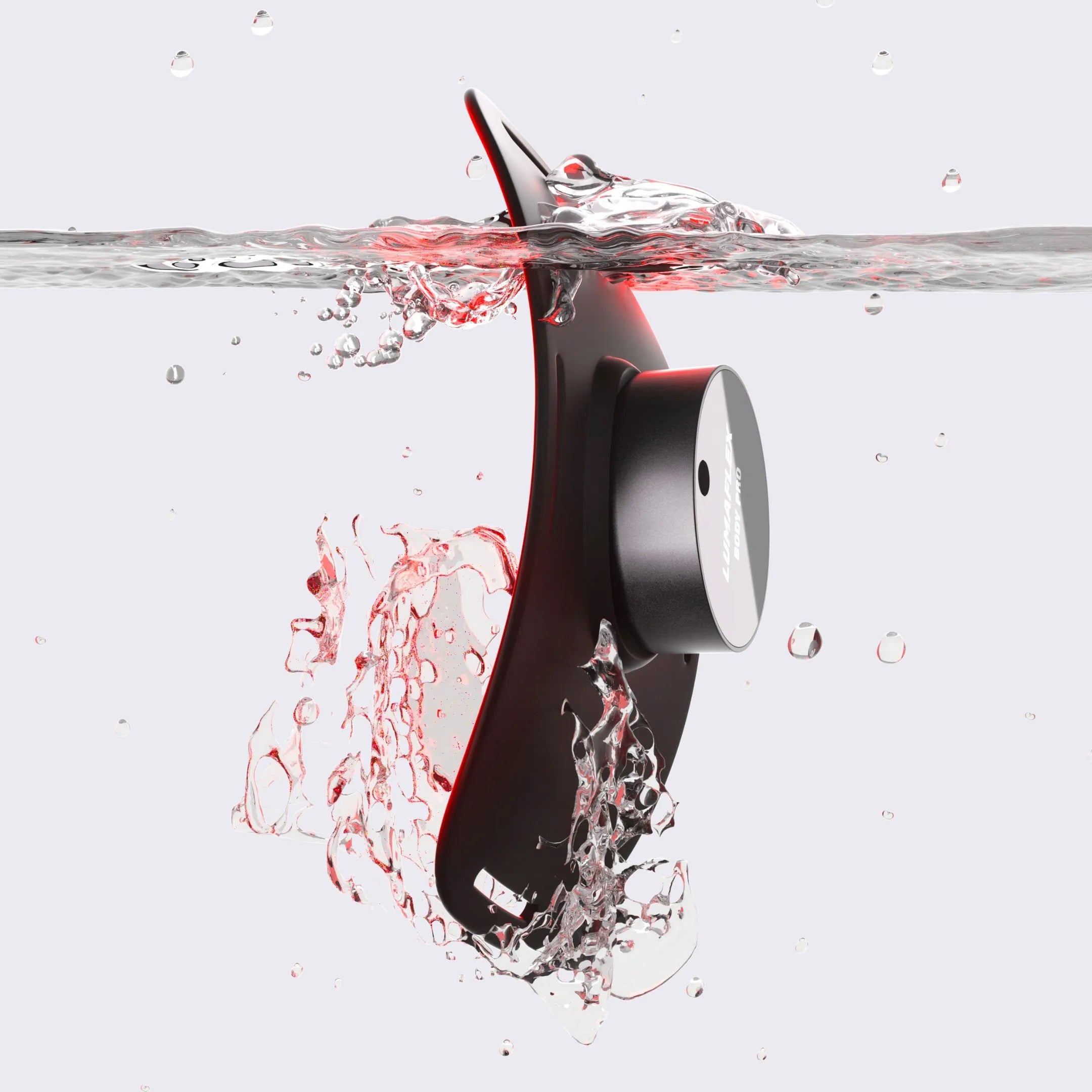
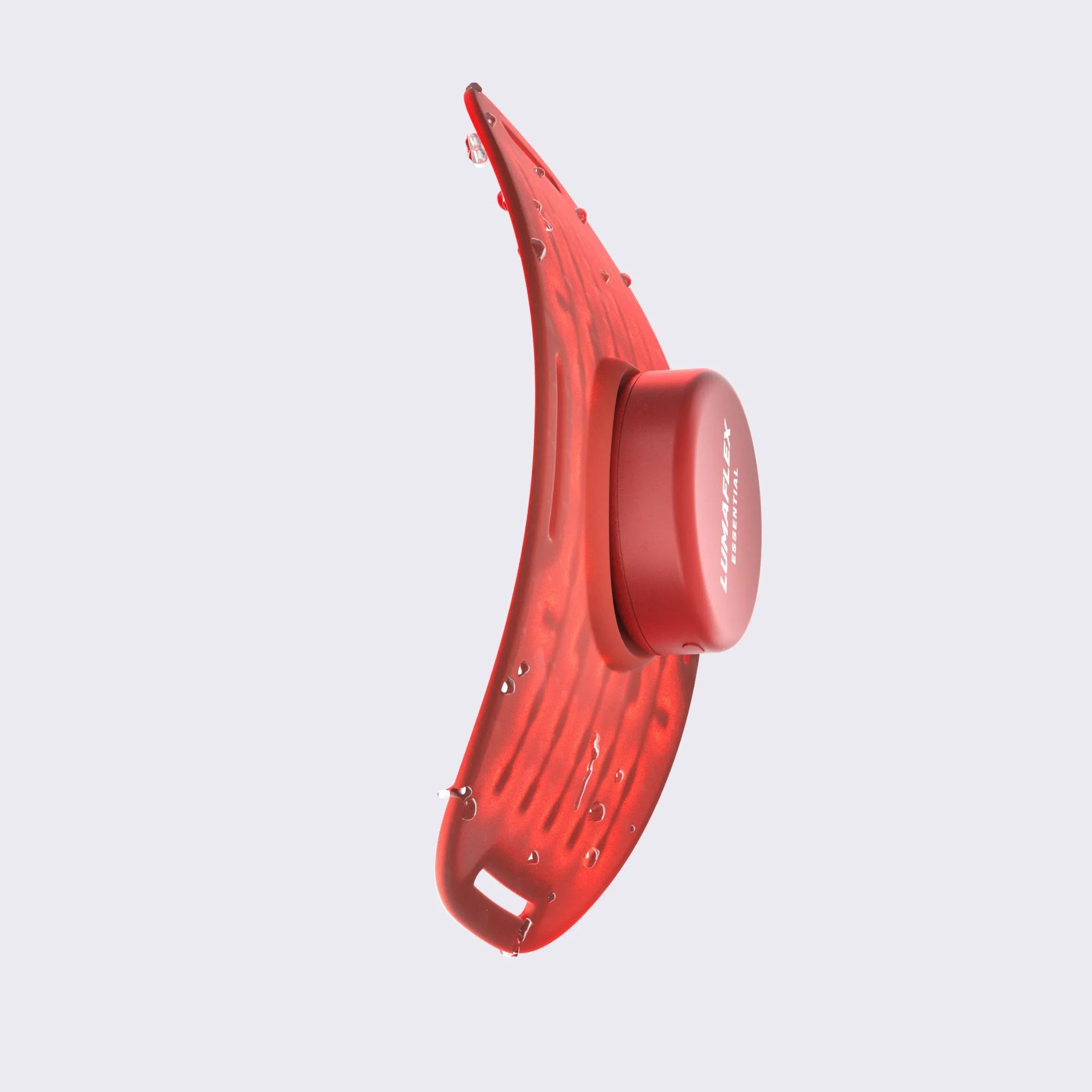
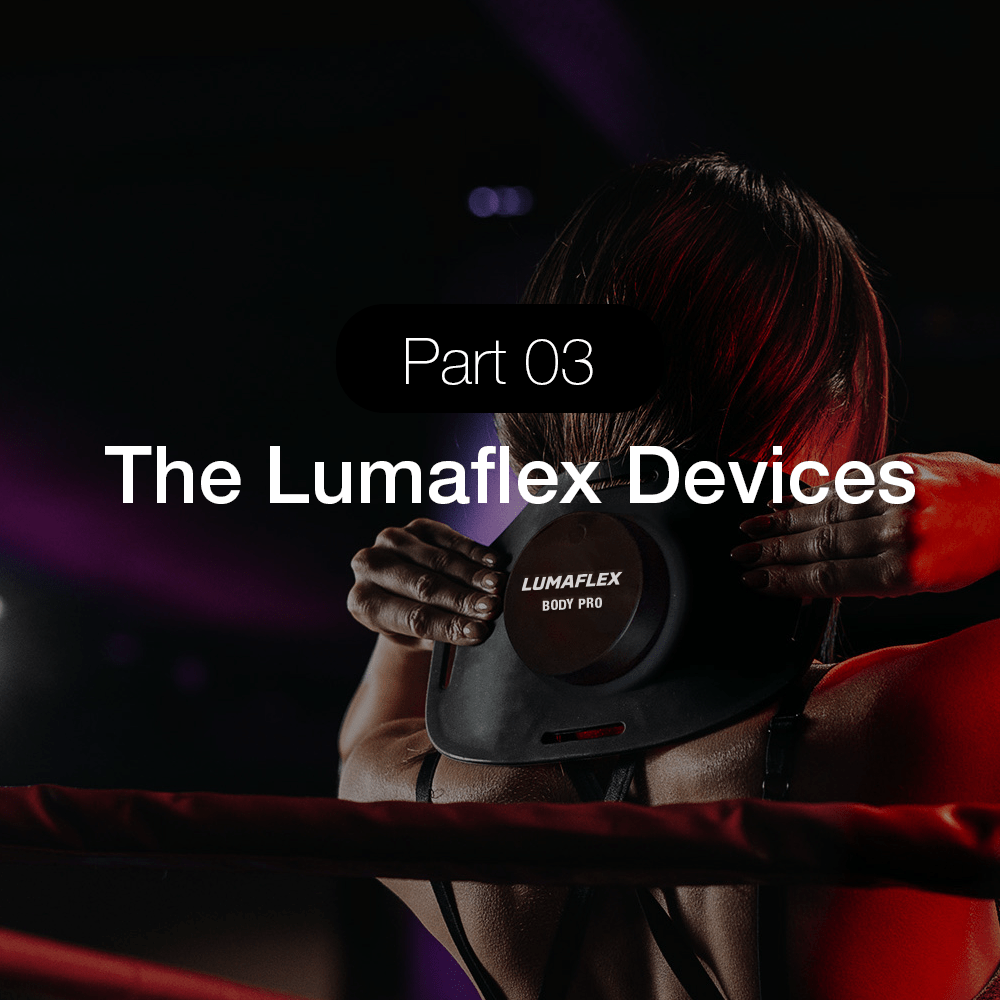
To see the wavelengths, output specifications and intended use of Lumaflex devices, explore Lumaflex's red light therapy technology.
Conclusion
Can red light therapy help with myofascial pain? Some pooled evidence suggests improvement in trapezius pain, but the most recent sham-controlled trial found no pain advantage over sham, only a function improvement in the treated group. That separates a promising signal from a demonstrated benefit. Anyone with persistent or unexplained muscle pain should have it assessed before relying on any device.
Sources
- Alayat et al. (2022). Effectiveness of photobiomodulation therapy for upper-trapezius myofascial pain: systematic review and meta-analysis. Photobiomodulation, Photomedicine, and Laser Surgery.
- Silva et al. (2026). Photobiomodulation for trapezius myofascial pain: randomised, sham-controlled, double-blind trial. Lasers in Medical Science.
- Salari et al. (2025). Photobiomodulation in myofascial pain dysfunction syndrome: randomised triple-blind clinical trial. Photodiagnosis and Photodynamic Therapy.
- Steen et al. (2025). Myofascial pain syndrome: an update on clinical characteristics, etiopathogenesis, diagnosis, and treatment. Muscle & Nerve.
- Mayo Clinic. Myofascial pain syndrome: diagnosis and treatment.
- LLLT for myofascial neck pain: systematic review and meta-analysis.
- International consensus on trigger-point diagnostic criteria.