Red Light Therapy for Hip Pain: Is It Worth Trying?

Is red light therapy for hip pain worth considering? Photobiomodulation (PBM), the clinical term for red and near-infrared light therapy, has been studied for several musculoskeletal conditions. Research on hip pain is still developing, and findings from other joints offer useful context rather than a direct answer for every hip condition.
The potential role of red light therapy depends on what is causing the pain, how closely the available research matches that condition, and whether a device's specifications and intended use align with your needs.
This guide explores the research across different hip conditions, explains how red and near-infrared light work, and outlines what to look for when comparing devices.
- Does red light therapy for hip pain work?
- What causes hip pain?
- How does the evidence apply to different types of hip pain?
- How to choose a red light therapy device for hip pain
- How do Lumaflex devices compare?
- Where does red light therapy fit alongside other hip pain care?
- Is red light therapy for hip pain safe?
- When should you get hip pain assessed?
- Red light therapy for hip pain: Frequently Asked Questions
- Red Light Therapy for Hip Pain: What to Consider Before You Buy
Does red light therapy for hip pain work?
Research on photobiomodulation (PBM) includes human studies involving hip surgery, a growing evidence base for rehabilitation after joint replacement, and a veterinary trial involving hip osteoarthritis. These studies offer a more direct look at hip-related outcomes, although each examines a specific treatment setting.
Human research after hip replacement. A 2018 randomized, triple-blind, placebo-controlled trial involving 18 patients examined PBM applied around the surgical incision 8 to 12 hours after total hip arthroplasty. The researchers reported lower pain scores and reductions in two inflammatory markers in the active-treatment group compared with placebo. This study supports further investigation of PBM for immediate postoperative pain, but it does not establish its effectiveness for everyday hip pain or long-term osteoarthritis management.
Evidence from joint-replacement rehabilitation. A 2026 systematic review examined PBM after total knee and hip arthroplasty. It included four randomized controlled trials involving 133 participants, with one study focused on hip replacement. The review reported promising short-term findings for postoperative pain, swelling, range of motion, and functional performance. Differences in treatment protocols and the small number of trials mean these results need further confirmation.
Research on hip osteoarthritis in dogs. A 2022 randomized, double-blinded controlled trial evaluated Class IV laser PBM in 20 dogs with bilateral hip osteoarthritis. The treatment group showed improvements in several pain and function measures over the study period. These findings provide condition-specific evidence in veterinary medicine, but results in dogs cannot establish effectiveness in humans.
The human studies focus on treatment immediately after surgery or during recovery, while the animal study uses a clinical laser for canine osteoarthritis. Consumer LED devices can differ in wavelength, output, treatment area, and dose. When evaluating a device for hip pain, consider how closely its specifications and intended use match the protocols studied, and whether the research addresses the specific cause of your pain.
What causes hip pain?

Hip pain comes from the joint, the muscles, the tendons, the bursae, or the lower back. Location and sensation do not reliably show which. The NHS and Versus Arthritis both advise against diagnosing it yourself.
- The hip joint. Osteoarthritis is one of the most common causes of hip pain in adults, with pain, stiffness, and reduced mobility.
- Muscles. Strains can affect the hip flexors at the front of the hip and groin, the gluteals, and the hamstrings.
- Tendons and bursae. Greater trochanteric pain syndrome (GTPS), which includes what used to be called trochanteric bursitis, causes pain on the outer hip and is usually linked to overloaded gluteal tendons.
- Referred pain. Lower back problems can show up as hip or buttock pain.
- Exercise. Squats, lunges, and running can provoke pain for any of these reasons.
Research on one of these conditions says nothing about the others, which is why the next section splits them.
How does the evidence apply to different types of hip pain?
The potential role of red light therapy depends on the underlying condition. Research has examined photobiomodulation after hip replacement and in dogs with hip osteoarthritis, while hip flexor pain and outer-hip tendon conditions require their own condition-specific evidence.
Hip osteoarthritis
Research on hip osteoarthritis includes a randomized, double-blinded trial of photobiomodulation in dogs with the condition. The researchers reported improvements in several pain and function measures following Class IV laser treatment. This provides a starting point for further research into hip osteoarthritis, although findings in dogs cannot establish effectiveness in humans.
A separate human trial examined photobiomodulation immediately after total hip replacement, focusing on postoperative pain and inflammation. These findings relate to recovery after surgery rather than ongoing symptoms from osteoarthritis.
For more on the science of cartilage regrowth and the questions surrounding red light therapy, see our related article on cartilage regeneration.
Hip flexor pain
Hip flexor pain is a symptom rather than a specific diagnosis. Discomfort at the front of the hip during squats can involve a muscle, tendon, the hip joint, or another structure, so identifying the cause is an important first step.
Research on photobiomodulation after hip replacement offers context for its potential role in pain management, but it does not directly address hip flexor strains or injuries.
A customer's experience with hip discomfort
One Lumaflex customer described a persistent pinching sensation at the front of the hip during squats. After using a Lumaflex device, the customer reported that the pinching sensation was absent during squats.
Experiences like this offer a useful perspective on how individuals perceive changes in their symptoms while using red light therapy. However, a customer report cannot establish what caused the original discomfort or whether the underlying issue resolved. Controlled clinical research is needed to determine whether photobiomodulation can help with hip flexor-related pain.
The experience is encouraging and highlights an area worth exploring through further research.
Hip bursitis and gluteal tendinopathy
Greater trochanteric pain syndrome (GTPS) includes pain associated with the gluteal tendons and structures around the outer hip. Clinicians use a physical assessment to help distinguish these conditions from other causes of hip pain.
Research into photobiomodulation for joint pain and postoperative recovery provides a foundation for exploring its potential across other musculoskeletal conditions. For GTPS, gluteal tendinopathy, and hip bursitis, further condition-specific research could help clarify where red light therapy may fit alongside established care. In the meantime, clinical assessment and appropriate rehabilitation remain important steps toward managing symptoms and improving function.
How does red light therapy work?
Red and near-infrared light is absorbed by tissue, and researchers study what that absorption triggers inside cells. Red light sits at roughly 620 to 700 nm and near-infrared at roughly 700 to 1,100 nm. One proposed mechanism involves cytochrome c oxidase in the mitochondria, which may influence ATP production and cell signaling. Laboratory findings on mechanism do not show that a device will relieve any particular person’s hip pain. For the broader picture, see our guide to red light therapy for pain.
The hip joint sits beneath muscle and soft tissue. Light is attenuated on its way in, so the dose reaching a deep joint is lower than the dose at the skin. How much lower depends on device output, distance, and the person’s tissue.
How to choose a red light therapy device for hip pain
Compare devices on specifications, treatment area, and the evidence behind their stated use, not on marketing language.
Wavelengths and specifications
Wavelength is one variable among several. Also check published output, treatment area, how the light is delivered, and the exposure time the manufacturer specifies. A claim that a given wavelength reaches the hip joint at a therapeutic dose needs evidence, because depth, output, and distance all change what arrives.
Irradiance and treatment time
A timer does not show how much light you receive. Irradiance (power per unit area) multiplied by time gives the incident fluence, the energy per area at the skin under defined conditions. It does not by itself establish the dose delivered to deeper tissue. Our red light therapy dosage guide explains how to read these numbers.
Follow the manufacturer’s instructions for session length and frequency instead of improvising protocols, or better yet, consult a medical professional..
Treatment area and fit
A wearable device can be positioned over a specific area, such as the outer or front hip, and held in place with straps. A large panel covers a broader area from a distance. The two do not necessarily deliver the same exposure to the same spot, because distance changes the dose.
Clinical evidence and regulatory claims
Read the stated intended use, specifications, and safety information, and look for the evidence behind the specific claim being made. FDA clearance applies to a defined intended use, so it does not show that a device treats every type of hip pain. Check exactly what the clearance names.
How do Lumaflex devices compare?
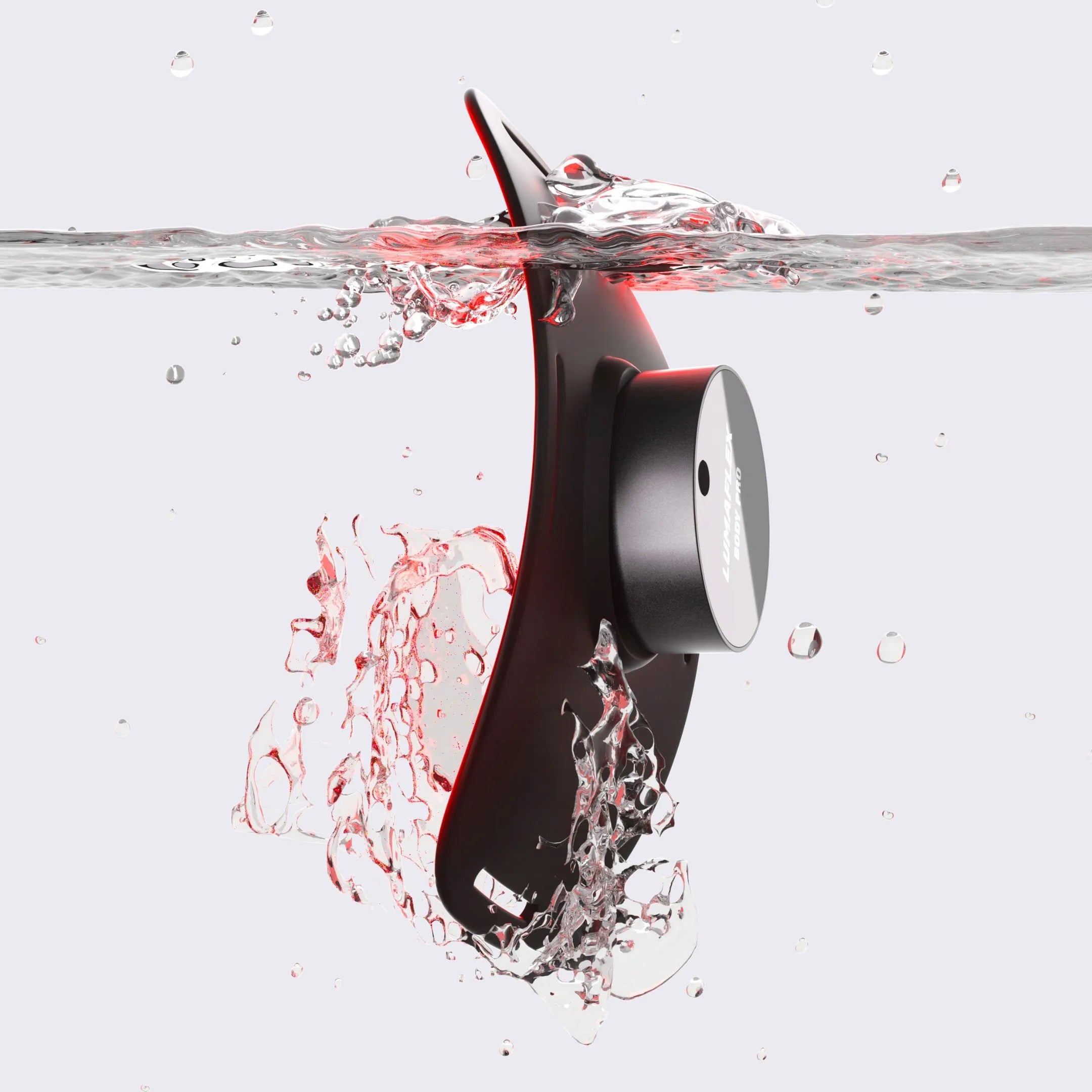
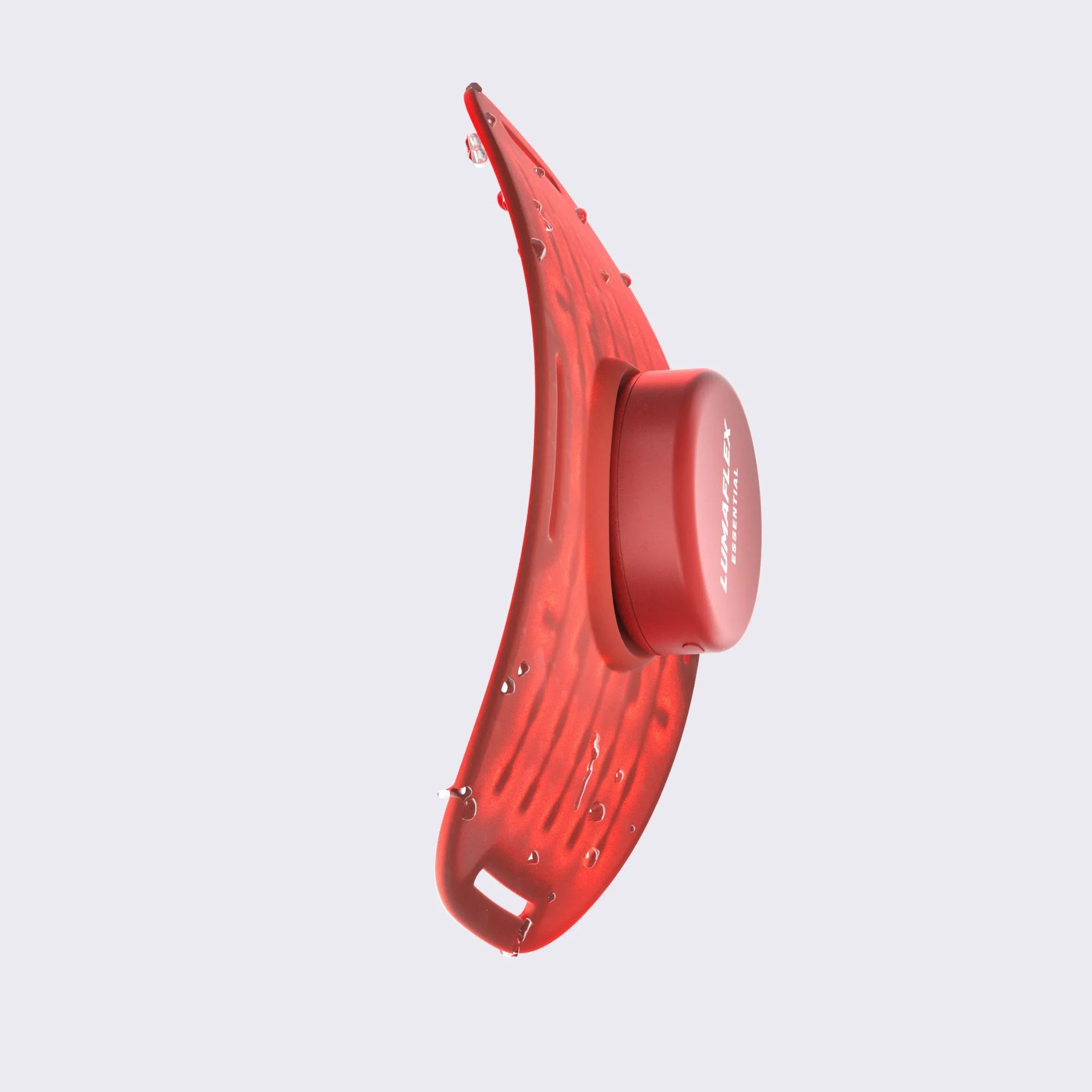
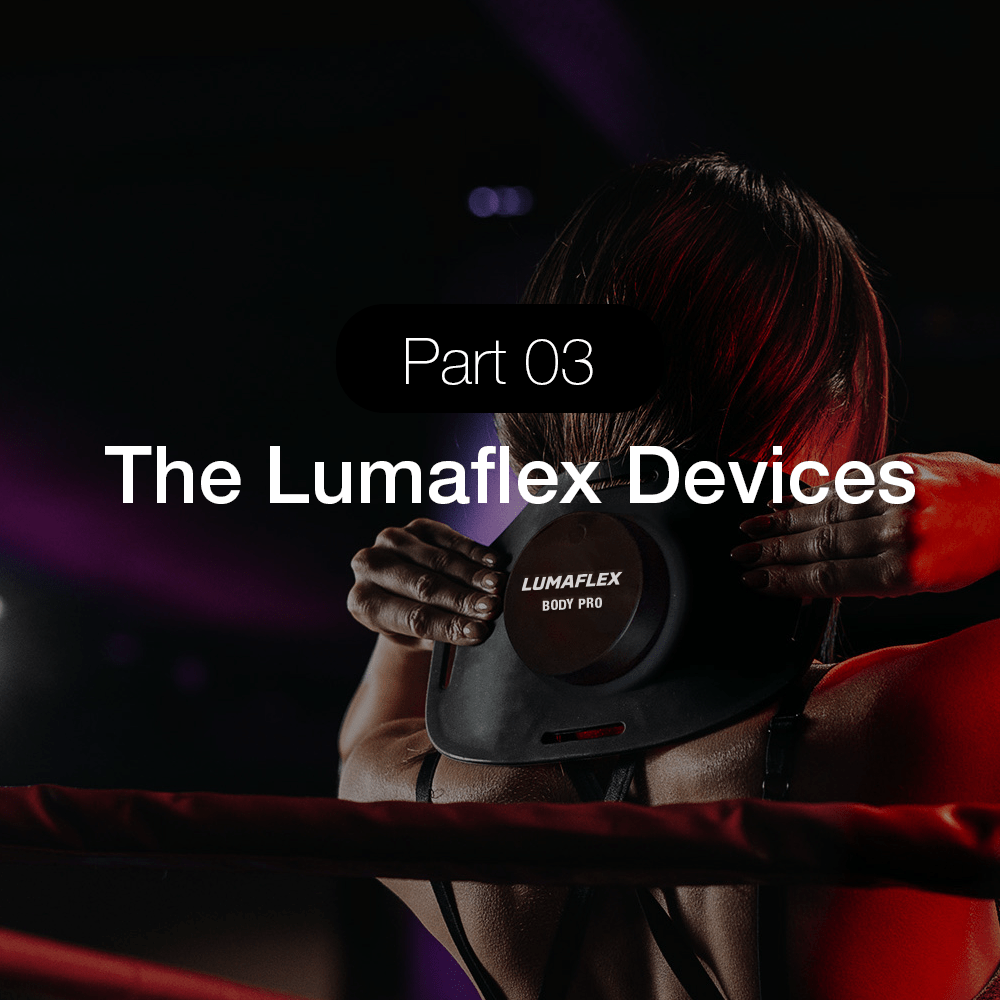
Both wearable Lumaflex devices pair red and near-infrared light, and they differ mainly in wavelength range and irradiance. Specifications as listed on Lumaflex product pages:
| Feature | Lumaflex Essential | Lumaflex Body Pro | Lumaflex Essential Pro |
| Wavelengths | 630 + 850 nm | 630 + 850 nm | 630 + 660 + 810 + 850 + 904 + 1064 nm |
| LED configuration | 45 dual-core LEDs | 45 dual-core LEDs | 50 quad-core LEDs |
| Irradiance | 75 mW/cm² | 75 mW/cm² | 60 mW/cm² |
| Dose over 10 minutes | 45 J/cm² | 45 J/cm² | 36 J/cm² |
| Treatment area | Approx. 280 cm² | Approx. 280 cm² | Approx. 280 cm² |
| Size | 10 × 6.25 × 1.40 in | 10 × 6.25 × 1.40 in | 10 × 6.25 × 1.40 in |
Comparing wavelengths, irradiance, treatment area, and other specifications can help you identify the Lumaflex device that best fits your preferences and intended use. Explore the Lumaflex product comparison to see all three models side by side.
These specifications help you compare the wavelengths, surface output, and treatment area of each Lumaflex device. The next consideration is how those features relate to your needs: light reaching deeper tissues depends on factors such as tissue depth, device output, and placement. The number of wavelengths or a higher irradiance alone does not determine which device is most suitable for a particular hip condition. Similarly, a device's regulatory clearance applies to its specified intended use, rather than establishing effectiveness for every type of hip pain.

For practical use, treatment area and positioning are important considerations. A wearable wrap can stay over a chosen area during a session, while a panel used at a distance creates a different exposure setup.
Where does red light therapy fit alongside other hip pain care?
Red light therapy may complement professional assessment and rehabilitation. The most appropriate approach depends on the cause of your hip pain. Care may include a clinical assessment, modifying activities that aggravate symptoms, and following a tailored rehabilitation plan. Because different hip conditions respond to different approaches, exercises should be selected to suit your symptoms and underlying condition.
Do not push through sharp or persistent pain because a device makes a movement feel easier. For exercise-related recovery, see red light therapy for weightlifters.
Is red light therapy for hip pain safe?
Short-term use of red-light devices appears generally well tolerated, but safety depends on the device, how it is used, and the person. The American Academy of Dermatology describes red light devices as generally well tolerated in the contexts it reviewed. That source addresses skin applications, so it gives general safety context and not guidance on treating hip pain.
- Follow the manufacturer’s instructions for placement and session length.
- Use eye protection when the instructions call for it.
- Do not extend exposure or invent your own schedule.
- Check the device instructions for contraindications, and ask a healthcare professional before use if you have photosensitivity, take medications that affect light sensitivity, have an implant, or have another condition that could affect suitability.
- Red light therapy is not suitable for everyone, and no device is free of risk.
When should you get hip pain assessed?
Get hip pain assessed if it lasts, worsens, or limits what you can do. The NHS advises seeing a GP when hip pain stops you doing normal activities or affects your sleep, keeps coming back, or has not improved after about two weeks of home care.

Seek urgent help for:
- Severe hip pain that starts suddenly, with or without a fall
- Inability to put weight on the leg after an injury
- A swollen hip that feels hot
- Hip pain with a fever or feeling generally unwell
A home device is not a reason to delay any of these.
Red light therapy for hip pain: Frequently Asked Questions
Can I use red light therapy before squats?
One Lumaflex customer reported that a pinching sensation in the front of the hip was absent during squats after using a Lumaflex device. Individual experiences vary, and this report does not establish that red light therapy prevents hip pain or makes it safe to train through discomfort. If squats trigger hip pain, modify the movement and address the underlying cause before continuing.
How often should I use red light therapy for hip pain?
Follow the manufacturer’s instructions for your device. No condition-specific frequency for hip pain has been established.
Can red light therapy replace physical therapy?
Follow the manufacturer's instructions for your device. The optimal frequency for hip pain has not yet been established. Track your pain levels, hip mobility, and comfort during activities such as walking or squatting before and during your treatment period. If your pain worsens or you notice new symptoms, stop and seek advice from a healthcare professional.
Is a wearable device better than a panel for the hip?
Neither format has been established as more effective for hip pain. A wearable stays positioned over a targeted area, while a panel can illuminate a wider area from a distance. These differences affect positioning and light exposure. If you want to target a specific area, a wearable may be more convenient; if you want to cover a broader area, a panel may be more practical. Whichever format you choose, check the recommended treatment distance, session duration, and dosage rather than assuming one format delivers better result.
Can I use red light therapy with a hip replacement or other implant?
It depends on the implant, the treatment area, and your device's instructions. Check the manufacturer's guidance and consult your surgeon or healthcare professional before use, especially if you are recovering from surgery. They can help determine whether red light therapy is appropriate for your situation and when it may be suitable to begin.
What should I look for in a red light therapy device for hip pain?
Check that the manufacturer lists the wavelengths, irradiance, recommended treatment distance, session duration, and treatment area. Look for clear safety instructions and verify whether the device's intended use and supporting research relate to your specific hip condition. Compare the recommended dose and coverage area across devices, and be cautious of claims that promise to treat every type of hip pain or guarantee results. The device comparison section above can help you evaluate these details.
Red Light Therapy for Hip Pain: What to Consider Before You Buy
Three points matter most when you are weighing red light therapy for hip pain:
- The cause of the pain decides what is relevant, and it needs identifying, not guessing.
- Direct evidence for red light therapy for hip pain remains limited.
- When comparing devices, evaluate specifications and the evidence for the intended use. A wavelength or output figure does not prove effectiveness.
To compare treatment area, wavelengths, and output side by side, see the Lumaflex product comparison, or read the dosage guide first to understand what the numbers mean.
Ready to explore red light therapy for your wellness routine? Shop Lumaflex red light therapy devices to compare your options and find a device that fits your needs.