Golf Back Strain: Why It Happens, Recovery Timeline, and Red Light Therapy

What Is Golf Back Strain?
Golf back strain is a lower back muscle issue that most often involves the erector spinae and multifidus. It usually comes from how the swing loads the spine, especially through rotation and impact. Mild strains can settle within a week or two, while more noticeable injuries often take three to six weeks to calm down with the right approach. Red light therapy, or photobiomodulation, is being looked at as a complementary option that may help with inflammation and muscle recovery, but it has not been studied specifically in golfers with this type of strain.
- 1. What Is Golf Back Strain?
- 2. What Does Golf Back Strain Feel Like?
- 3. Why Golf Is Hard on Your Back
- 4. What Should You Do in the First 48 Hours?
- 5. How Long Does Golf Back Strain Take to Recover?
- 6. When Can You Return to Golf?
- 7. Golf Back Strain Exercises and Recovery Movements
- 8. What Does Research Say About Red Light Therapy for Muscle Recovery?
- 9. How Red Light Therapy May Support Golf Back Strain Recovery
- 10. How to Use Red Light Therapy for Golf Back Strain
- 11. Other Golf Injuries Red Light Therapy May Support
- 12. Preventing Golf Back Strain
- 13. Frequently asked questions (FAQs)
- 14. Golf Back Strain: Key Points to Know
- 15. References
What Does Golf Back Strain Feel Like?
Most golfers do not start by asking about anatomy. They start by asking, “Is this serious?”
A typical golf back strain presents as:
- Localized pain or tightness in the lower back
- Discomfort during rotation, especially through the downswing
- Stiffness after a round or the following morning
- Pain when standing up from a bent posture
- A feeling of “pulling” or guarding in one side of the back
In most cases, the pain stays in the lower back. It does not travel down the leg or cause numbness.
That distinction matters.

How to Tell a Golf Back Strain From Something More Serious
A straightforward muscle strain tends to follow a pattern. It usually hurts with movement, feels tight or restricted, and then gradually eases as the days go on.
It’s a different picture if you notice things like:
- Pain that travels into the glutes or down the leg
- Tingling or numbness
- Weakness in the leg or foot
- Pain that feels constant, rather than changing with movement
At that point, you’re likely not dealing with just muscle tissue. Those signs point more toward nerve involvement, which is something worth getting checked rather than trying to manage on your own.
Why Golf Is Hard on Your Back
Golf combines rotation, speed, and repetition in a way few other sports do. The lower back sits at the center of that movement.
The highest load occurs during the transition into the downswing. At this point, the spine is rotating while also handling compressive force and lateral shift. For a well-sequenced swing, much of this load is distributed through the hips and thoracic spine.
For many amateur golfers, that distribution breaks down.
Limited hip mobility, reduced core control, or simple fatigue can shift more stress into the lumbar region. Over time, this creates the conditions for strain.
Which Muscles Are Usually Involved in Golf Back Strain?
When golfers run into lower back issues, it’s usually the same few areas taking the hit.
- Erector spinae
- Multifidus
- Quadratus lumborum
- Thoracolumbar fascia
These sit right around the lumbar spine and do a lot of the quiet stabilizing work during the swing. If something else in the chain isn’t pulling its weight, they tend to pick up the slack.
Over time, or sometimes after a single overloaded swing, that’s when you start to see irritation build. Small areas of tissue get stressed, and the result is that familiar tight, localized pain through the lower back.

Acute vs Chronic Golf Back Strain
Sometimes it’s obvious. You take a swing, feel something pull, and the back tightens up right away. That’s usually an acute strain.
Other times, it creeps in. The round feels fine, but your lower back stiffens up later that day or the next morning. Then it keeps showing up, round after round. That’s more in line with a chronic pattern.
Both matter. The difference is how you manage them. What settles a fresh strain isn’t always what fixes something that’s been building over time.
What Should You Do in the First 48 Hours?
This is where many golfers make the mistake that prolongs recovery.
The instinct is either to push through or to shut everything down completely. Neither is ideal.
In the first 48 to 72 hours:
- Stop play if the pain is sharp or worsening
- Avoid aggressive stretching or “loosening it up”
- Stay gently active with walking or light movement
- Avoid long periods of sitting, especially in poor posture
- Use simple pain management strategies if needed
The goal is not to fix the injury immediately. It is to avoid making it worse while the body begins its repair process.
How Long Does Golf Back Strain Take to Recover?
If you’re dealing with this, the real question is simple. When can you swing again without it biting back?
In most cases, it falls somewhere in this range:
- Mild strain: about 1 to 2 weeks
- Moderate strain: more like 3 to 6 weeks
- More stubborn or recurring cases: 6 to 12 weeks, sometimes longer
Where people get caught out is expecting it to improve in a straight line. It usually doesn’t.
You might feel almost normal after a few days, then notice the same spot tighten up after a bucket of balls or halfway through a round. That’s common with this kind of strain.
The better signal is whether each flare-up is a little less intense and settles a bit faster. If that’s happening, you’re moving in the right direction.
The 4 Stages of Golf Back Strain Recovery
Inflammation (0–72 hours)
Protection and symptom management
Repair (3–21 days)
Gradual reintroduction of movement
Remodeling (3–8 weeks)
Progressive strengthening and load tolerance
Return to golf
Controlled reintroduction of swing mechanics

When Can You Return to Golf?
This is one of the most practical questions, and often the most mishandled.
A useful progression looks like this:
- Pain-free walking and daily movement
- Light mobility and controlled rotation without symptoms
- Short swings or half swings at low intensity
- Gradual return to full swings
- Partial rounds before a full 18 holes
A key distinction:
Soreness after activity can be normal. Sharp pain during movement is not.
If symptoms return during the swing, you are moving too quickly through recovery.
Golf Back Strain Exercises and Recovery Movements
You do not need an aggressive rehab plan early on. You need the right progression.
Early Phase
- Walking
- Gentle pelvic tilts
- Controlled breathing to reduce muscle guarding
Mid Phase
- Cat-cow mobility
- Bird-dog variations
- Light glute activation
Late Phase
- Anti-rotation core work
- Hip mobility drills
- Thoracic rotation exercises
Return to Play
- Slow tempo swings
- Gradual volume increase
- Focus on sequencing rather than power
The aim is not just to recover. It is to reduce the likelihood of the same pattern repeating.
What Does Research Say About Red Light Therapy for Muscle Recovery?
Photobiomodulation has been studied in the context of muscle performance and recovery, though not specifically in golf back strain.
A systematic review of 13 randomized controlled trials found that light therapy improved muscle performance and recovery markers across studies. The strongest effects were observed when applied before exercise.
A separate field-based trial in rugby athletes reported improvements in fatigue-related measures and recovery indicators following phototherapy.
A more recent review highlights the growing interest in these applications, though it is not a primary sports medicine source.
What This Research Means for Golf Back Strain
It is worth noting that most studies have focused on limb muscles rather than the lumbar spine. None were conducted in golfers.
However, the biological processes involved in muscle repair are consistent across skeletal muscle. This allows for cautious application of the findings without overstating them.
How Red Light Therapy May Support Golf Back Strain Recovery
How Red Light Therapy May Help With Early Inflammation
Early on, the lower back can feel tight, irritated, and a bit unpredictable. Small movements that normally feel fine suddenly don’t. That’s largely down to inflammation doing its job in the background.
Photobiomodulation gets discussed most often at this stage. Some research suggests it may help regulate that response, which is why it’s usually considered in the first few days, while the tissue is still sensitive.
How Red Light Therapy May Support Muscle Repair
Muscle repair takes more out of the body than most people expect. After a strain, the area isn’t just resting. It’s actively trying to rebuild while you’re still moving through normal daily activity, which adds to the overall demand on the tissue.
That’s one reason photobiomodulation gets brought into muscle recovery discussions. It’s thought to influence how cells produce and use energy during this phase, and some research suggests that may support the muscle repair process. The evidence isn’t specific to back strain, but across muscle-focused studies, the same idea keeps coming up. When energy availability is better supported, recovery tends to move more efficiently.
What Creatine Kinase Can Tell Us About Muscle Recovery
Creatine kinase tends to come up whenever muscle damage is discussed. It’s one of the markers that shows up in the bloodstream when muscle tissue has been stressed or slightly torn, which is exactly what’s happening in a strain.
In studies looking at photobiomodulation, changes in markers like this are part of what researchers track. Some findings point toward lower levels following light-based treatment, which is why it gets linked to recovery. It’s not a direct measure of how your back feels, but it does give a window into what’s happening in the muscle itself.
How Blood Flow May Affect Golf Back Strain Recovery
Lower back strains don’t just feel tight. They often feel a bit stuck, especially after you’ve been sitting or once you cool down after a round.
Circulation is part of that, although it’s not something most people think about directly. In the research around photobiomodulation, nitric oxide comes up from time to time because of how it affects blood vessels. It’s a small piece of a bigger picture, but it helps explain why improving local blood flow is often mentioned alongside muscle recovery.
Should You Use Red Light Therapy Before a Round?
Most golfers only think about recovery after the round. The idea of doing something before you play usually doesn’t come up unless you’ve already dealt with a recurring issue.
That’s where pre-session use of photobiomodulation gets mentioned in some of the research. A few studies have looked at applying it before exercise and tracking fatigue, with results pointing toward better muscle endurance. It hasn’t been studied in golf specifically, but it lines up with the idea of preparing the tissue before loading it rather than waiting until after.
How to Use Red Light Therapy for Golf Back Strain
Where to Apply Red Light Therapy for Golf Back Strain
Focus on the lower back, covering both sides of the spine from roughly L1 to L5.
Best Red Light Therapy Wavelengths for Golf Back Strain
- Red light for superficial tissue
- Near-infrared for deeper muscle layers
For lumbar strain, deeper penetration is generally more relevant.
Should You Use Red Light Therapy Before or After Golf?
- Post-round for recovery
- Pre-round for conditioning
How Often Should You Use Red Light Therapy for Golf Back Strain?
- 3 to 5 sessions per week during recovery
- 2 to 3 sessions per week for maintenance
How Lumaflex Academy Helps You Apply RLT Correctly
Knowing that red light therapy may support recovery is only the starting point. The challenge is applying it in a way that matches the stage of injury and the demands of your sport.
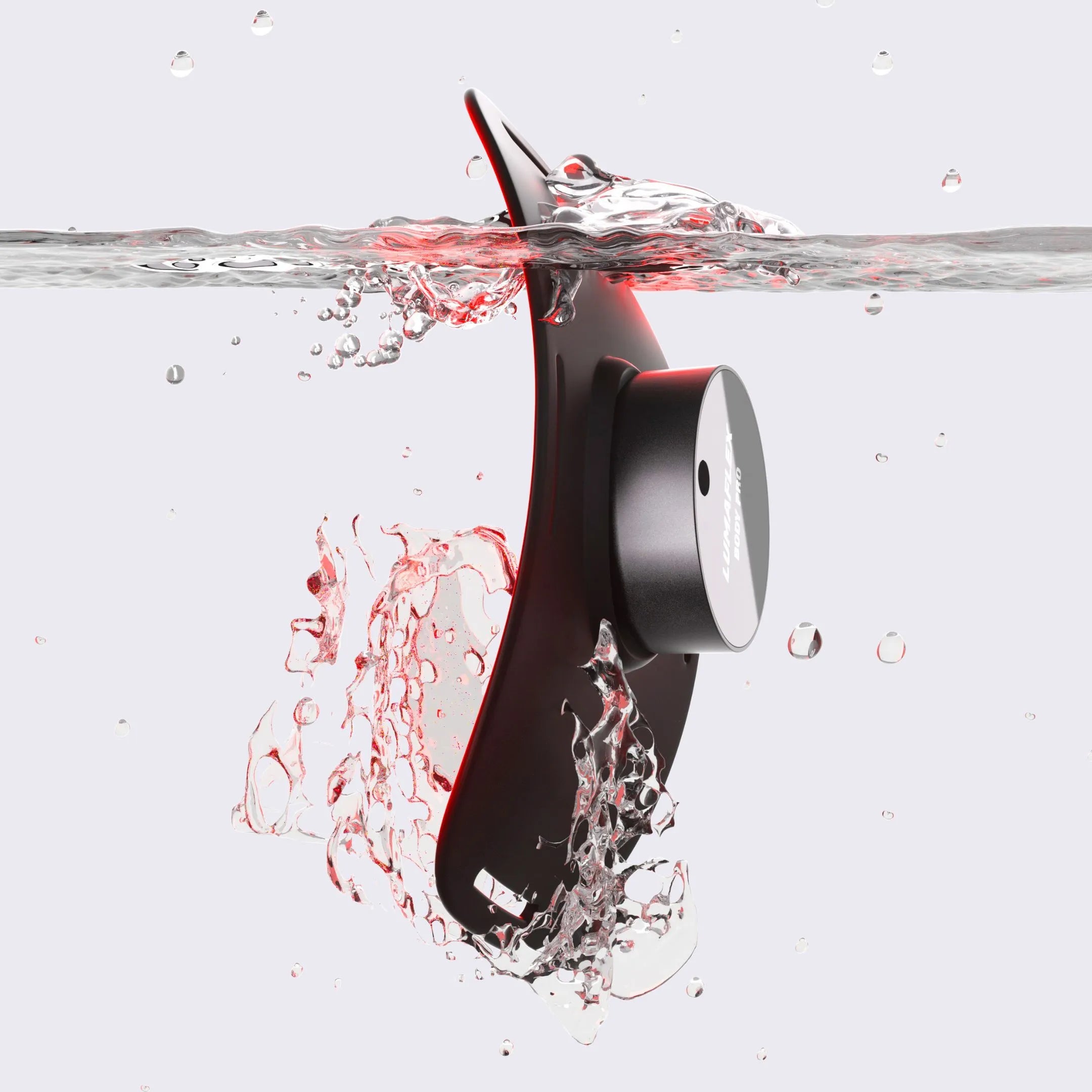
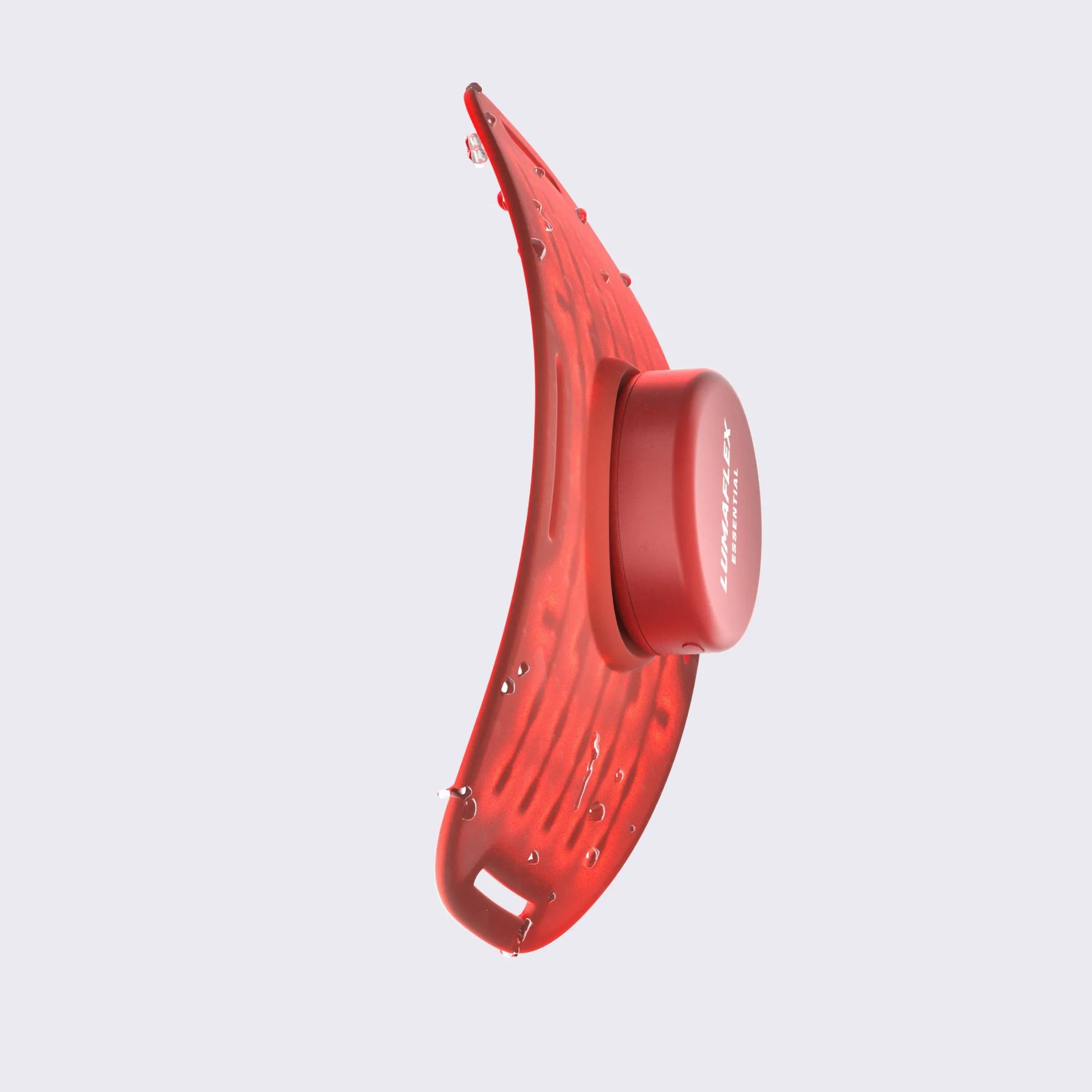
The Lumaflex Academy focuses on that application layer. It breaks down how to use different wavelengths, how to time sessions around play, and how to adjust protocols as you move from early recovery to full return.
For golfers, this matters because recovery is not static. The approach that supports tissue repair early on is not the same as what supports performance later. The Academy provides a structured way to navigate that progression.
Other Golf Injuries Red Light Therapy May Support
Golf places repetitive stress on multiple areas of the body.
- Golfer’s elbow
- Rotator cuff irritation
- Wrist tendinopathy
- Knee stress during follow-through
- Hip and piriformis issues
Research into photobiomodulation has explored many of these conditions, particularly in relation to inflammation and connective tissue support.
Preventing Golf Back Strain
Prevention is less about avoiding movement and more about distributing load effectively.
- Build core control, not just strength
- Improve hip and thoracic mobility
- Use a proper warm-up before play
- Manage playing volume, especially after time off
- Treat recovery as part of performance, not an afterthought
Golfers who stay consistent with these habits tend to experience fewer recurring issues.
Interested in looking for alternative recovery strategies, read our article on Methylene Blue for Athletes.
How long does a golf back strain take to heal?
Most golf back strains heal within one to six weeks, depending on how much muscle has been irritated.
Milder cases often settle in a week or two. Once it’s more than a minor pull, you’re usually looking at a few weeks rather than a few days. Some strains drag on longer, especially if you get back to swinging before the area has properly settled.
Can red light therapy help with golf back strain?
Possibly, but it’s not something you’d rely on by itself.
Most of what’s been studied looks at muscle recovery more generally, not back strain in golfers. The mechanisms line up, especially around how the body handles inflammation and repair, but that’s not the same as having direct evidence for this exact situation. People tend to use it alongside rehab work rather than instead of it.
Where should I apply red light therapy?
Lower back. Usually just off the spine where the muscles feel tight rather than directly on the bone.
Most people don’t keep it perfectly precise. The sore spot can shift a bit, so it often ends up covering a wider area across both sides. Near-infrared tends to be used here since the muscles sit deeper, but exact placement matters less than being consistent with it.
What other injuries can it support?
Mostly the kind golfers tend to pick up over time. Elbow issues on the lead arm, shoulder irritation from repeated swings, and smaller wrist or hand problems all come up here.
Photobiomodulation gets used in those contexts because they involve the same mix of muscle and connective tissue stress. The research isn’t specific to golf, but the overlap is close enough that it often gets included as part of a broader recovery setup.
Should I use it before or after golf?
After is usually the better place to start, especially if you’re dealing with an active strain.
That’s when the tissue has just been loaded, so most people focus on recovery first. Using it before a round comes up more once things have settled a bit, particularly if you’re trying to manage fatigue or stop the back from tightening up as you play.
When should I see a doctor?
Most back strains settle down on their own. When they don’t, that’s usually when people start second guessing whether it’s something more.
Pain that spreads out of the lower back changes the picture a bit. The same goes for anything that feels more like tingling, numbness, or weakness rather than just tightness. That’s generally where it stops behaving like a simple strain and becomes worth getting looked at properly.
Golf Back Strain: Key Points to Know
- Golf back strain usually comes back to how the swing loads the lower spine, especially through rotation
- Some cases clear quickly, others don’t. A minor strain might settle in a week or two, but it can take much longer if it keeps getting irritated
- What you do early on makes a difference. Pushing through it or jumping back too soon is where a lot of setbacks happen
- Red light therapy is being explored in muscle recovery, particularly around inflammation and repair
- The research isn’t specific to golf or lower back strain, so it needs to be viewed in that context
- It tends to make more sense as something you layer into a rehab plan rather than relying on it on its own
Disclaimer: This article is for informational purposes only and does not constitute medical advice. If you are experiencing back pain, consult a qualified healthcare professional before beginning any recovery protocol.
References
Leal-Junior, E. C. P., Vanin, A. A., Miranda, E. F., de Carvalho, P. D. T. C., Dal Corso, S., & Bjordal, J. M. (2015).
Effect of phototherapy (low-level laser therapy and light-emitting diode therapy) on exercise performance and markers of exercise recovery: A systematic review with meta-analysis. Lasers in Medical Science, 30(2), 925–939. https://doi.org/10.1007/s10103-013-1465-4
Pinto, H. D., Vanin, A. A., Miranda, E. F., de Carvalho, P. D. T. C., Dal Corso, S., Bjordal, J. M., & Leal-Junior, E. C. P. (2016).
Photobiomodulation therapy improves performance and accelerates recovery of high-level rugby players in field conditions: A randomized, crossover, double-blind, placebo-controlled clinical study. Journal of Strength and Conditioning Research, 30(12), 3329–3338. https://doi.org/10.1519/JSC.0000000000001439
Wojdat-Krupa, M., et al. (2025).
Red light therapy in muscle recovery and athletic performance: A review. International Journal of Innovative Technologies in Social Science, 3(47). https://doi.org/10.31435/ijitss.3(47).2025.3876
Ferraresi, C., Hamblin, M. R., & Parizotto, N. A. (2016).
Low-level laser (light) therapy (LLLT) on muscle tissue: Performance, fatigue and repair benefited by the power of light. Journal of Biophotonics, 9(11–12), 1273–1299. https://doi.org/10.1002/jbio.201600267