Red Light Therapy for Office Workers: Benefits & Everyday Use

Red light therapy for office workers can be used as an adjunct for local muscle comfort and fatigue recovery, but current research does not establish that it reverses prolonged sitting, improves productivity, or treats desk-related pain. Most relevant research comes from healthy participants, exercise studies, and musculoskeletal rehabilitation—not typical office-worker populations.
For desk-based work, PBM is best treated as an optional adjunct to movement, ergonomic changes, regular breaks, and sleep. Evidence for fatigue recovery is promising but limited; evidence for chronic neck discomfort is modest, and a systematic review does not support PBM for nonspecific low-back pain.
- What Desk Work Loads When Movement Is Limited
- How Red and Near-Infrared Light Interact With Tissue
- What Does the Research Say About Red Light Therapy for Office Workers?
- Where Red Light Therapy for Office Workers Fits Into the Workday
- How to Build a PBM Routine Around Your Workday
- What a Portable PBM Device Adds to an Office Routine
- What Red Light Therapy for Office Workers Cannot Replace
- Questions Office Workers Ask About Red Light Therapy
- Red Light Therapy Can Support Recovery—Not Replace Movement
- Sources
What Desk Work Loads When Movement Is Limited
Desk work can be physically demanding because the body often spends hours under low-level, repetitive loading rather than moving through varied positions. Prolonged sitting is not a diagnosis, but duration, limited movement, and sustained positioning can contribute to tension or fatigue.

How Prolonged Sitting Loads the Neck, Shoulders, and Back
A desk-based workday often involves static loading around the neck and shoulders, limited movement through the hips and spine, sustained screen-facing posture, lower-back fatigue, and accumulated muscle tension.
Common complaints include neck discomfort, shoulder tension, back fatigue, stiffness, and a sense of having spent too long without moving. These experiences are not interchangeable with a diagnosed injury or chronic pain condition.
Why a Static Workday Can Produce Physical Fatigue
Holding a relatively fixed posture for hours creates a different physical demand from lifting, walking, or sport. A desk worker’s recovery hierarchy should start with movement, ergonomics, breaks, sleep, and general recovery, with optional adjuncts such as PBM lower on the list.
Red light therapy should complement that hierarchy, not become a reason to remain seated.
How Red and Near-Infrared Light Interact With Tissue
Red light therapy, or photobiomodulation (PBM), uses low-intensity red and near-infrared light to influence biological activity in exposed tissue. Research has examined cellular energy metabolism, mitochondrial signaling, inflammatory pathways, circulation, and local tissue responses.

Red light vs. near-infrared light
Red light generally refers to visible wavelengths in the red portion of the spectrum. Near-infrared light is outside visible vision and is often used in PBM devices alongside red light. Wavelength affects how light interacts with tissue, including how it is absorbed and scattered.
Neither category is universally better; evaluate wavelengths, output, treatment area, and intended protocol together. A specification describes an exposure; it does not guarantee a clinical outcome.
What PBM Studies Measure—and What They Do Not
PBM research may measure fatigue, pain, strength, range of motion, inflammatory markers, sleep, or functional capacity. These outcomes answer different questions. A change in a laboratory marker does not necessarily mean that a desk worker will feel less tension. A small pain reduction does not establish that PBM treats the underlying cause of discomfort.
Mechanistic findings explain why PBM is studied; they do not establish a clinical benefit for desk workers.
What Does the Research Say About Red Light Therapy for Office Workers?
Red light therapy has a documented role in research on muscle recovery, musculoskeletal discomfort, and tissue recovery. For office workers, the most relevant applications are local muscle fatigue, neck and shoulder tension, and recovery after prolonged periods of static loading.
The evidence comes from several overlapping areas rather than one large body of trials conducted exclusively on office workers. Research in healthy participants, exercise recovery, musculoskeletal conditions, and home-use PBM helps establish how red and near-infrared light can fit into a desk-based recovery routine.
Muscle Fatigue and Recovery
PBM research supports its use as a recovery tool for muscle fatigue and post-exercise recovery. A 2023 systematic review and meta-analysis of 16 studies involving 340 healthy participants found improvements in fatigue recovery. The analysis did not find convincing improvements in strength or short- and long-term functional capacity, showing that recovery benefits depend on the outcome being measured.
The broader PBM literature also reports benefits across measures of muscular fatigue and recovery, although treatment parameters vary between studies. Wavelength, irradiance, treatment time, treatment area, and device design all influence the exposure. Ten minutes on one device does not necessarily deliver the same amount of light as ten minutes on another. See Red Light Therapy Dosage: How Much Light Do You Need? for the calculation and for the distinction between irradiance and fluence.
For office workers, this evidence is relevant to the physical fatigue that can build up around the neck, shoulders, and back during prolonged desk work. PBM fits most naturally as a recovery tool alongside movement, ergonomic adjustments, breaks, and adequate sleep.
It should not be confused with a productivity intervention. Evidence for muscle recovery does not establish improvements in concentration or work output.
Neck and Shoulder Discomfort
Research also supports investigating PBM for neck and shoulder discomfort. A systematic review of PBM combined with therapeutic exercise for chronic neck pain included seven eligible studies. Four reported short-term pain benefits, although only one reached a minimal clinically important difference and none demonstrated significant improvement in disability.
These findings support a more specific interpretation: PBM can be part of a broader approach to muscular neck and shoulder discomfort, particularly when combined with movement and exercise. It is not a substitute for addressing the physical demands that contribute to tension during desk work.
This also fits the existing LumaFlex guidance on ways to relieve shoulder tension, where red light therapy is presented alongside movement and other practical strategies rather than as a standalone solution.
Persistent, radiating, worsening, or function-limiting symptoms require appropriate medical or physical-therapy assessment.
Lower-Back Fatigue and Low-Back Pain Are Different Questions
Lower-back fatigue from prolonged sitting and chronic nonspecific low-back pain should not be treated as the same outcome.
For nonspecific low-back pain, a systematic review of 12 randomized controlled trials involving 1,046 people found no clinically important improvement in pain or disability compared with sham treatment. That evidence does not support presenting PBMT as a treatment for nonspecific low-back pain.
That finding does not erase the distinction between treating a diagnosed pain condition and supporting muscular recovery after a long period of sitting. Office workers commonly report lower-back fatigue after prolonged static loading, and PBM can be considered within a broader recovery routine when the goal is local muscular comfort rather than treatment of chronic pain.
What About General Recovery?
PBM is also being studied as a broader recovery tool. A 2025 systematic review of whole-body PBM included five studies involving 105 physically active participants. It found no benefit for fatigue biomarkers or exercise performance, while two studies reported improvements in sleep-related measures.
Those findings are useful for defining the scope of the claim. PBM has a place in recovery research, but the relevant outcome matters: evidence involving muscle recovery, sleep, or physical discomfort should not automatically be converted into a claim about productivity.
For office workers, the practical takeaway is straightforward: red light therapy can be incorporated into a recovery routine that addresses the physical demands of desk work. The strongest rationale is local muscular recovery and comfort, while productivity and cognitive-performance claims require separate evidence.
The office-worker case study in the LumaFlex content library provides an individual example of PBM being used alongside reported lower-back fatigue after prolonged sitting and neck and shoulder tension. It illustrates how the technology can be incorporated into real-world recovery; it should be read as a case example rather than a controlled clinical trial.
Where Red Light Therapy for Office Workers Fits Into the Workday
Red light therapy for office workers fits best as a convenient recovery practice alongside movement, not in place of it. Choose the time that makes the routine easiest to maintain; there is no established need to use PBM at a specific point in the workday.

Before work
A morning session can establish a consistent routine. It should not be framed as a productivity enhancer, and it does not replace a walk, mobility work, or an appropriate workstation setup.
During a work break
A work break is a useful opportunity to pair a session with actual movement. For example, you might stand up, walk briefly, perform comfortable mobility work, and then use PBM on the area you are trying to support. The light session should not become a reason to stay in the same chair for another ten minutes.
After work
An evening session can become part of a transition from desk work into recovery after a walk, exercise session, or mobility practice. Use the evening timing because it fits naturally after work and makes the routine easier to maintain, rather than because evening has been established as a superior treatment window.
For workplace routines and recovery tools, see building a more productive workday.
How to Build a PBM Routine Around Your Workday
Choose a routine you can repeat without neglecting movement or basic recovery.
Choose a consistent time
Morning, lunch break, and evening can all work from a routine-building perspective. Choose the time that makes regular use realistic; there is no established universal “best time” for office workers.
Target the area you are actually trying to support
A flexible device may be used around the neck and shoulders, lower back, or another area experiencing muscular fatigue when positioning matches the instructions. Focus on a defined local goal rather than vague “whole-body desk damage.”
Follow the device’s dosing instructions
Irradiance, treatment time, fluence, wavelength, treatment area, and device geometry all affect exposure. Ten minutes on one device does not necessarily deliver the same amount of light as ten minutes on another. See Red Light Therapy Dosage: How Much Light Do You Need? for the calculation and for the distinction between irradiance and fluence.
Do not increase exposure simply because a workday was long. Follow the manufacturer’s intended protocol, especially if the device uses pulsed output or reports peak rather than average irradiance.
Pair the session with movement
A practical example is:
10-minute light session + short walk + comfortable mobility work
That is more sensible than using a light session instead of taking a break. PBM should be part of recovery, not a justification for more sedentary time.
What a Portable PBM Device Adds to an Office Routine

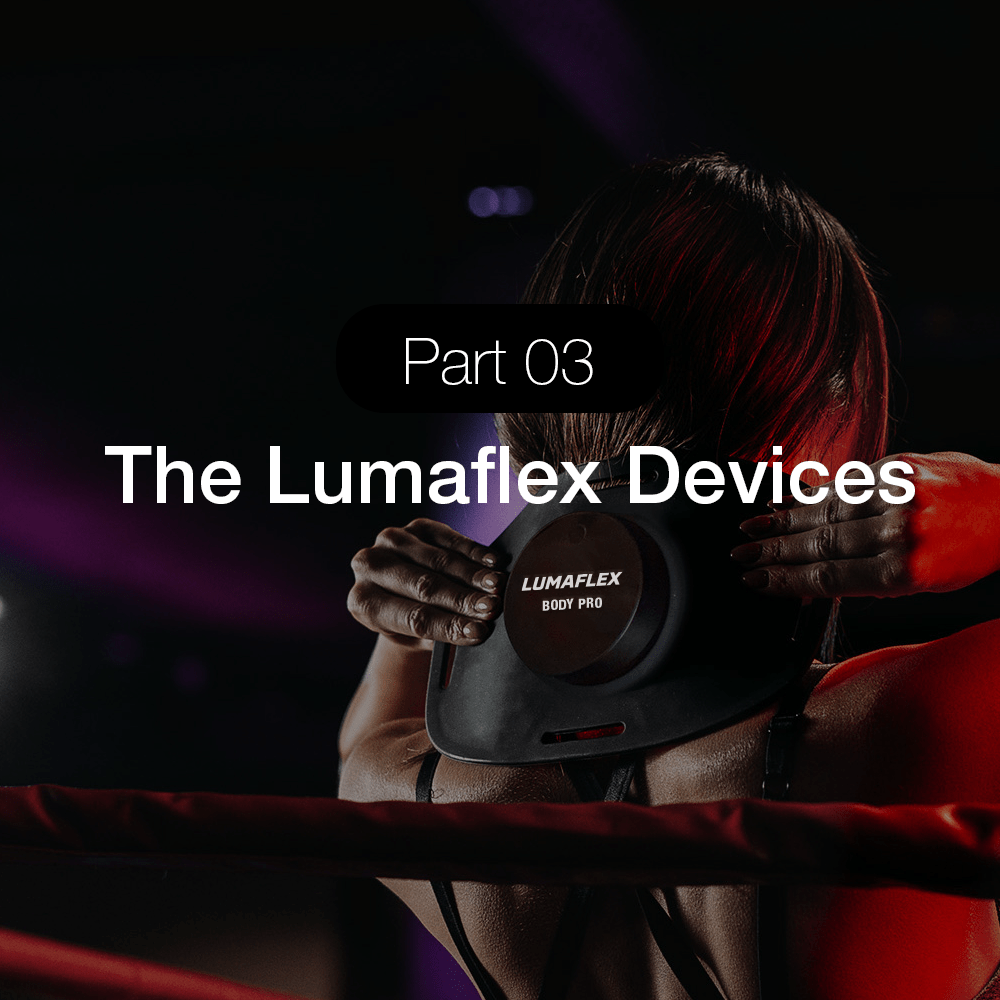
Portability makes a PBM routine easier to fit into a workday. A wearable or flexible device is easier to position on a target area than a large system, especially for someone working from home or fitting a session into a short break.
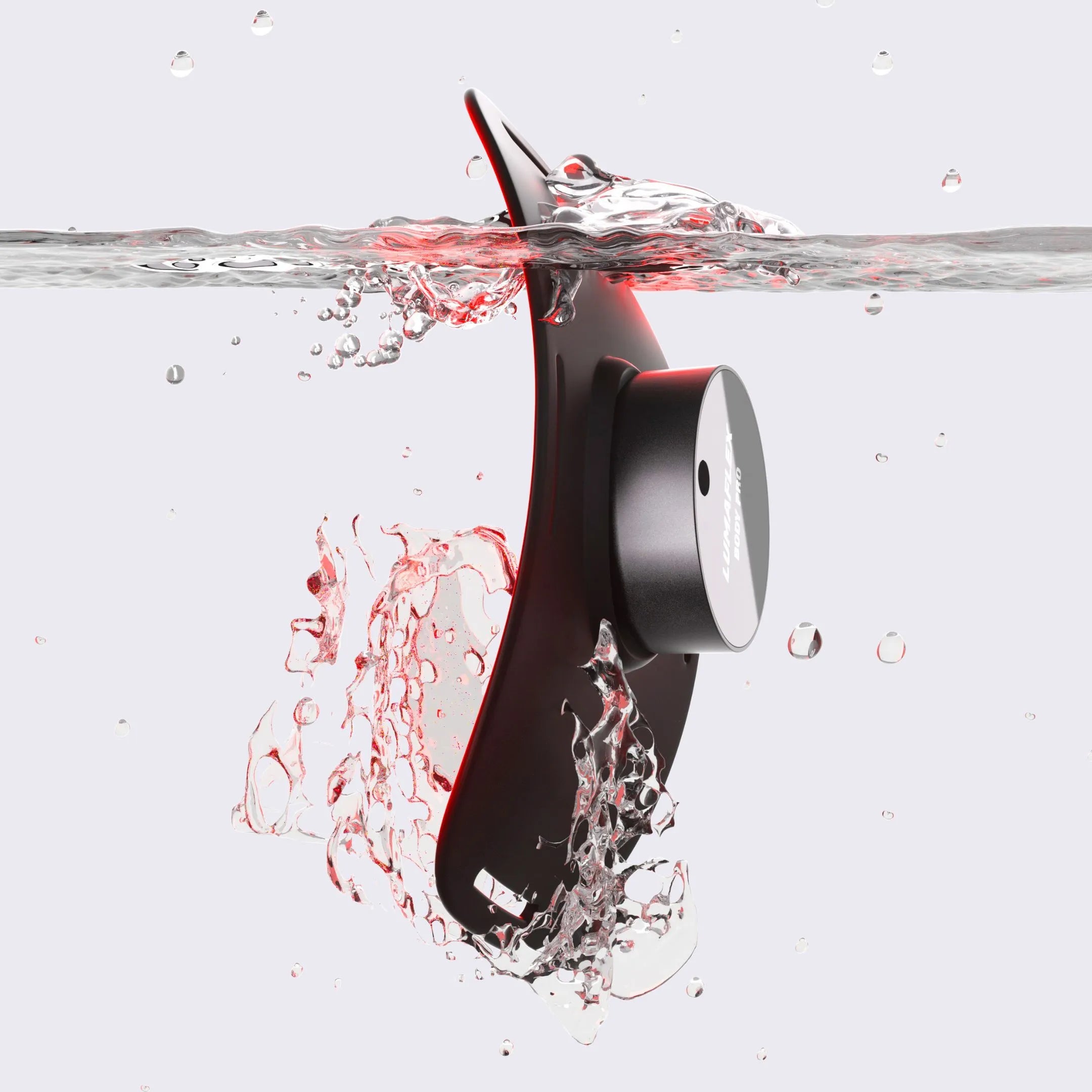
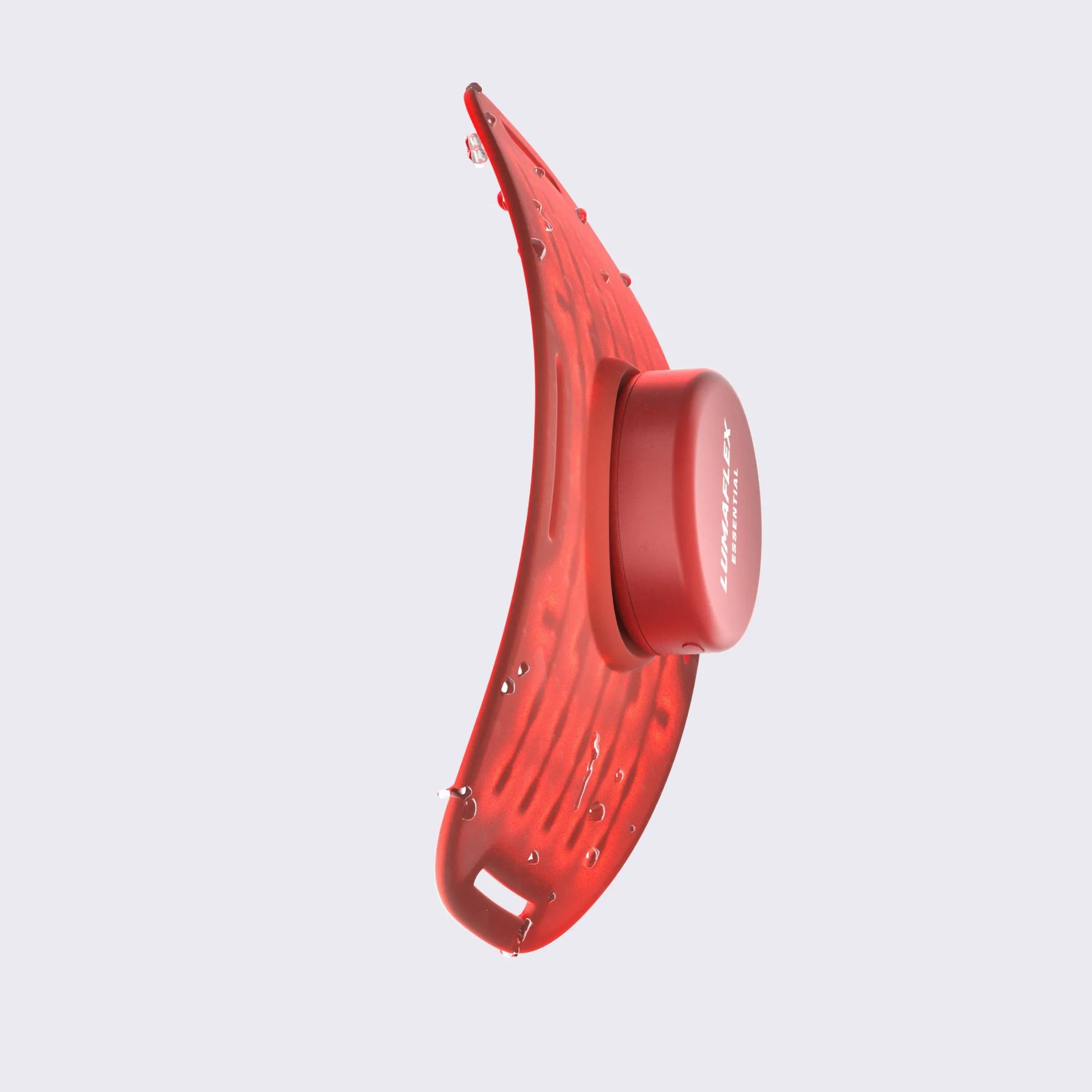
Lumaflex positions the Essential around daily recovery and home wellness, including use by home users and office workers. Its product information describes a portable, flexible design using red and near-infrared light, with a built-in timed treatment format. Those features make it suitable for desk workers who want a targeted session without setting up a larger device.
The product should still be evaluated through the same questions as any other PBM device:
•What wavelengths does it use?
•What irradiance is published, and under what measurement conditions?
•What treatment time and dose does the intended protocol specify?
•What area does the device cover?
•Is the device positioned for contact, a fixed distance, or another geometry?
These specifications help you understand what the device is designed to deliver. They describe the treatment parameters and practical setup; they do not, by themselves, establish that a device will resolve office-related discomfort or improve work performance.
What Red Light Therapy for Office Workers Cannot Replace
Light should complement movement, not replace it. For a desk-based routine, the priority order remains:
1. regular movement and position changes;
2. a workstation setup that supports comfortable positioning;
3. breaks from prolonged sitting;
4. adequate sleep and general recovery; and
5. optional adjuncts such as PBM.
Red light therapy cannot compensate for remaining seated all day, ignoring persistent symptoms, sleeping poorly, or never changing the physical demands of the workday. It is also not a medical diagnosis or a universal treatment for neck or back pain.
Home-use PBM research supports the practicality and general safety of self-applied devices across studied applications, although review authors have emphasized the need for more rigorous randomized trials. Use the device as directed, protect the eyes when instructed, and seek professional advice if you have a condition, take photosensitizing medication, or develop unusual symptoms.
Can red light therapy help after prolonged sitting?
Yes. PBM can be used as an adjunct for local muscular fatigue or tension after prolonged sitting. However, research does not establish that PBM reverses the broader effects of prolonged sitting. Pair it with movement and breaks rather than using it instead of them.
Can red light therapy help neck and shoulder tension?
PBM can provide short-term relief for some forms of neck pain and discomfort. However, the evidence does not establish it as a reliable standalone treatment for ordinary desk-related tension. Persistent or worsening symptoms should be assessed appropriately
Does red light therapy improve productivity?
There is no good basis for promising that red light therapy improves productivity. Evidence on fatigue recovery or sleep-related outcomes is not the same as evidence of better concentration, work output, or cognitive performance.
Red Light Therapy Can Support Recovery—Not Replace Movement
Red light therapy for office workers fits best as an optional support for local muscular comfort and fatigue recovery not as a solution to sedentary work. The research supports a role for PBM in muscle recovery and some forms of musculoskeletal discomfort, while evidence for chronic nonspecific low-back pain does not support broad treatment claims.
Start with movement, ergonomic adjustments, breaks, sleep, and recovery. A short, consistent PBM session can complement those habits as part of a practical recovery routine.
For someone working from home or spending long hours at a desk, portability and a defined treatment time can make that routine easier to maintain. The goal is not to make prolonged sitting harmless; it is to add a practical recovery option alongside the habits that address the physical demands of desk work.
Sources
•Bezerra LO et al. “Effects of photobiomodulation therapy on the functional performance of healthy individuals: a systematic review with meta-analysis.” Lasers in Medical Science. 2023. PubMed
•da Silva Júnior JEF et al. PBM and therapeutic exercise for chronic neck pain: systematic review. Lasers in Medical Science. 2022. PubMed
•Tomazoni SS et al. PBM for nonspecific low-back pain: systematic review. Journal of Physiotherapy. 2020. PubMed
•Álvarez-Martínez M et al. Whole-body PBM for exercise performance and recovery: systematic review. 2025. PubMed
•Gavish L, Houreld NN. Home-use PBM devices: systematic literature review. Photobiomodulation, Photomedicine, and Laser Surgery. 2019. PubMed
•U.S. Food and Drug Administration. Photobiomodulation Devices: Draft Guidance for 510(k) Submissions